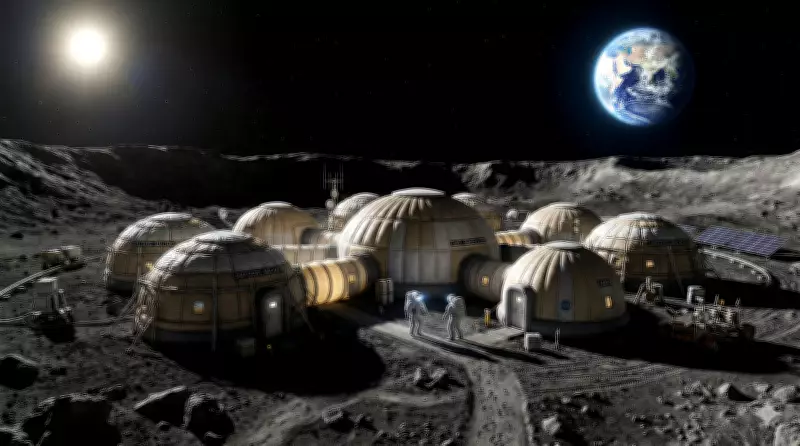
Inflatable Lunar Habitats: Pioneering Human Settlements on the Moon
The concept of humans establishing permanent residences on the Moon, once confined to the pages of science fiction, is rapidly approaching reality thanks to groundbreaking scientific innovations. Researchers are intensively developing creative architectural solutions for lunar habitats that prioritize lightness, strength, and ease of transportation from Earth to the lunar surface.
What Are Inflatable Lunar Habitats?
Inflatable lunar habitats represent a specialized class of living structures constructed from flexible yet robust materials. These habitats are engineered to be compactly transported in a compressed state and subsequently inflated upon arrival at their lunar destination. According to NASA, "inflatable habitats offer a combination of low mass and high volume efficiency, which is advantageous for space travel where mass is a major constraint."
These innovative dwellings incorporate multiple protective layers to safeguard inhabitants from hazards such as micrometeoroids, radiation exposure, and extreme temperature fluctuations. Once fully deployed, they provide a functional living environment equipped with essential amenities for astronaut survival. The practicality of inflatable habitats has been validated through research, notably NASA's Bigelow Expandable Activity Module, which has demonstrated their effectiveness in space conditions.

Why Inflatable Homes Are Ideal for Lunar Environments
The primary obstacle in lunar exploration has traditionally been the logistical challenge of transporting heavy construction materials into space. Inflatable habitats address this issue directly by being lightweight and compact during launch phases. The European Space Agency has further endorsed this approach by proposing concepts for lunar bases that integrate inflatable and 3D-printed structures, underscoring their viability for future missions.
Experts highlight that these habitats can be enhanced by covering them with lunar regolith, commonly known as Moon dust, after deployment. This additional layer provides superior insulation and radiation shielding, significantly improving safety for lunar explorers. As emphasized by the European Space Agency, utilizing local materials is critical for sustainable lunar living, reducing dependence on Earth-based supplies.
Moreover, the expandable nature of inflatable habitats allows for future growth of lunar bases, offering a scalable solution aligned with long-term habitation plans.
Research Insights on Surviving the Moon's Extreme Conditions
Scientists and engineers are conducting extensive research to enable human survival in the Moon's harsh environment, characterized by low gravity, high radiation levels, and a lack of atmosphere. Studies supported by NASA's Human Exploration and Operations Mission Directorate stress that developing sustainable habitats is paramount for mission success.
Key findings from various studies and mission briefings point to the importance of closed-loop life support systems within these habitats, which recycle air and water to sustain astronauts over extended periods. Inflatable living spaces are poised to facilitate longer lunar stays by integrating such advanced systems.
Research indicates that the success of lunar habitats hinges on a multidisciplinary approach, combining engineering, biology, and environmental science. The Moon serves not only as a destination but also as a crucial testing ground for future missions to Mars and beyond.
Challenges and Future Prospects
Despite the promise of inflatable lunar homes, several challenges remain to be addressed:
- Ensuring robust protection against cosmic radiation.
- Maintaining long-term structural durability in the lunar environment.
- Managing internal pressure stability within the habitats.
Nevertheless, scientists are actively working to overcome these hurdles through ongoing research in design concepts and material characterization. With each advancement, the vision of human settlements on the Moon becomes increasingly tangible, driven by innovative design and practical engineering solutions.

The development of inflatable lunar habitats exemplifies the remarkable progress in space science, showcasing human ingenuity and versatility. As space agencies and researchers continue to push boundaries, the Moon may soon transition from a distant dream to a feasible frontier for human habitation.