

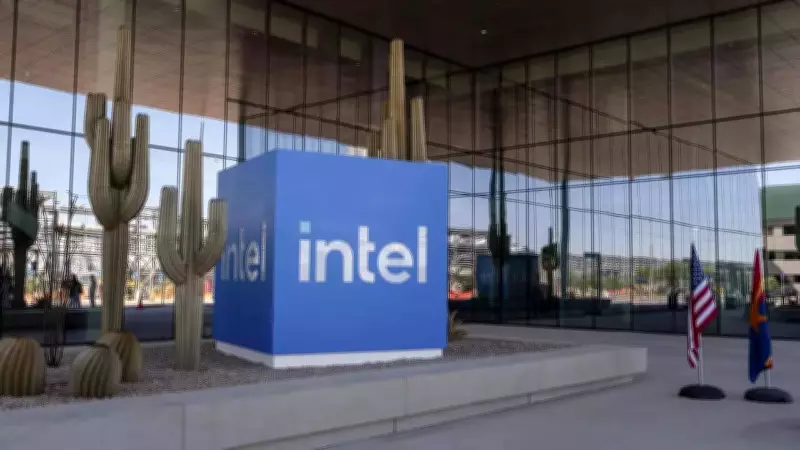
Intel CEO Declares GPU Ambitions in Direct Challenge to Nvidia
In a bold move signaling intensified competition in the semiconductor industry, Intel CEO Lip-Bu Tan delivered what industry observers are calling a "we are coming" message to Nvidia CEO Jensen Huang this week. At the recent Cisco AI Summit, Tan announced Intel's strategic entry into the graphics processing unit market, a domain long dominated by Nvidia and Advanced Micro Devices.
Strategic Hiring and Technical Expertise
The announcement gained substantial credibility with Tan's revelation that Intel has secured top talent for this initiative. "I just hired the chief GPU architect, and he's very good. I'm very delighted he joined me," Tan stated, acknowledging that recruiting this expertise required significant persuasion.
The architect in question is Eric Demmers, a Qualcomm veteran with over 13 years of experience, who joined Intel in January. Demmers confirmed his new role as Senior Vice President of GPU Architecture at Intel Corporation via LinkedIn, where he expressed enthusiasm about the position. Within Intel's organizational structure, Demmers will report directly to Kevork Kechichian, Executive Vice President and General Manager of Intel's Data Center Group.

Technical Distinctions Between CPU and GPU Architectures
This strategic shift represents a significant departure from Intel's traditional focus. For decades, Intel has been synonymous with central processing units, processors characterized by a limited number of cores optimized for serial computing tasks. These CPUs have formed the backbone of personal computers and many server applications.
In contrast, graphics processing units feature thousands of smaller cores designed specifically for parallel computing. This architectural difference makes GPUs exceptionally well-suited for demanding applications including artificial intelligence model training, high-performance computing, and advanced gaming graphics. While Nvidia didn't invent the GPU concept, the company has masterfully capitalized on the AI revolution through these specialized chips, contributing substantially to its market success.
Targeting the Data Center Market
In an exclusive interview with Reuters conducted on the sidelines of the Cisco AI Summit, Tan clarified that Intel's GPU efforts will specifically target the data center segment. "It's tied in with the data center," Tan emphasized to Reuters, adding, "We're working with customers, and will then define what the customer needs."
This focus comes at a critical juncture for Intel, which has seen its market position challenged in recent years as competitors benefited from the massive artificial intelligence infrastructure buildout. The demand for GPUs has skyrocketed as companies worldwide race to establish AI capabilities, creating what many analysts describe as a gold rush for semiconductor manufacturers specializing in these components.
Complex Competitive Landscape
The competitive dynamics between Intel and Nvidia contain intriguing complexities. Despite their rivalry in certain segments, Nvidia represents a prospective customer for Intel's manufacturing facilities. Furthermore, Nvidia holds a significant financial stake in Intel following a substantial $5 billion investment made last year. The two companies have also agreed to collaborate on integrating Intel's CPUs with Nvidia's AI chips within Nvidia systems.
Financial analysts note that Nvidia's investment in Intel has appreciated considerably, growing by more than $6 billion since the initial transaction. This creates a situation where the companies are simultaneously competitors, collaborators, and financial stakeholders in each other's success.
Broader Semiconductor Industry Challenges
Tan also addressed wider industry challenges during his summit appearance, particularly the ongoing memory chip shortage affecting the technology sector. The Intel CEO offered a sobering assessment, predicting that "the computer industry's memory-chip shortage is likely to persist for at least two years."

When pressed for specifics about potential relief, Tan responded unequivocally: "There's no relief as far as I know." He elaborated that conversations with two key memory industry players yielded consistent predictions of constrained supply continuing until 2028.
This shortage stems from multiple factors, most notably the massive expansion of artificial intelligence infrastructure that has dramatically increased demand for memory chips. This surge has reduced availability for traditional computing devices including personal computers and smartphones, leading to widespread shortages, price increases, and potential impacts on consumer purchasing behavior.
As the world's largest manufacturer of processors for personal computers, Intel has particular interest in memory chip availability, since these components are essential for data storage and management in computing systems. The memory market itself remains dominated by three major players: Samsung Electronics Co., SK Hynix Inc., and Micron Technology Inc.
Internal Challenges and Future Outlook
Intel's GPU announcement comes as the company continues efforts to revitalize its foundry business. Earlier this month, Intel CFO David Zinsner acknowledged strategic missteps, particularly regarding demand forecasting for data center CPUs. Zinsner indicated that the company expects product shortages to reach their "lowest level" in the first quarter before showing improvement in subsequent quarters.
Industry analysts view Intel's GPU initiative as both an offensive move against established competitors and a defensive strategy to reclaim relevance in the rapidly evolving semiconductor landscape. With artificial intelligence driving unprecedented demand for specialized computing hardware, Intel's success in this new venture could significantly reshape the competitive balance in the high-stakes chip industry.
