Watching the news from the comfort of your home, the war in Iraq might seem like just another global event, another country caught in the geopolitical chess game. But for the people living there, hiding from forces and dodging bullets is a daily reality. The war is not confined to headlines or debates; they see it every day. Pockmarked walls, damaged doors, and shattered windows carry the physical memory of invasion, conflict, displacement, and instability. Over time, these scars fade into the background of each new attack, turning trauma into the ordinary.
Mokhallad Habib: Leading Iraq's Revival of Hope
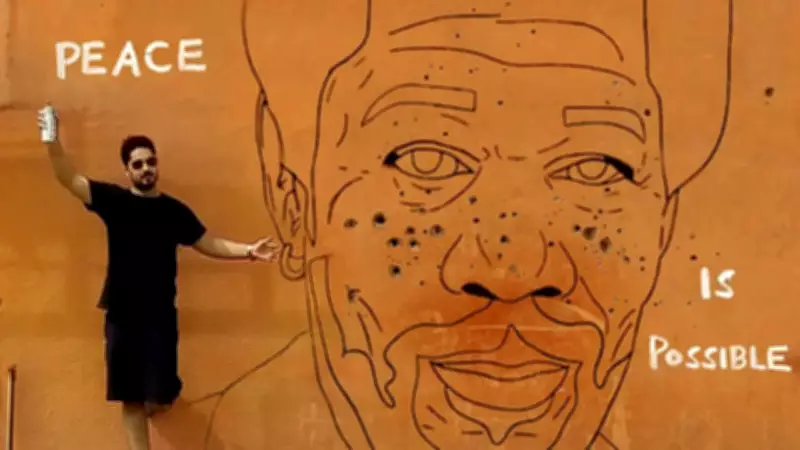
Mokhallad Habib, however, does not look away from these surfaces. He uses them as his canvas, adding meaning and life to bullet holes and broken structures. His art calls for hope and life, creating moving human images that evoke emotions: happiness for some, introspection for others. Often called the 'Banksy of Iraq', Habib creates art that is playful yet serious in meaning. A cluster of bullet holes on a white door becomes patterns on a butterfly's wings; those on a side wall become craters of the moon in a painted galaxy. A yellow door with bullet holes now features a bunch of bananas with the message 'Give Hope', while a broken car window shows a woman blowing on a dandelion. In another piece, holes transform into music notes with the message 'Make music not war'.
Art as a Tool for Change
Habib often showcases his creations on Instagram, where he has built a steady following of 3,000 followers, all drawn by his rare talent of turning destruction into decoration. He is also a pharmacist, has gifted drawings to Akira Endo, Ambassador of Japan to Iraq, and has met popular Saudi poet Ali Al-Nahwi. Rather than shying away from the reality of a country weathering war, he transforms sites of conflict into powerful visual stories, urging people to pause, reflect, and acknowledge the history being written.

If Iraq's Banksy has his way, these scars will remain as bold and proud evidence for people who have suffered through war, fought life and death, and yet emerged victorious and united. His work ensures that the trauma is not forgotten but transformed into a testament of resilience.