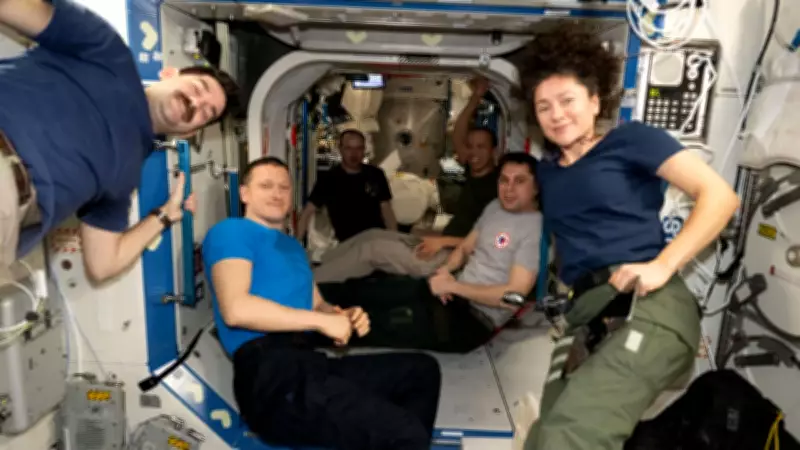
On 20 May 2026, biomedical research aboard the International Space Station (ISS) centered on cancer studies and blood-related experiments, while astronauts also prepared for upcoming spacewalks. As part of Expedition 74, the crew is leveraging microgravity conditions to understand how various diseases, particularly cancer and blood clots, develop in space. Additionally, astronauts and cosmonauts are maintaining station systems and gearing up for extravehicular activities (EVAs), as detailed in a recent NASA update.
Cancer Research and Blood Studies in Microgravity
A key focus for NASA researchers is the behavior of cancer cells and the blood system in zero gravity. According to NASA, astronauts have been conducting experiments to assess how cancer treatments affect biological samples in weightlessness. The crew is exploring how cancer and blood-clotting systems respond in space using onboard laboratory modules. These studies involve exposing samples to radiation and microgravity to examine their impact on cancer development.
A major advantage of space-based research is the ability to grow cells in a 3D environment, unlike the flat cultures used on Earth, which more closely mimics natural tumor behavior. NASA has also initiated blood research, examining clot formation under weightlessness to understand why astronauts' circulation and immune responses are altered. The ISS is described as a unique laboratory where biological processes can be studied without gravity, opening new avenues for medical innovation.

Spacewalk Preparations and Orbital Maintenance
Alongside scientific experiments, cosmonauts are training for spacewalks. NASA's blog indicates that astronauts are practicing both physically and mentally for an EVA scheduled within the month. Cosmonauts from Roscosmos are also involved. Spacewalks require extensive preparation on Earth, including underwater training to simulate weightlessness. During an EVA, astronauts work in a vacuum wearing heavy pressurized suits, which limit mobility and make each move critical. The purpose of these spacewalks is station maintenance, such as repairing external structures, installing new scientific equipment, and checking solar panels that provide power.
Linking Space Science and Medical Innovation
The combination of cancer, blood, and operational studies highlights the dual nature of modern spaceflight: science and operations. Agencies like the European Space Agency also conduct biology, medicine, and materials science experiments on the ISS. Results from these studies are expected to yield insights into disease development and treatments, potentially leading to better therapies for complex illnesses like cancer. Spacewalk preparation ensures crew members can maintain and upgrade station equipment. Thus, the ISS functions both as an engineering facility and a science laboratory, bridging space research and medical advancements.