Japanese Researchers Pioneer Affordable Smartphone Radiation Detection System
In a significant breakthrough for emergency response technology, scientists at Hiroshima University in Japan have developed an innovative, low-cost method to transform ordinary smartphones into effective tools for measuring radiation exposure. This groundbreaking system combines radiochromic film, a compact portable scanner, and smartphone camera technology to deliver immediate, on-the-spot radiation dose readings.
Addressing Critical Emergency Response Needs
The research team specifically designed this technology for emergency situations where speed is paramount and conventional laboratory equipment may be unavailable or inaccessible. According to their published findings, the complete setup costs less than US$70, making it substantially more affordable than traditional dosimetry tools that often require expensive specialized equipment.
This development tackles a persistent challenge in radiation response protocols: how to rapidly assess individual exposure levels following nuclear incidents or radiological emergencies. The urgency of such assessments cannot be overstated, as radiation exposure can cause severe health consequences if not treated promptly.

Medical Implications of Rapid Radiation Assessment
Medical interventions for radiation exposure, including cytokine therapy, potassium iodide administration, and Prussian blue treatment, demonstrate maximum effectiveness when administered soon after exposure occurs. Early washing of exposed skin can also significantly reduce the risk of delayed burns and other complications.
Despite this critical time sensitivity, many current radiation measurement methods depend on laboratory analysis or specialized instruments that are frequently unavailable during disaster scenarios. The Hiroshima University system directly addresses this accessibility gap through its portable, affordable design.
Technical Innovation: Radiochromic Film Integration
The core of this innovative system centers on radiochromic film known as Gafchromic EBT4. This specialized material undergoes immediate darkening when exposed to radiation, with the color change visible to the naked eye without requiring chemical processing.
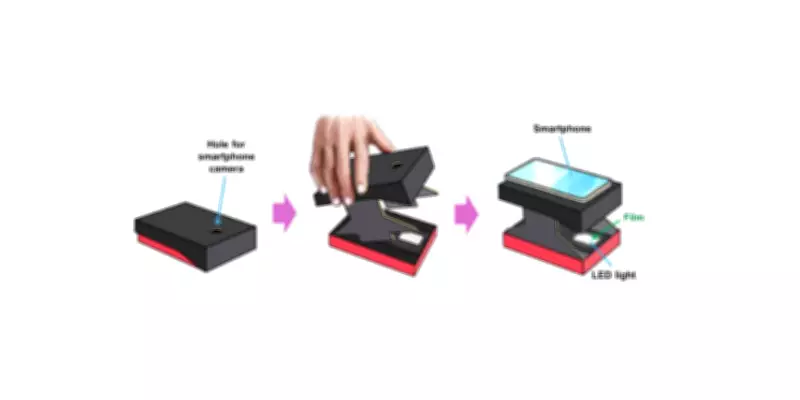
The operational process involves placing the film into a foldable, battery-powered scanner, then capturing the scanned image using a smartphone camera. Dedicated image-processing applications analyze the color variations to estimate radiation dose levels accurately.
Performance and Testing Results
Comprehensive testing has demonstrated the system's capability to reliably measure radiation doses up to 10 gray. To understand this measurement scale: one gray represents the absorption of one joule of radiation energy per kilogram of tissue. Medical data indicates that a whole-body dose of approximately 4 gray can prove fatal to half of exposed individuals within two months without treatment, while a 10 gray skin dose can lead to permanent hair loss and other serious effects.
These sobering statistics underscore the vital importance of rapid, individual radiation assessments in emergency scenarios. The research team evaluated their method using multiple smartphone models, including various Samsung and iPhone devices, finding that analysis of the cyan color channel provided the most stable and consistent results.
Practical Applications and Future Development
While acknowledging that desktop scanners still offer higher precision, the researchers have determined that their smartphone-based approach provides sufficient accuracy for emergency response applications where portability and accessibility outweigh absolute precision requirements.
Professor Hiroshi Yasuda, the study's corresponding author, emphasized that simplicity and cost-effectiveness were primary design objectives. The team specifically engineered a system that could remain functional after earthquakes or other disasters when power infrastructure might be compromised or destroyed.

Current research efforts are now focused on standardizing operational procedures and testing system performance under diverse environmental conditions to ensure reliability across various emergency scenarios. This development represents a significant step forward in making radiation safety technology more accessible and responsive to real-world emergency needs.