

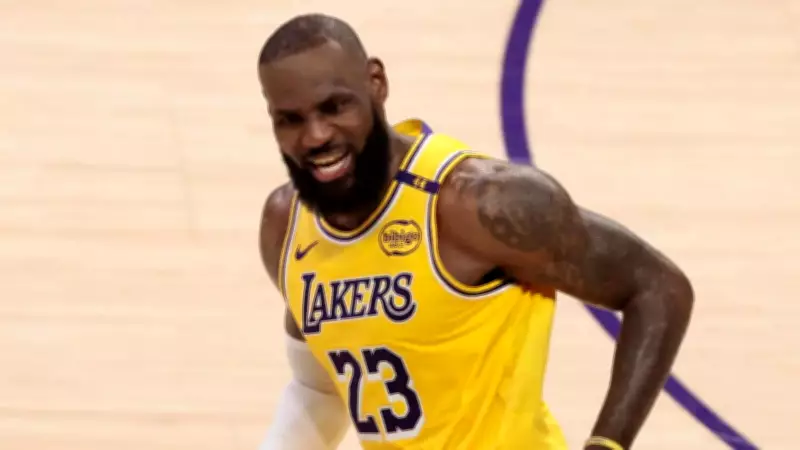
LeBron James Confronts AI Deepfake Crisis with Legal Action
In an era where artificial intelligence blurs the lines between reality and fiction, basketball icon LeBron James is drawing a firm legal boundary. The proliferation of AI-generated deepfake videos has reached alarming levels, with James becoming a frequent target of disturbing and defamatory content that challenges the very notion of "seeing is believing."
The Viral AI Video That Sparked Outrage
A particularly troubling AI-generated movie recently circulated online, depicting LeBron James violently punching fellow NBA stars including Stephen Curry, Michael Jordan, Luka Doncic, Russell Westbrook, Kevin Durant, and others. The video, which appeared remarkably realistic, concluded with an absurd AI-generated image of James twerking, accompanied by a caption describing it as "the most random and nonsensical video I've ever watched."
This wasn't an isolated incident. Previous AI videos had already shown James in equally disturbing scenarios, including one where he appeared pregnant. These posts garnered millions of views on social media platforms like X, demonstrating how easily such fabricated content can spread and mislead audiences.

Legal Battle Against AI Misuse
James and his legal team have taken decisive action against this technological exploitation. They sent cease-and-desist letters to FlickUp, the company behind Interlink AI, a Discord-hosted video-generation application that enables users to create hyper-realistic videos of celebrities without consent.
According to reports from 404 Media, the AI platform had become a virtual playground where NBA stars like Stephen Curry and Nikola Jokić were transformed into unwilling avatars in grotesque scenarios. One particularly disturbing video showed an AI-generated Sean "Diddy" Combs sexually assaulting a dummy version of Steph Curry in a prison setting, with an expressionless AI LeBron James watching in the background. This video alone accumulated over 6.2 million views on Instagram.
Platform Response and Industry Implications
FlickUp founder Jason Stacks confirmed receiving the legal notice from James' attorneys at Grubman Shire Meiselas & Sacks. In an Instagram Reel, Stacks acknowledged the unexpected attention, stating, "This is a letter from one of the biggest NBA players of all time. Two months ago, I launched the YouTube AI video. It was a fun idea to help creators make some more money. But then people started noticing... Like this guy, yeah, LeBron James. And he wasn't happy."
Stacks told 404 Media that his team acted swiftly, removing all realistic human models from Interlink AI's software within 30 minutes of receiving the cease-and-desist. He emphasized their commitment to ethical practices, saying, "Generative AI is the 'wild west' when it comes to copyright & IP, but we're committed to being on the right side of that change."
The platform has since updated its policies regarding likeness and public figure usage, though James has yet to publicly comment on the most recent AI video controversy.
Broader Concerns About AI and Authenticity
This case highlights significant challenges in the rapidly evolving landscape of artificial intelligence. The ease with which convincing deepfakes can be created and disseminated raises serious questions about digital authenticity, consent, and the potential for harm through defamation.
As AI technology becomes more accessible, the need for clear legal frameworks and ethical guidelines grows increasingly urgent. LeBron James' proactive legal stance represents a crucial step in protecting public figures from unauthorized and damaging digital impersonations, setting a precedent that may influence how similar cases are handled in the future.
The incident serves as a stark reminder that in the digital age, visual evidence alone can no longer be trusted implicitly, and that technological advancement must be balanced with responsible usage and legal accountability.

