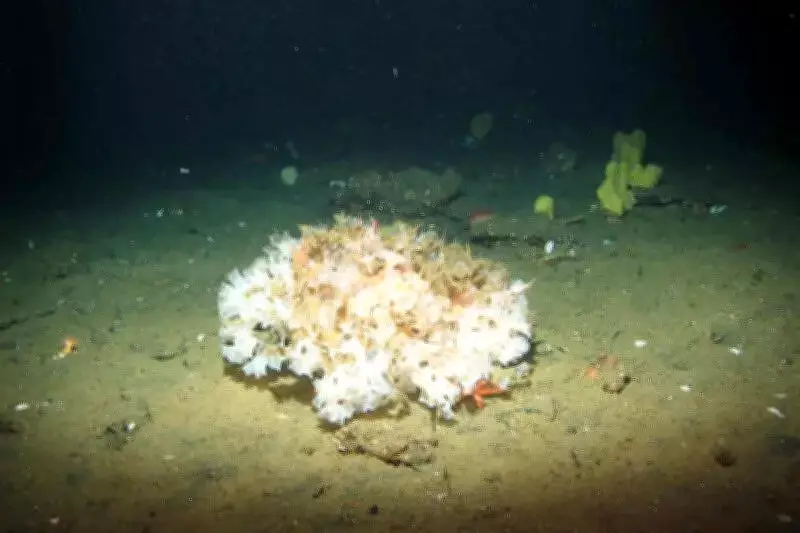
The deep sea is often considered the ultimate mystery, requiring vast distances to uncover new discoveries. Yet, sometimes, the unknown lies close to home, in places we think we know best. Such was the case off Southern California, one of the world's best-studied marine areas. During routine surveys between two well-known marine protected areas, a federal research team lowered a camera into a deep underwater valley. Expecting a muddy, barren seafloor, they instead found an enormous complex of unusual sponge mounds.
Beneath Our Day-to-Day Routines
The discovery of these sponge mounds surprised everyone because of human assumptions. They were located between two well-known undersea sites: Footprint Ridge and Piggy Bank. Despite years of analysis of these neighboring areas, no one imagined anything important lay in between. The breakthrough came when the team deployed a remotely operated vehicle into deeper waters at around 600 meters, beyond the usual exploration depth. The vehicle's lights revealed an alien landscape of giant sponge mounds, resembling a movie set. The ocean was not hiding these features; we simply were not looking at the right depths. These "rainforests of the deep," vital for marine life, are largely composed of dead sponges, whose skeletons form a base for new growth. This highlights unexplored ecosystems close to shore.
The Silent Graveyards, Building a Future
After the discovery, scientists faced bizarre environmental paradoxes. The sponge mounds are significant ecological structures, serving as shelters and nurseries for hundreds of marine species like fish and crabs. However, when the robotic camera examined the new patch, a massive portion of the sponges appeared dead, leaving ghostly white skeletons. This phenomenon became a key research topic. Rather than signifying catastrophe, the layers of skeletons are the secret to the mound's success. Deposited over time by extinct sponges, they act as sediment catchers and provide a foundation for further growth.

This discovery off California underscores a lesson in modern exploration: declaring an area mapped does not mean all its secrets are understood. A unique, valuable ecosystem can exist unexplored even near the most active coastline, proving much remains to be discovered on Earth.