AI Reshapes Media Operations Beyond Newsrooms
Artificial intelligence is actively transforming media enterprises today. It is no longer a distant promise. Organizations are using AI to operate differently, make smarter decisions, and serve their audiences better. For media leaders, the key question has shifted. They are not asking if they should adopt AI. Instead, they are figuring out how to embed it meaningfully across all business areas.
These areas include human resources, sales, marketing, finance, legal, and product development. The challenge is to do this without losing trust, talent, or human judgment. This critical discussion took center stage at a recent exclusive workshop.
Executives Gather to Reimagine AI Readiness
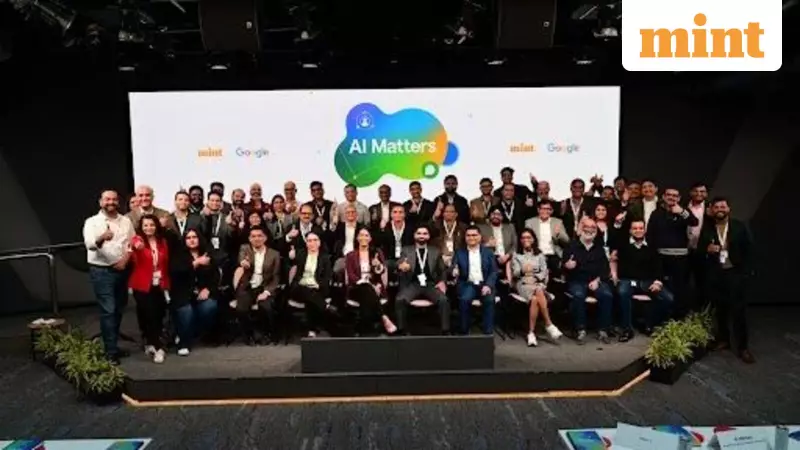
The event was called AI Matters: Transformation Dialogues in the News & Media Industry. Mint hosted this invite-only CXO workshop in association with Google. It happened on December 16, 2025, at the Google office in Gurgaon. Senior leaders from technology, data, finance, HR, marketing, and product functions came together. They shared a common goal.

Their objective was to move beyond small, isolated AI pilots. They wanted to rethink what true AI readiness means for an entire organization. The conversations did not treat AI as just a productivity booster or a simple tool upgrade. Instead, participants positioned AI as a foundational enabler for enterprise-wide transformation.
They believe AI can unlock new ways of working. It can improve decision-making processes. It can strengthen monetization strategies and enhance trust with audiences. However, this only happens when business functions actively embrace AI. They must integrate it into their people, processes, and company culture.
Cutting Through Information Overload with AI
Durga Raghunath opened the day's discussions. She is the Head of News Partnerships for India and AI Lead for APAC at Google. She spoke about a challenge that affects all organizations, not just newsrooms. That challenge is information overload.
Data volumes are exploding everywhere. Compliance demands are increasing steadily. Teams face pressure to move faster with fewer resources. "We are drowning in signals," Raghunath noted. She added that the real problem today is not access to data. The true challenge is extracting relevance, context, and insight from that data across different functions.
Raghunath highlighted the next phase of AI adoption. It will be driven by agentic AI systems. These are tools that can plan, reason, and execute complex tasks. They go beyond simply responding to user prompts. She described how enterprise-grade AI systems like Gemini can help. When combined with grounded knowledge tools like NotebookLM, they connect external intelligence with internal data.
This enables smarter workflows across marketing, sales, HR, and operations. It does so without sacrificing accuracy, accountability, or institutional memory.
The Digital Value Paradox in Media
Neeraj Sharma set the broader strategic context. He is the Managing Director and APAC Media & Entertainment Lead at Accenture. He addressed a familiar paradox for media leaders. Digital scale does not automatically create digital value.
Sharma described this phenomenon vividly. He called it "analogue rupees being traded for digital paise." Reach expands, but monetization weakens. He introduced Accenture's Four-I Framework. It consists of Information, Insights, Interaction, and Intent. Sharma argued that sustainable value creation begins when organizations move beyond volume-centric metrics.
They must start aligning data, technology, and teams to serve high-intent audiences. The goal is to achieve specific business outcomes. Data shared during the session revealed a recurring pattern across industries. Experimentation with generative AI is now widespread. However, only a small fraction of enterprises have successfully scaled AI into full production.
Sharma noted the root cause is not the technology itself. It is organizational readiness. Problems include fragmented data foundations, unclear ownership, and misaligned operating models. These issues drive up costs and delay the time to realize value.

Leadership Debate on Trust and Transformation
These realities were explored further during a leadership debate. Leslie D'Monte moderated the session. He is the author of AI Rising and a Mint Tech Talk columnist. The panel featured Yudhvir Mor, Chief Product and Technology Officer at Bennett Coleman. Nagaraj Nagabushanam also joined. He is Vice President of Data and Analytics & Designated AI Officer at The Hindu. Arnav Mathur participated as well. He is the Chief Digital Growth Officer at Zee Media.
The discussion deliberately moved beyond editorial use cases. It examined how AI is being adopted across entire organizations. Applications span from marketing analytics and revenue forecasting to operational reporting, compliance, and talent management. Panelists acknowledged that AI is already delivering efficiency gains. It automates repetitive tasks effectively.
However, they cautioned that scale without proper structure can introduce new risks. The panel agreed that trust must be engineered into systems from the very beginning. This requires strong governance, clear accountability, and consistent human oversight. Without clear ownership, measurable outcomes, and cross-functional alignment, AI initiatives risk becoming costly experiments. They may fail to drive real transformation.
Talent and culture emerged as equally critical factors. As AI reshapes workflows across departments, leaders emphasized the need to redesign roles. They must invest in reskilling programs and manage change proactively. True transformation depends as much on people and mindset as it does on models and technical infrastructure.
Scaling AI Across the Enterprise
In the final speaker session, Kapil Malhotra addressed scaling challenges. He is the Head of Customer Engineering at Google Cloud. He discussed what it takes to scale AI across enterprises without fragmenting workflows or increasing complexity.
Malhotra argued that as foundation models become commoditized, differentiation will depend on operationalization. Organizations must leverage proprietary data, contextual intelligence, and strong governance. He highlighted enterprise platforms like Gemini for Enterprise. These are built with security, privacy, and compliance at their core.
Such platforms can serve as a foundation for creating, deploying, and governing AI-powered workflows. These workflows span functions from newsroom operations and marketing to HR, finance, and legal. Malhotra stressed the importance of unified platforms. Instead of adopting disconnected tools, organizations need systems that allow them to build AI agents once. They can then deploy these agents consistently across teams. This enables scale, speed, and trust simultaneously.
From Discussion to Practical Action
The workshop concluded with Collaborative Roundtable Dialogues. Many participants described this format as a first-of-its-kind experience. For the first time, leaders from competing media organizations and diverse functions sat together. They openly discussed, debated, and co-created AI use cases in a highly collaborative setting.
They worked across six key themes. These were AI in workforce productivity, audience experience, revenue growth, trust, talent, and governance. The discussions were marked by candor, energy, and a shared sense of urgency. They moved beyond theory to offer hands-on exercises and practical application.
Using the R.I.C.E. framework, which stands for Reach, Impact, Criticality, and Effort, CXOs identified near-term AI initiatives. These could be implemented within 60 to 90 days. They also considered longer-term transformation bets. Use cases ranged widely. They included building single sources of truth and intent-driven audience journeys. Others focused on automating recruitment workflows, strengthening compliance, and enabling smarter sales and marketing operations.
The day ended with a live demonstration. NotebookLM synthesized inputs from across the speaker sessions and roundtables. This offered a tangible glimpse into how grounded AI systems can support real-time collaboration and decision-making at an enterprise level.
A Defining Moment for Media Leadership
The conversations at AI Matters reflected a shared understanding. AI adoption in media can no longer be confined to newsrooms or technology teams alone. Its impact will be defined by deployment effectiveness across all business functions.
Organizations must align leadership, people, processes, and platforms around a common transformation agenda. True AI readiness depends on leadership alignment. It requires disciplined execution and a clear commitment to trust and talent across the entire enterprise.
In this sense, AI is not replacing human judgment. Instead, it is shaping how effectively organizations can apply that judgment at scale. It works across functions in the service of long-term value creation.
Note to the Reader: This article has been produced on behalf of the brand by HT Brand Studio and does not have journalistic/editorial involvement of Mint.