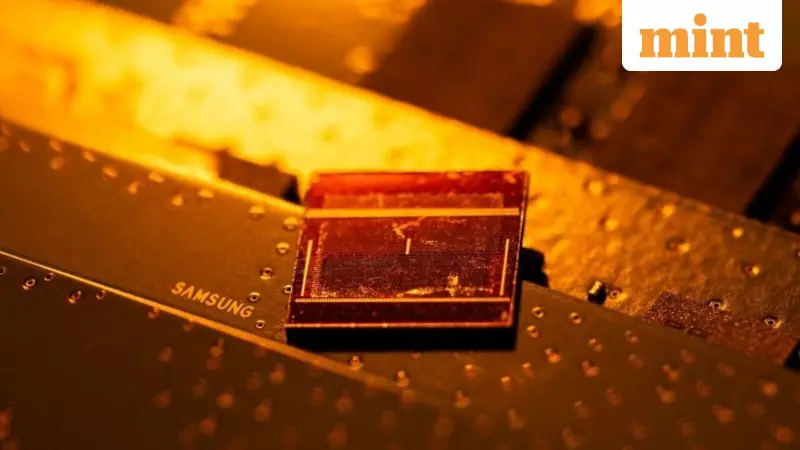
Memory Chip Shortage Drives Up Electronics Prices, Threatens AI Expansion
The global memory chip shortage is hitting consumers and businesses hard. Prices for these essential components have skyrocketed. Experts predict more increases ahead. This situation stems from the explosive growth of artificial intelligence.
AI Demand Fuels Price Surge
AI companies need vast amounts of memory chips. Their demand is pushing prices higher. Memory chip prices jumped 50% in late 2025. Analysts expect another 40-50% rise by early 2026. Three firms dominate this market: SK Hynix, Samsung, and Micron. They control over 90% of production.
Avril Wu from TrendForce says this is unprecedented. She has tracked the sector for two decades. "This time really is different," Wu notes. "It really is the craziest time ever."

Widespread Impact on Industries
The chip shortage affects many sectors. Consumers will pay more for laptops, TVs, and smartphones. Automakers might face delays in vehicle production. Data center projects could be postponed. Smaller electronics makers have thin margins. They may have to raise prices, reducing demand.
IDC revised its forecasts for smartphones and PCs. Higher prices could cut smartphone sales by 5% in 2026. PC sales might drop nearly 9%. Makers of car electronics and telecom gear struggle too. They need older memory types that are becoming scarce.
Manufacturers Scramble to Respond
Memory chip makers are expanding capacity. Samsung fast-tracked a factory completion in 2025. It is boosting output at existing plants. SK Hynix sold out its entire 2026 inventory. It plans big investments in new manufacturing. Micron broke ground on a $100 billion "megafab" in New York.
However, new capacity will take time. Most additions will not come online until 2027. Supply will not improve meaningfully until 2028. For now, factories run at full tilt with older equipment.
High-Bandwidth Memory in Focus
AI servers require specialized high-bandwidth memory (HBM). Producing HBM reduces output of conventional memory. Micron's Sumit Sadana explains the trade-off. "Every time we manufacture one extra bit of HBM, we lose three bits of supply of conventional DRAM," he says.
Data centers will consume over 70% of high-end memory chips in 2026. They would take more if available. This shifts capacity away from consumer devices. Memory chips could rise from under 10% to 30% of gadget costs.
Creative Solutions Emerge
Some firms consider buying memory from Chinese maker CXMT. Others seek used chips. Companies like Caramon reclaim memory from old servers. Its sales nearly doubled in months, reaching $900,000 monthly.
MS Hwang of Counterpoint Research advises urgent action. "You gotta buy a plane ticket and get that allocation from manufacturers right now," he says. Manufacturers are selling capacity for 2026 through 2028.
Long-Term Outlook Uncertain
Analysts see no quick relief. Memory prices may not stabilize for a year or two. AI's hunger for chips continues to grow. Elon Musk's xAI plans a $20 billion data center in Mississippi. Tech giants prepurchase memory to secure supply. New AI projects might start with less memory and upgrade later.
Hwang warns of rising costs. "There is no limit," he says on how much others will pay. The memory chip shortage reshapes the semiconductor landscape. It highlights the growing dominance of AI in global tech.