Microsoft AI CEO Clarifies Stance on White-Collar Automation
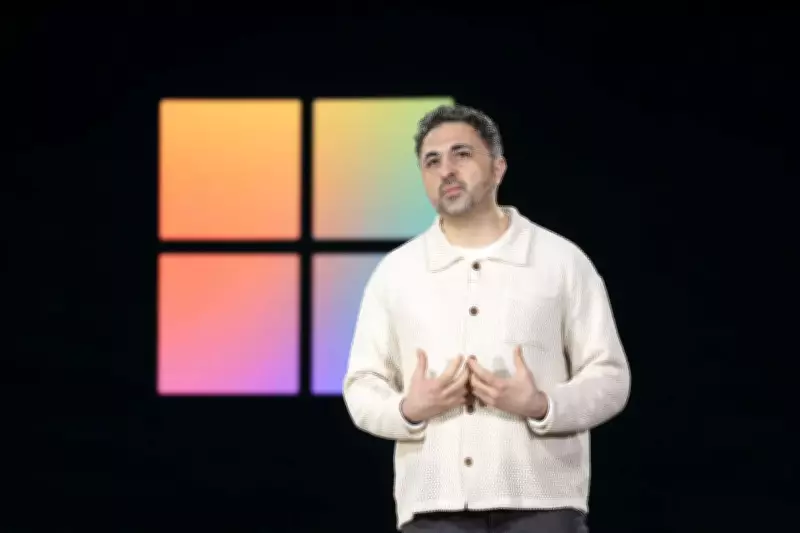
Mustafa Suleyman, CEO of Microsoft AI, is urging everyone to revisit his February prediction with a highlighter in hand. In a recent interview, he clarified that his earlier statement about AI automating white-collar work referred to tasks, not entire jobs. Speaking on The Verge's Decoder podcast, Suleyman stressed that AI will enhance productivity for professionals like lawyers, accountants, and project managers, rather than render them obsolete.
"Sending an email, having a conversation with a colleague, putting together a PowerPoint—sub-tasks will increasingly become digitized, automated," Suleyman explained. "That does not necessarily mean that the role goes away at all. It just means that the work can be done faster and more efficiently." When pressed on his original quote, he insisted, "I said 'tasks' in the quote that you've just said. So that does not mean jobs. It's a very important distinction." He elaborated that jobs and roles are broader categories, while tasks are the components within them.
Original Context of the Prediction
The original statement appeared in a February 12 Financial Times report on Microsoft's pursuit of AI self-sufficiency, where Suleyman outlined plans to build frontier models in-house and reduce reliance on OpenAI. The quote that garnered widespread attention was: "White-collar work, where you're sitting down at a computer, either being a lawyer or an accountant or a project manager or a marketing person—most of those tasks will be fully automated by an AI within the next 12 to 18 months." The interview primarily focused on Microsoft's $140 billion capital expenditure forecast and gigawatt-scale compute ambitions, but the automation prediction became the headline, drawing ridicule from FT readers and skepticism toward Microsoft's AI assistant, Copilot.

Suleyman's defense holds textual merit, as the word "tasks" does appear in the original quote. However, phrases like "white-collar work" and "fully automated" dominated subsequent headlines, and it took four months for Microsoft's AI chief to clarify the interpretation.
Tech CEOs Walk Back AI Job Loss Predictions
Suleyman is not alone in this retreat. OpenAI CEO Sam Altman admitted in May he was "pretty wrong" about AI eliminating entry-level white-collar jobs, noting that the predicted displacement has not materialized. Anthropic's Dario Amodei, who once warned AI could wipe out 50% of white-collar jobs, now frames automation as a productivity multiplier, suggesting the remaining 10% of a job expands to become the entirety of what people do. The timing of these clarifications coincides with reports of OpenAI and Anthropic preparing IPOs this year at valuations near $1 trillion, lending a commercial subtext to the softened rhetoric.
Google DeepMind CEO Demis Hassabis called AI-driven layoffs "a lack of imagination," stating that engineers becoming three to four times more productive should lead to more output, not fewer jobs. Nvidia's Jensen Huang branded the AI layoff narrative "lazy," accusing executives of invoking AI "to sound smart." Meanwhile, tech layoffs exceeded 115,000 through May 2026, nearing 2025's total of 124,000, with companies like Meta, Amazon, and Snap citing AI. Yet Yale Budget Lab research found no significant shift in occupational mix or unemployment duration for high-AI-exposure jobs since ChatGPT's launch in late 2022.
Suleyman's clarification leaves an awkward timeline: the 18-month countdown from February expires around August 2027, by which time white-collar workers will determine whether the tasks-versus-jobs distinction truly matters.
About the Author: TOI Tech Desk – A dedicated team of journalists delivering the latest technology news, including gadget launches, reviews, trends, and in-depth analysis on AI, cybersecurity, and digital platforms.