Microsoft Overhauls Copilot Structure, Admits Organizational Split Wasn't Working
In a significant strategic shift, Microsoft is fundamentally restructuring how it operates its Copilot artificial intelligence platform. The technology giant is finally acknowledging what internal employees have recognized for some time: the separation between consumer and commercial AI teams has proven ineffective and counterproductive.
Leadership Reshuffle and Organizational Consolidation
On Tuesday, CEO Satya Nadella announced that the two distinct Copilot organizations will merge under unified leadership. This consolidation represents a direct response to persistent problems that have plagued Microsoft's AI offerings. Jacob Andreou, a former Snap executive who joined Microsoft AI as corporate vice president of product and growth, will now serve as executive vice president of Copilot, reporting directly to Nadella.
Andreou will assume comprehensive ownership of design, product development, growth strategies, and engineering across both consumer and commercial Copilot experiences. He will be supported by Ryan Roslansky, Perry Clarke, and Charles Lamanna—who recently assumed responsibilities from retiring executive Rajesh Jha—in leading Microsoft 365 applications and the broader Copilot platform infrastructure.

The Persistent Problem of Fragmented Identity
The reorganization addresses a critical issue that Microsoft has been slow to publicly acknowledge. Consumer and commercial versions of Copilot have exhibited substantial differences in appearance, behavior, and feature availability, creating confusion among users. Internal surveys reportedly revealed significant customer bewilderment regarding the multiple versions and their varying capabilities.
The performance metrics have been equally concerning. As of February, Copilot recorded just 6 million daily active users—a stark contrast to ChatGPT's 440 million and Google Gemini's 82 million. This substantial usage gap has compelled Microsoft to implement this consolidation as a strategic response to competitive pressures and market realities.
Suleyman's Strategic Shift to 'Superintelligence' Mission
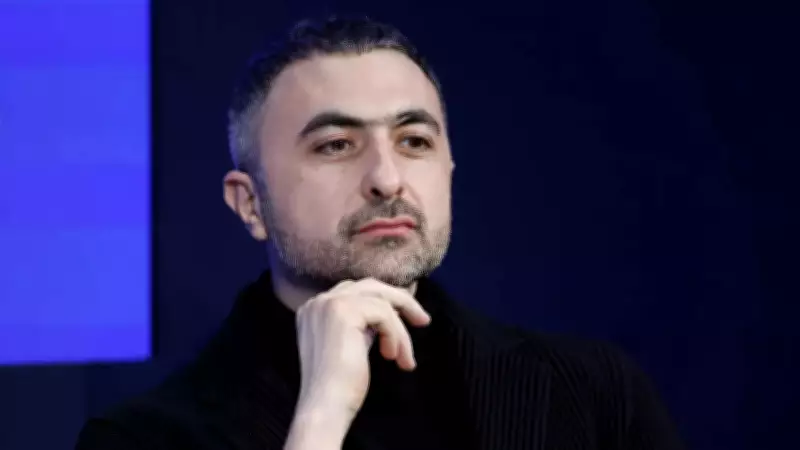
Concurrently, Microsoft AI chief Mustafa Suleyman is stepping back from day-to-day product responsibilities to pursue what he describes as Microsoft's "Superintelligence" mission. Suleyman frames this transition as a promotion rather than a retreat, emphasizing that frontier model development has always represented his primary focus and professional passion.
In communications to employees, Suleyman committed to dedicating the next five years to building enterprise-grade AI model lineages for Microsoft. This initiative prioritizes cost efficiency, benchmark performance optimization, and reducing the company's substantial dependence on OpenAI technologies. The proprietary model development effort has progressed slower than anticipated, with Microsoft's models consistently lagging in benchmark evaluations against competing offerings.
Reducing OpenAI Dependency Through Proprietary Development
Microsoft originally hired Suleyman in 2024 to lead consumer Copilot initiatives and develop AI models capable of competing with those from OpenAI and other leading research laboratories. The leadership reshuffle represents a strategic course correction aimed at accelerating proprietary model development and reducing external dependencies.
Despite the organizational changes, Andreou and Suleyman will maintain professional connections. Suleyman confirmed that Andreou retains a dotted-line reporting relationship to him, and he will continue involvement in Microsoft AI's daily operations through participation in meetings, leadership teams, and product strategy discussions.
Suleyman's Vision for Unified AI Strategy
In his internal memorandum to Microsoft employees, Suleyman articulated a clear vision: "Technology and the future of our industry will be defined by two things: frontier models, and the products through which they are experienced." He emphasized that creating Superintelligence capable of delivering transformative, positive impact for millions represents his overriding mission at Microsoft.

Suleyman further explained: "With our ambitious, long-term frontier scale compute roadmap locked, we now have everything we need to build truly state-of-the-art models. The next phase involves restructuring our organization to enable me to focus all my energy on our Superintelligence efforts and deliver world-class models for Microsoft over the next five years."
The newly established Copilot Leadership Team—comprising Suleyman, Andreou, Charles Lamanna, Perry Clarke, and Ryan Roslansky—will coordinate brand strategy, product roadmaps, model development, and core infrastructure to deliver cohesive experiences for all users, whether in consumer or commercial contexts.
This comprehensive reorganization signals Microsoft's recognition that fragmented AI strategies cannot compete effectively in an increasingly consolidated artificial intelligence marketplace dominated by unified platforms and seamless user experiences.