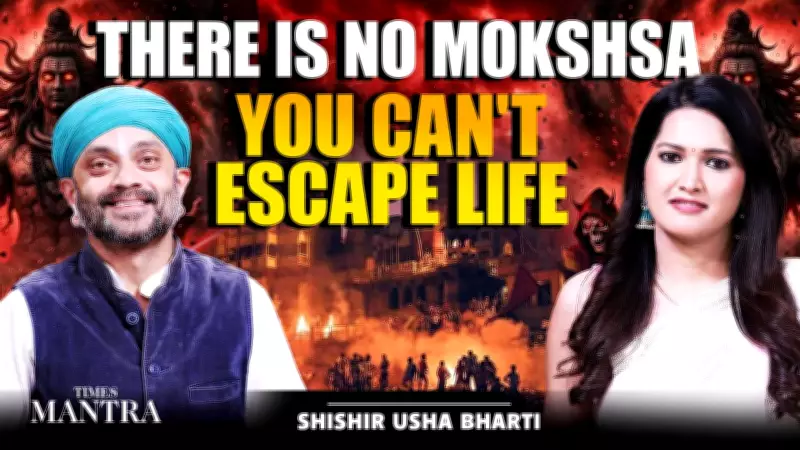
What if moksha is not simply about escaping life? In a thought-provoking discussion, Shishir Usha Bharti presents a different perspective on liberation, existence, and the human experience. The conversation delves into why people seek escape from suffering, responsibilities, or reality itself, and questions whether moksha is misunderstood in modern times.
Redefining Moksha
Shishir Usha Bharti suggests that moksha, often interpreted as liberation from the cycle of birth and death, may actually be an illusion if viewed solely as an escape. Instead, he proposes that true liberation lies in embracing life fully, rather than running away from it. This perspective challenges traditional spiritual teachings and invites a deeper examination of what freedom truly means.
The Human Tendency to Escape
Many individuals seek moksha as a way to avoid pain, responsibilities, or the complexities of existence. However, Bharti argues that this desire for escape is rooted in a misunderstanding of the self and reality. By confronting suffering and engaging with life, one may find a more authentic path to inner peace.

Modern Misinterpretations
In contemporary times, moksha is often equated with achieving a state of bliss or detachment. Yet, Bharti emphasizes that this oversimplification ignores the richness of human experience. He calls for a reevaluation of spiritual goals, urging people to focus on self-awareness and conscious living rather than seeking an ultimate escape.
Key Philosophical Insights
- Liberation through Engagement: True freedom comes from fully participating in life, not withdrawing from it.
- Embracing Suffering: Pain and challenges are integral to growth; avoiding them hinders spiritual evolution.
- Beyond Dualities: Moksha transcends the binary of pleasure and pain, requiring a holistic understanding of existence.
This discussion offers a fresh lens for those exploring spirituality and philosophy. Watch the full conversation to understand this perspective more clearly and reflect on your own beliefs about life and liberation.