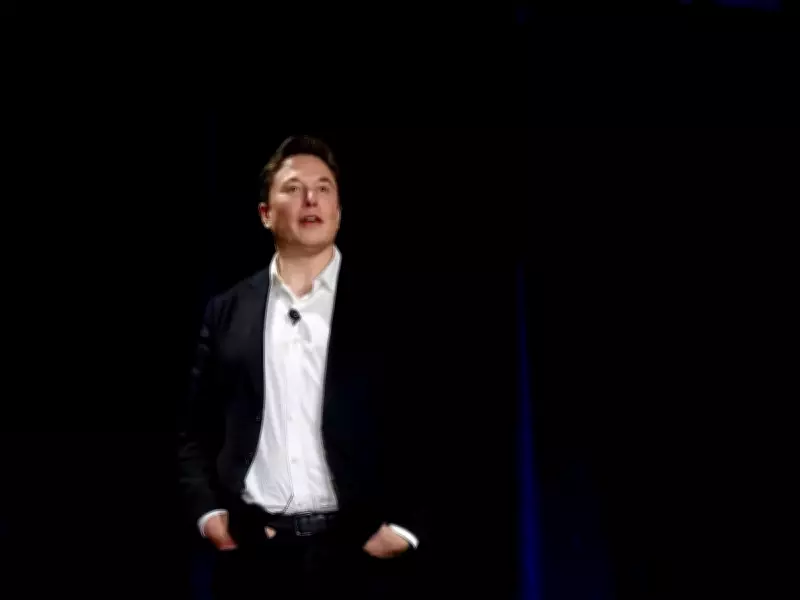
SpaceX CEO Elon Musk has suggested that reaching quadrillionaire status is "not impossible," but he emphasized that such wealth would require factories on the Moon and Mars, with a future economy measured in mass and energy rather than in dollars. Responding to a post on social media platform X (formerly Twitter) noting he would need nearly $999 trillion more to become a quadrillionaire, Musk wrote: "Not impossible, but definitely requires factories on the Moon and Mars to achieve. By then, I don't think dollars will be used as currency. Just mass and energy." This remark echoes language Musk used earlier this year when details of his milestone-driven SpaceX IPO equity package drew attention. At that time, he said such valuations would only make sense if humanity advanced toward a Kardashev II civilization, capable of harnessing stellar-scale energy.
SpaceX IPO Milestone
Musk's latest comment follows a historic weekend for SpaceX. The company recently went public on Nasdaq under ticker SPCX, raising around $75 billion in the largest IPO on record. Shares surged by 19% on debut, valuing SpaceX at more than $2.1 trillion and making it the sixth-most valuable US company. The public listing pushed Musk's fortune to about $1.1 trillion, according to Forbes, making him the world's first trillionaire.
Moon City and Mars Vision
On Sunday, June 14, Musk forecast that SpaceX could reach $1 trillion in revenue by 2030, citing future infrastructure such as "Moon City," lunar factories, and off-Earth AI manufacturing hubs. While Musk has long prioritized Mars settlement, his recent comments expand the vision to include lunar industry as a stepping stone toward interplanetary economies.

How SpaceX Achieved the Biggest IPO Ever
SpaceX's transformation over the past six months has been striking. The company, which built its identity around rocket launches and Starlink satellite internet, has repositioned itself as an AI infrastructure giant. Its valuation was around $800 billion in an insider share sale as recently as December. It rose to $1 trillion following SpaceX's acquisition of Musk's xAI in February, and has now vaulted to $1.77 trillion at the IPO price—more than double its valuation from July last year. Much of that shift has been driven by major computing infrastructure deals. SpaceX has signed agreements to provide AI compute capacity to Anthropic and Google for a combined $2.17 billion per month. Musk's broader pitch places SpaceX at the center of an ambitious vision: data centers in space, robot factories on the moon, and a permanent human colony on Mars.
Elon Musk: World's First-Ever Trillionaire
SpaceX shares began trading, sending the company's valuation past $2 trillion and cementing its place in history. Following the public listing, the skyrocketing stock value officially made company founder and CEO Elon Musk the world's very first trillionaire. After the successful IPO, Musk emphasized that the public listing is merely a stepping stone toward a much grander, sci-fi-inspired vision for humanity. Speaking to a crowd of supporters and investors, Musk drew a sharp line between his company's philosophy and that of traditional aerospace contractors. He said older aerospace firms and his competitors built reliable rockets but lacked the ambition required to push humanity forward. "While the other aerospace companies built good rockets and everything, they were simply not pursuing the technology that's necessary to make life multi-planetary. To make Star Trek, to make the exciting science fiction futures that we've read about," Musk said.