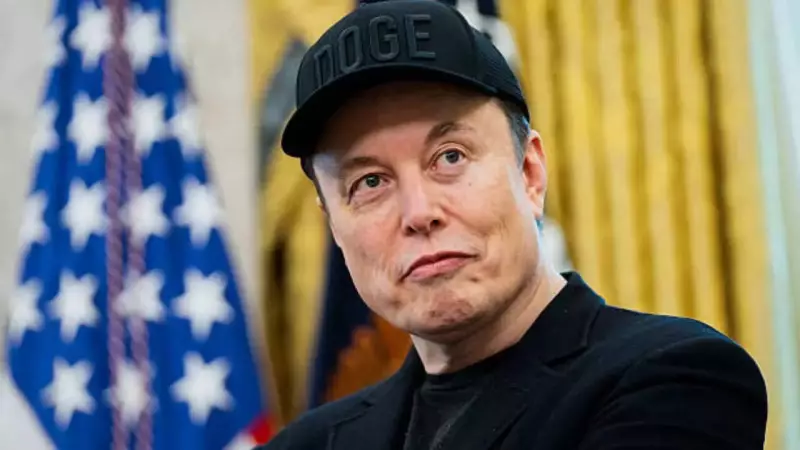
Elon Musk, the world's wealthiest individual with a net worth exceeding $700 billion, has made a bold prediction. He suggests that the conventional practice of saving for retirement might become completely outdated within the next twenty years. Musk shared this perspective during a recent appearance on the Moonshots with Peter Diamandis podcast.
The Core Argument: Productivity and Abundance
Musk's reasoning centers on a fundamental shift in productivity. He believes rapid advancements in artificial intelligence, robotics, and energy technology are poised to transform the global economy. These technologies could soon enable machines to perform most tasks—both physical and cognitive—more efficiently and cost-effectively than humans.
"My advice is not to worry too much about setting aside money for retirement over the next ten or twenty years. It simply won't be relevant," Musk stated during the conversation. He explained that if production costs for goods and services plummet due to automation, the basic fear of not affording necessities in old age would disappear. Traditional retirement savings exist because people anticipate scarcity later in life. Musk is betting on a future where scarcity is no longer the default condition.

AI and Robotics as Economic Engines
Musk identifies artificial intelligence and robotics as the primary drivers of this economic transformation. AI systems are already capable of writing code, diagnosing medical conditions, and managing complex logistics. Meanwhile, robots are becoming increasingly sophisticated, operating not just in controlled factory settings but also in more dynamic environments.
According to Musk, once these systems achieve proper scale, productivity across all industries could skyrocket. Machines do not experience fatigue, demand salary increases, or require retirement. He also emphasizes the role of cheap, clean energy in supercharging automation. With abundant energy and advanced machines, production limits could virtually vanish. In such a scenario, the traditional logic of saving and investing for decades ahead may start to seem obsolete.
Universal High Income: A New Paradigm
Instead of relying on wages and retirement funds, Musk proposes a concept he terms "universal high income." This idea resembles universal basic income but is envisioned as more generous in scope. The premise is straightforward: if machines generate the majority of economic value, society will need innovative mechanisms to distribute that wealth.
People would still have access to essential needs like housing, food, healthcare, and education, regardless of their employment status. Musk argues that once machines surpass human capabilities in nearly every domain, income becomes less about labor and more about access. Determining who receives what and why would shift from a market outcome to a deliberate policy choice.
Musk acknowledges this vision remains theoretical for now. However, he presents it as a probable outcome if current automation trends continue unchecked.
Near-Term Changes in Healthcare and Education
Musk offered specific timelines for certain sectors, revealing his concrete optimism. He claimed healthcare could undergo dramatic improvements within the next five years. AI-driven diagnostics, robotic surgical systems, and automated treatment protocols could make high-quality medical care widely accessible and affordable.
Similarly, education is ripe for disruption. AI-powered tutors could personalize learning for each student, making education cheaper, faster, and available from anywhere. In this future, education would cease to be a lifelong financial burden. Since healthcare and education represent two of the largest expenses people plan for over a lifetime, a significant reduction in these costs would directly diminish the need for extensive long-term savings.
The Psychological Challenge of a Work-Free Future
Musk did not portray this future as entirely utopian. In fact, he expressed unease at times during the discussion. He noted that work provides people with structure, purpose, and meaning. If machines handle all productive tasks, humans might struggle to find their place and sense of fulfillment.

"If you truly have access to everything you want, is that the kind of future you desire?" Musk questioned. This aspect of his prediction feels less technical and more profoundly human. Even if financial constraints disappear, the search for meaning does not automatically resolve itself. Musk admitted that society could find this transition challenging and potentially painful.
A Bumpy Transition Ahead
Musk described the path toward this new economic reality as "bumpy," which might be an understatement. Automation could disrupt jobs, industries, and government systems long before any universal income framework is established. In the short term, economic uncertainty might actually increase. People may still require savings, safety nets, and contingency plans while social and economic structures adapt to technological changes.
While Musk's vision is speculative, it reflects a broader debate already taking place. Artificial intelligence and automation are undeniably altering how people work and conceptualize the future. Whether retirement savings become entirely irrelevant or not, the foundational assumptions behind them are being seriously challenged.
For now, Musk's comments serve less as practical financial advice and more as a window into how influential tech leaders envision the coming decades. They imagine a world where the concepts of work, money, and retirement may hold entirely different meanings than they do today.