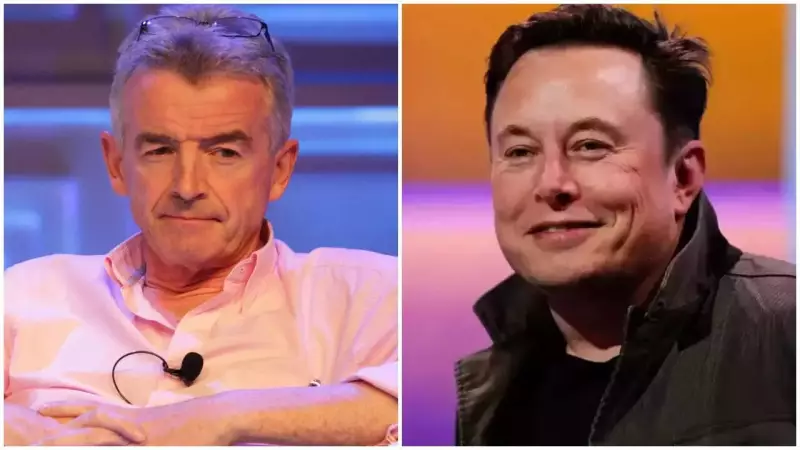
What started as a simple comment about Wi-Fi quickly exploded into a full-blown online battle. The world's richest man, Elon Musk, and Ryanair's outspoken CEO, Michael O'Leary, engaged in a public spat that captured global attention. Their exchange turned into a meme-filled spectacle on social media platform X, formerly known as Twitter.
How the Feud Began
It all began when X experienced a widespread outage on Friday, January 16. Users across the United States and India reported problems posting content and checking their feeds. Downdetector, a service that tracks online disruptions, recorded sharp spikes in complaints during this period.
Ryanair saw an opportunity and posted a cheeky message during the outage. The airline's official account wrote, "Perhaps you need Wi-Fi, @elonmusk?" This simple question ignited the firestorm.

Musk Fires Back With Takeover Threat
Elon Musk responded with a provocative question of his own. The billionaire asked, "Should I buy Ryanair and put someone whose actual name is Ryan in charge?" This reply immediately went viral, sparking countless memes and jokes across the platform.
Users quickly joined the conversation with creative suggestions. One person tagged Musk's AI chatbot, Grok, asking about Ryanair's market capitalization and the potential cost of a hostile takeover. Another user humorously inquired which five people named Ryan would be most suitable for the CEO position if Musk actually purchased the airline.
The Meme Machine Takes Over
People named Ryan began participating in the online frenzy. One individual identifying as Ryan wrote, "Make me CEO and I'll give all Ryan's a discount." Another user offered to change his name, saying, "Buy it, put me in charge, my name is Bryan, and we'll paint B's in front of the Ryan. And I'll use Grok to fix everything over there and live tweet all of it on X."
Some users even offered cautionary advice. One person warned Musk, "Be careful when you buy them. They'll offer you a low price that will seem too good to be true, and later down the line they'll charge you for all kinds of extras." This comment cleverly referenced Ryanair's business model of offering low base fares with additional fees for extras.
Deeper Roots of the Conflict
The social media exchange followed earlier critical remarks from Michael O'Leary about Musk's technology. The Ryanair CEO had previously ruled out installing SpaceX's Starlink internet service on the airline's aircraft. O'Leary explained to Reuters that adding the necessary antenna would create a 2% fuel penalty due to increased weight and drag.
He further stated, "We don't think our passengers are willing to pay for Wi-Fi for an average 1-hour flight." In a separate radio appearance, O'Leary referred to Musk as an "idiot," adding that while the Tesla owner is "very wealthy, he's still an idiot."
Name-Calling Escalates
Musk did not take these comments lightly. He fired back by labeling O'Leary an "utter idiot" and suggested the Ryanair CEO should be fired from his position. According to reports from the Irish Times, the name-calling continued as both men traded further remarks, though the exact details of their continued exchange remain unclear.
The Wealth Gap Between the Two Men
The financial disparity between these two business leaders is staggering. Elon Musk currently stands as the world's richest person, with his net worth exceeding $700 billion at one point. His wealth surpasses the combined fortunes of the next three tech billionaires on the list, including Google's Larry Page, Oracle's Larry Ellison, and Amazon's Jeff Bezos.
Michael O'Leary, while successful in his own right, commands only a fraction of Musk's wealth. The Ryanair CEO was set to receive a $116 million bonus in 2028 for meeting performance targets, but this amount pales in comparison to Musk's astronomical fortune.
Why This Feud Matters
This public spat highlights several important trends in modern business and communication. First, it demonstrates how social media platforms have become battlegrounds for corporate conflicts. What might have remained a private disagreement in previous decades now plays out in real-time for millions to witness.

Second, the incident shows how quickly serious business discussions can transform into internet memes and viral content. The public eagerly participated in the exchange, creating jokes and speculative scenarios that amplified the original conflict.
Finally, the feud raises questions about the future of in-flight connectivity. As airlines consider whether to invest in advanced Wi-Fi systems like Starlink, this public disagreement between two prominent figures brings the debate into sharper focus for consumers worldwide.