

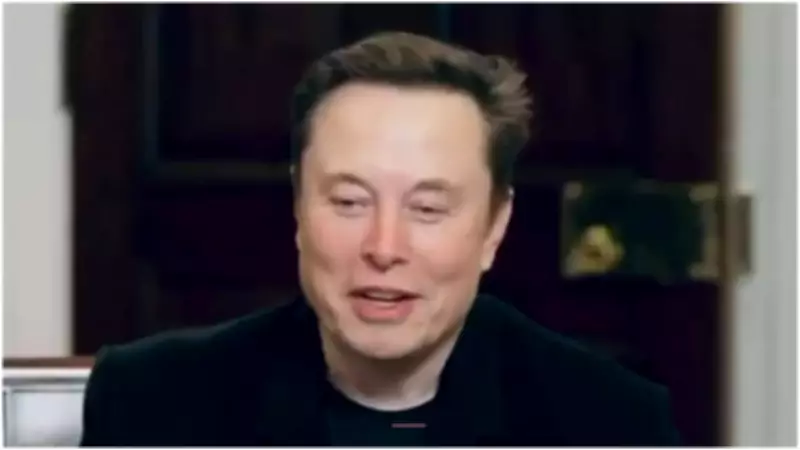
Elon Musk Forecasts Orbital AI Infrastructure as Most Economical Solution
In a striking declaration that could reshape the future of artificial intelligence infrastructure, Tesla and SpaceX CEO Elon Musk has projected that the most affordable location for deploying AI systems will be in space, potentially within the next 36 months. The visionary entrepreneur made these remarks during a comprehensive interview on the Dwarkesh podcast, where he elaborated on the comparative economics of terrestrial versus orbital data centers, the challenges of scaling power generation on Earth, and the prospects for mass-producing humanoid robots in the United States.
The Compelling Case for Space-Based AI Operations
Musk articulated a clear technical advantage for space-based operations, emphasizing that "it's harder to scale on the ground than it is to scale in space." He revealed ambitious plans to construct AI data centers in orbit, highlighting the superior performance of solar panels in the vacuum of space. According to Musk, solar panels in space can generate approximately five times more power than their terrestrial counterparts due to the absence of atmospheric interference, day-night cycles, seasonal variations, and cloud cover.
"The atmosphere alone results in about a 30% loss of energy," Musk explained, underscoring a significant inefficiency in ground-based solar energy capture. This enhanced solar efficiency eliminates the need for expensive battery storage systems to maintain operations during nighttime, further reducing costs. "You also avoid the cost of having batteries to carry you through the night. It's actually much cheaper to do in space," stated the world's wealthiest individual.

A Definitive Timeline for Orbital AI Deployment
When pressed for a specific timeframe, Musk confidently predicted that space would become "by far the cheapest place to put AI" in the near future. He specified, "It will be space in 36 months or less. Maybe 30 months." This bold timeline suggests accelerated development in space infrastructure and AI hardware compatibility.
Addressing Hardware Reliability Concerns
The discussion also touched upon the reliability of Graphics Processing Units (GPUs) during extensive AI training sessions. Musk downplayed concerns about hardware failures, suggesting they are less problematic than commonly perceived. He noted that reliability depends on the recency of GPU deployment, explaining that once GPUs surpass the initial debugging phase—whether manufactured by Nvidia, Tesla, or other chip producers like those creating TPUs or Trainium chips—they tend to operate with consistent dependability.
"Once they start working and you're past the initial debug cycle... they're quite reliable past a certain point," Musk asserted. Consequently, he views ongoing maintenance and servicing as a manageable issue rather than a major obstacle for space-based AI systems.
This perspective aligns with Musk's broader vision of leveraging space's unique environment to overcome terrestrial limitations in power scalability and cost, potentially revolutionizing how AI computational resources are deployed and managed globally.

