Elon Musk's Weekend Sacrifice for Tesla's AI5 Chip Ambitions
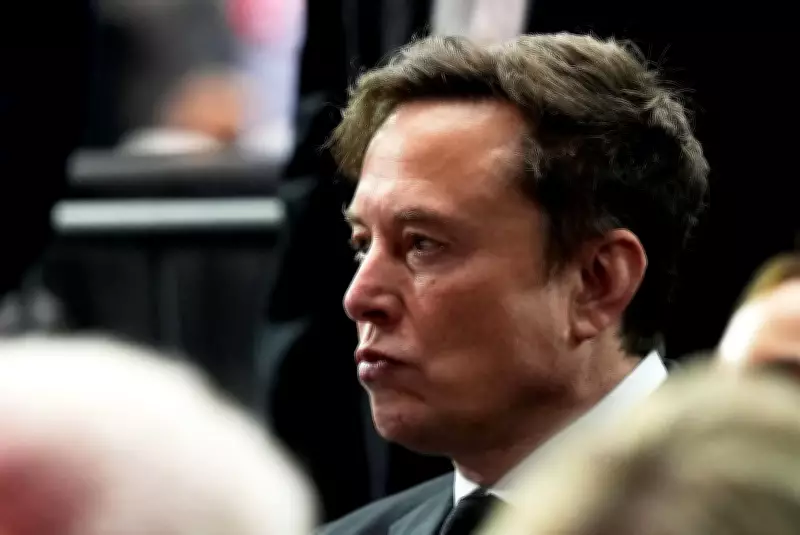
During Tesla's highly anticipated Q4 2025 earnings call, CEO Elon Musk offered investors a rare glimpse into his personal schedule, revealing that his weekends are now dedicated to advancing the company's semiconductor technology. "I've been spending pretty much every Saturday on this, and every Tuesday," Musk stated, referring to the critical AI5 project. He emphasized the significance of this commitment, noting, "If I'm spending my Saturdays on something, it's going to be something pretty important."
Strategic Pivot: From Batteries to Silicon
Musk's comments underscore a fundamental transformation in Tesla's business focus. Once celebrated for pioneering electric vehicle batteries, Tesla now views custom silicon as the linchpin of its future growth. The AI5 chip, slated for production in 2027, promises a staggering 50x performance improvement over its predecessor, achieved through:
- 10x increase in raw computing power
- 9x expansion in memory capacity
- 5x enhancement in hardened block quantization and softmax functions
These advancements enable efficient low-precision computing without compromising model accuracy, which is essential for AI inference in autonomous vehicles and robots. Musk expressed confidence in the design, asserting, "I feel quite confident about the design at this point. We're not selling the chips outside of Tesla. We need them."

Chip Supply as Tesla's Existential Challenge
For Tesla, a company built on automotive innovation, Musk's emphasis marks a strategic pivot where chip production, rather than vehicle manufacturing, could become the primary bottleneck over the next four years. The rationale is clear: robotaxis require onboard AI processing for autonomous navigation, while Optimus robots depend on it for task performance. Tesla's entire strategy of scaling autonomous vehicles and humanoid robots hinges on securing sufficient custom silicon.
Currently, Tesla has secured chip supply for approximately three years, but beyond that, uncertainties loom. Geopolitical tensions, particularly concerning Taiwan's advanced chip manufacturing hub, threaten availability. Musk starkly warned, "Securing enough chips is existential," adding that Tesla must "figure out some game plan" before the three-year window closes.
TeraFab Vision and Current Constraints
To mitigate supply chain risks, Musk revisited the concept of the TeraFab—a Tesla-owned semiconductor facility integrating logic chips, memory, and packaging under one roof. This vertical integration approach aims to insulate the company from external disruptions. "We will be fundamentally limited by supply chain without domestic chip production," Musk cautioned.
However, immediate action on the TeraFab remains unlikely. CFO Vaibhav Taneja clarified that its development is not included in Tesla's substantial capital expenditure plans for 2026, which exceed $20 billion. These funds are allocated to:
- Expanding AI training capacity in Texas
- Ramping up Cybercab and Tesla Semi production
- Installing Optimus robot assembly lines
Musk expressed hope for increased domestic silicon production in the U.S., aligning with national reshoring efforts, though this offers no short-term relief for Tesla.
Doubling Down on AI Training and Compute Power
In the interim, Tesla is intensifying efforts within its control. The company plans to more than double its onsite AI training compute in Texas during the first half of 2026, measured in H100 GPU equivalents. Construction of the Cortex 2 supercomputer facility at Gigafactory Texas is underway to support this expansion.
Until the chip supply landscape stabilizes, Musk's weekend grind continues. Whether this represents genuine necessity or strategic messaging to investors, the takeaway is unequivocal: Tesla's CEO deems the AI5 project critical enough to warrant sacrificing his personal time, signaling that the company's future is increasingly tied to silicon innovation rather than traditional automotive components.