

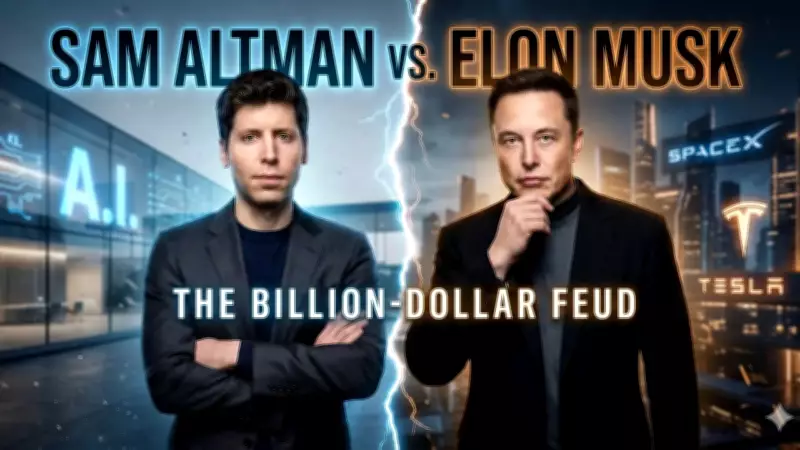
Elon Musk vs Sam Altman: OpenAI Lawsuit Trial Begins April 27 in Historic Silicon Valley Battle
On April 27, two of the most influential figures in the technology world will confront each other not through social media posts or podcast debates, but within the formal confines of a courtroom. Elon Musk, the world's wealthiest individual and proprietor of Tesla, SpaceX, and X, is set to face off against Sam Altman, the Chief Executive Officer of OpenAI, the pioneering firm behind the revolutionary ChatGPT. This legal confrontation, initially filed by Musk in early 2024, subsequently withdrawn, and then revived in early 2026, transcends conventional financial disputes. According to Musk, it fundamentally revolves around a 'broken promise' that strikes at the heart of artificial intelligence development.
The Core of the Legal Dispute: A Mission Allegedly Abandoned
Musk's central legal argument asserts that OpenAI was originally established as a nonprofit organization with the explicit mission of developing artificial intelligence for the universal benefit of humanity. He contends that Sam Altman, in collaboration with the company's board and fellow co-founders, deliberately abandoned this foundational ethos in a relentless pursuit of corporate profit. This alleged deviation from the nonprofit charter forms the bedrock of Musk's lawsuit, framing it as a matter of ethical breach rather than mere monetary grievance.
In response, Altman and OpenAI have mounted a vigorous defense, characterizing the lawsuit as a strategic distraction fueled by competitive envy. They highlight that Musk is concurrently developing xAI, his own artificial intelligence enterprise that directly rivals OpenAI, suggesting the trial is a tactical maneuver to impede the success of the ChatGPT creator. Legal experts anticipate this proceeding will become one of the most scrutinized judicial battles in the annals of Silicon Valley, setting precedents for corporate governance and AI ethics.

The Founding Vision and Early Evolution of OpenAI
To fully comprehend the significance of this trial, one must revisit the origins of OpenAI. By the mid-2010s, a concentrated cadre of researchers and technologists were advancing artificial intelligence, with tech behemoths like Google, Facebook, and Amazon investing billions into proprietary AI divisions. A pervasive concern emerged that if the most potent AI systems were developed exclusively within a few trillion-dollar corporations, they would monopolistically control humanity's technological future.
Elon Musk, sharing this profound apprehension, collaborated with Sam Altman—then president of the prestigious Y Combinator startup accelerator—alongside researchers including Greg Brockman, Ilya Sutskever, and Wojciech Zaremba. In December 2015, they formally announced OpenAI as a nonprofit AI research company, securing over a billion dollars in committed funding from founders like Musk and Peter Thiel. Musk personally contributed approximately $100 million. The organization's mission was unequivocal: to ensure that Artificial General Intelligence (AGI) would benefit all of humanity, not a select elite, hence the name 'OpenAI'.
The entity initially operated as a transparent research hub, openly publishing findings and attracting top talent like Dario Amodei, who later founded Anthropic. However, by 2018, the mission encountered severe financial constraints, as training state-of-the-art AI models demanded exorbitant computational resources and capital. Disagreements over strategic direction ensued, with Musk reportedly seeking greater control and the CEO position, which the board declined. Musk resigned from the board in early 2019.
The Pivotal Shift: From Nonprofit to 'Capped Profit' Model
Shortly after Musk's departure, OpenAI executed a critical strategic shift that now constitutes the primary contention in the lawsuit. Under Altman's leadership, the company established a 'capped profit' subsidiary—a for-profit arm designed to attract external investment while ostensibly upholding the original nonprofit mission. Altman assumed the CEO role, and the company commenced aggressive fundraising. This transition marked the beginning of OpenAI's evolution into a commercially driven entity, a move Musk would later decry as a fundamental betrayal.

ChatGPT's Meteoric Rise and the AI Industry Upheaval
For years, OpenAI remained largely known within academic and research circles. This changed dramatically on November 30, 2022, with the public release of ChatGPT. The response was unprecedented in the technology sector. Within merely five days, ChatGPT amassed one million users, and within two months, it surpassed 100 million, establishing itself as the fastest-growing consumer application in history according to UBS research.
This explosive growth triggered a state of internal emergency at Google, famously dubbed 'Code Red'. The search giant, which had pioneered the Transformer architecture foundational to ChatGPT, accelerated development of its Bard AI chatbot and integrated AI features into core products. Meanwhile, Microsoft seized the opportunity, announcing a monumental multi-year investment in OpenAI worth approximately $13 billion in January 2023. This deal granted Microsoft a 49% stake in OpenAI's for-profit arm and exclusive integration rights, leading to AI-powered enhancements in Bing and the launch of Copilot across Microsoft Office.
Musk's Growing Opposition and the Launch of xAI
Elon Musk observed these developments with escalating dismay. From his perspective, OpenAI was morphing into the very for-profit, corporate-controlled entity he had initially sought to prevent. In 2023, Musk launched his rival AI company, xAI, integrating its Grok chatbot into the X platform. He publicly accused Altman of betraying OpenAI's founding principles, criticized the Microsoft partnership as corrupt, and questioned the safety and alignment of OpenAI's AI systems.
Internal Turmoil at OpenAI and the Legal Escalation
While this public feud intensified, OpenAI experienced internal chaos. In November 2023, the board abruptly fired Sam Altman, citing transparency issues, only to reinstate him five days later following Microsoft CEO Satya Nadella's public support. Subsequent months witnessed high-profile departures, including Chief Scientist Ilya Sutskever and CTO Mira Murati, with many citing concerns over the company's strategic direction and safety culture.
Amidst this instability, Musk revived his lawsuit against OpenAI. Concurrently, Altman embarked on extensive fundraising, securing commitments from SoftBank, Amazon, Nvidia, and Oracle, including the ambitious $500 billion Project Stargate for AI infrastructure. Meanwhile, Google rebounded with its Gemini AI models, closing the competitive gap with OpenAI and reestablishing itself as an AI industry leader.
The April 27 Courtroom Showdown: Stakes and Implications
The trial commencing on April 27 represents the culmination of years of escalating conflict. Musk's legal claim hinges on the allegation that he was induced to donate substantial funds based on OpenAI's nonprofit, open-research commitment to benefiting humanity. He argues the transformation into a for-profit entity, particularly through the Microsoft partnership, constitutes a fundamental breach of trust.
OpenAI and Altman have repeatedly moved to dismiss the case, asserting that Musk's claims are legally tenuous and factually weak, primarily motivated by competitive rivalry rather than genuine principle. This landmark trial will not only adjudicate a high-stakes corporate dispute but also probe deeper questions about AI ethics, corporate accountability, and the future governance of transformative technologies. The outcome could reshape the landscape of artificial intelligence development and define the legal responsibilities of tech founders for generations to come.





