

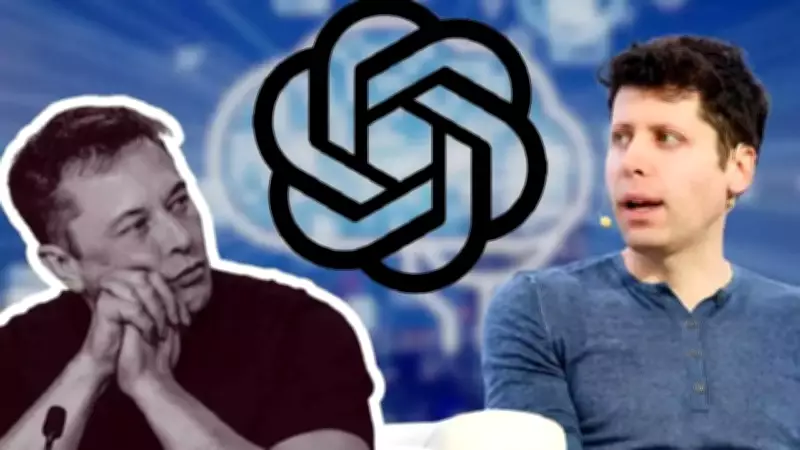
Elon Musk vs Sam Altman OpenAI Trial Set for April 27: Legal Battle Over Non-Profit Conversion
The highly anticipated legal showdown between tech titans Elon Musk and Sam Altman is scheduled to commence on April 27, as the lawsuit filed by Musk against OpenAI and its CEO heads to trial. This landmark case, which has captivated Silicon Valley and the global tech community, centers on fundamental questions about corporate governance, mission integrity, and the ethical boundaries of non-profit organizations.
Sam Altman's Pre-Trial Concerns and Podcast Appearance
Ahead of the trial date, Sam Altman recently appeared on the Core Memory podcast alongside Greg Brockman to discuss OpenAI's ten-year journey. During this conversation, Altman revealed his apprehension about Musk potentially withdrawing the lawsuit just before trial proceedings begin. "My fear at this point is if he decides to drop the case right before trial," Altman stated, emphasizing that such a move would prevent OpenAI from defending its position in court.
Altman further expressed his eagerness to address the allegations publicly, stating he is happy to explain "this to the world and leave the chapter behind." A clip from this podcast discussion was shared by former DOGE executive Katie Miller, who commented "Sam is cooked and he knows it." Elon Musk responded to Miller's post with a simple but telling "Exactly," amplifying the pre-trial tension.

The Core Legal Issue: Non-Profit to For-Profit Conversion
Katie Miller's post highlighted the central argument of Musk's lawsuit, which challenges the legality of converting a non-profit organization into a for-profit corporation. Miller wrote: "The lawsuit raises a foundational point: In America, you cannot convert a non-profit into a for-profit corporation. If a court allowed it, non-profits across the country would be permanently corrupted."
Her analysis continued: "Organizations could raise hundreds of billions of dollars tax-free by promising to serve humanity only to later become a for-profit company, destroying the integrity of the entire non-profit system." This perspective underscores the broader implications of the case beyond the immediate parties involved.
Background of the Musk vs Altman Legal Conflict
Elon Musk, the world's wealthiest individual and leader of Tesla, SpaceX, and X, initiated legal action against Sam Altman, CEO of ChatGPT-creator OpenAI, in early 2024. After briefly withdrawing the lawsuit that same year, Musk revived the legal challenge in early 2026. Importantly, this case is not primarily about financial damages in the conventional sense.
Musk's central allegation is that OpenAI has broken its founding promise. He argues that the organization was established as a non-profit dedicated to developing artificial intelligence for the benefit of all humanity. Musk claims that Altman, along with OpenAI's board and co-founders, has abandoned this mission in pursuit of profit, thereby violating the organization's original charter and public commitments.
OpenAI's Defense and Counterarguments
Altman and OpenAI have vigorously contested Musk's allegations, characterizing the lawsuit as a distraction driven by competitive jealousy. The defense points to Musk's own venture into artificial intelligence through his company xAI, which directly competes with OpenAI's products and services.
OpenAI's legal team suggests that the trial represents one of several strategies Musk is employing to hinder the success of ChatGPT and related technologies. This counter-narrative frames the legal battle as part of a broader competitive landscape in the rapidly evolving AI industry, where market positioning and technological dominance are at stake.
Significance and Expected Impact
The trial is poised to become one of the most closely monitored legal proceedings in Silicon Valley history, with potential ramifications extending far beyond the immediate parties. Legal experts anticipate that the outcome could establish important precedents regarding:

- The legal boundaries for non-profit organizations transitioning to for-profit models
- Fiduciary responsibilities of non-profit leaders and boards
- Interpretation of founding missions and charters in technology organizations
- The intersection of corporate governance and technological innovation
As the April 27 trial date approaches, both legal teams are preparing their arguments while the tech industry watches with intense interest. The case represents not just a personal dispute between two prominent figures, but a critical examination of how mission-driven organizations navigate the complex landscape of technological development, funding, and corporate structure in the artificial intelligence era.





