

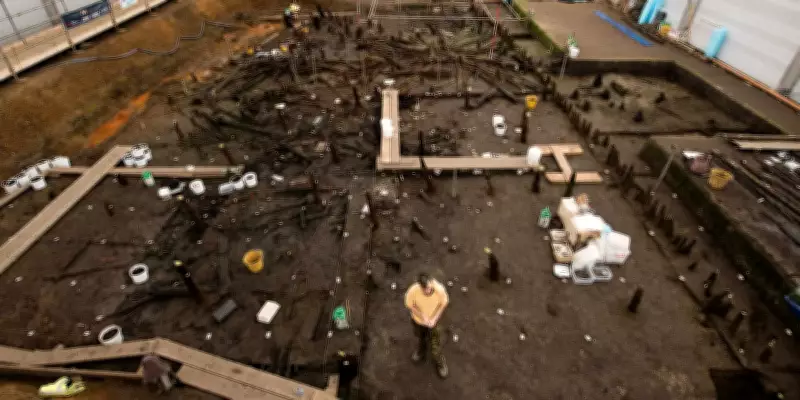
Imagine wading through the wetlands of an industrial brick pit in eastern England, observing machines digging through saturated mud, when you realize that what lies before your eyes is a series of decomposing wooden poles emerging from the mud. This is precisely what began happening near Whittlesey in Cambridgeshire in 1999.
Discovery of a Prehistoric Settlement
As workers carefully cleared away the dense, wet mud, they realized these were not random pieces of old driftwood or discarded fence posts. In fact, the waterlogged beams were the uppermost support structure for an exceptionally advanced prehistoric settlement. Soon thereafter, local excavators discovered a previously unknown stilt site comprising circular structures that had stood above an old riverbed over three thousand years ago. This exceptional discovery is referred to as the Must Farm Site. The particular circumstances surrounding this quarry helped create a unique time capsule, providing archaeologists with unprecedented insight into the lives of ancient people.
How an Accidental Disaster Created a Perfect Time Capsule
The accidental preservation of the settlement revolutionized the field of archaeology since it provided an untouched view of how ancient people lived. According to a comprehensive archaeology report from the University of Cambridge, the entire village was wiped out in an instant due to a raging fire on the wooden platform. As the burning stilt houses collapsed into the slow-moving River Nene below, the water and thick river silt instantly extinguished the flames, sealing everything in a protective, oxygen-free tomb.

In contrast to deterioration over several centuries, whole households froze in time exactly as they were used. According to another academic article produced by the University of Cambridge Department of Archaeology, this unique wet environment preserved thousands of organic items that would otherwise disappear in a matter of time on dry land. Archaeologists unearthed full wooden chests, elaborate woven clothes, complete sets of vessels, and perfect toolkits made of bronze, enabling them to analyze the arrangement of individual kitchens and workshops for the first time.
From Monuments to Daily Lives
It was only thanks to the amazing artifacts found in the silt deposits that researchers managed to shift their attention from monuments and tombs of elites to the everyday life of common people. It became clear that Bronze Age individuals did not live in poor conditions; instead, they had a cozy, organized domestic lifestyle.
The archaeologists found traces of actual cooked dinners preserved in pots, along with ornamental glass beads and even animal remains. Thanks to this vast array of intact, personal objects, the site earned the nickname "Britain's Prehistoric Pompeii." The rich legacy of the Must Farm dig demonstrates how some of our deepest discoveries about our common past may be hiding in plain sight. The truth is that no golden treasures are needed to make a great discovery. It seems humbling and disorienting to think that as workers dug the pit in Cambridge to retrieve materials for making bricks, complete houses, clothing, and food of an ancient community lay buried under their feet in complete silence.






