NASA Confirms Asteroid 2026 FB's Safe Earth Flyby Today
NASA is actively monitoring near-Earth objects as part of its planetary defense strategy, with a particular focus on a small asteroid designated 2026 FB. This asteroid is scheduled to make a close approach to Earth today, drawing attention from experts worldwide. While it poses no immediate threat, its passage provides valuable data for scientific research and future risk assessment.
Details of Asteroid 2026 FB's Approach
Asteroid 2026 FB is classified as a smaller near-Earth object, measuring approximately 69 feet in width, comparable to the size of a small aeroplane. NASA has confirmed that its closest approach will occur at a distance of around 683,000 miles, or 1.1 million kilometres, from Earth. This distance is nearly three times farther than the Moon's average orbit of 239,000 miles, ensuring no risk of collision.
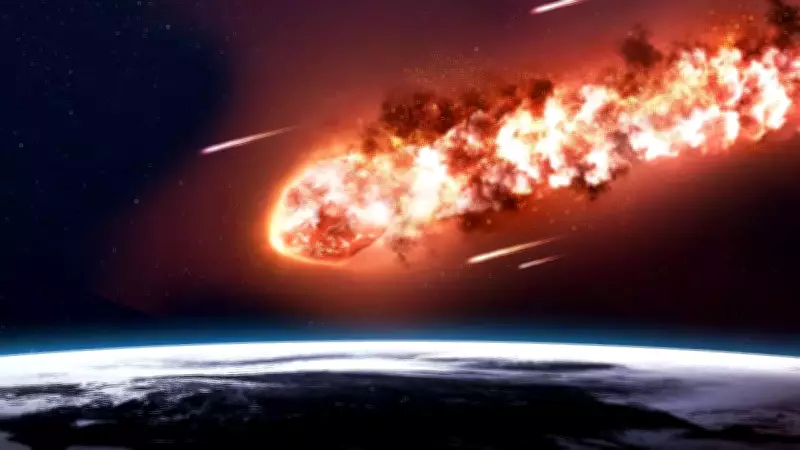
Experts emphasize that even if an asteroid of similar size entered Earth's atmosphere, it would likely burn up before reaching the surface, potentially creating a bright fireball but causing no significant damage. This underscores the importance of continuous observation to differentiate between harmless flybys and potentially hazardous objects.

Monitoring and Planetary Defense Efforts
To track objects like asteroid 2026 FB, NASA utilizes ground-based telescopes and radars. This monitoring is a critical component of the overall planning and strategy for planetary defense. Observing such asteroids helps scientists improve their understanding of the distribution and behavior of near-Earth objects, enhancing predictive models and preparedness for future risks.
Small asteroids like 2026 FB are relatively common, with thousands passing near Earth each year. Most are too small to cause serious harm and often go unnoticed, while only a few are large enough to be detected regularly. Larger asteroids capable of regional or global damage are rare, making ongoing surveillance essential for early warning systems.
Importance of Asteroid Monitoring
Monitoring asteroid 2026 FB contributes significantly to scientific knowledge and planetary defense. Data collected from such observations aids in refining models of asteroid trajectories and compositions, which is crucial for developing mitigation strategies in case of future threats. This effort aligns with NASA's broader mission to safeguard Earth from potential cosmic impacts.
By studying small asteroids, researchers gain insights that can be applied to both academic research and practical defense mechanisms, ensuring that humanity remains prepared for any celestial challenges ahead.