

NASA has made a historic decision to bring astronauts home early from the International Space Station. This marks the first time in over two decades of ISS operations that medical reasons have prompted an early return. The agency confirmed this move involves SpaceX's Crew-11 mission.
Medical Concern Triggers Precautionary Return
NASA identified a medical issue affecting one crew member aboard the orbital laboratory. While the agency maintains strict medical privacy protocols and has not disclosed specific details, officials emphasized the astronaut remains stable. The individual is receiving appropriate care according to NASA statements.
This decision reflects NASA's precautionary approach to astronaut health. The agency prioritizes safety over mission timelines, especially as human spaceflight enters increasingly complex phases. Medical teams began monitoring the health concern recently, leading to the early return plan.

Crew-11 Mission Details
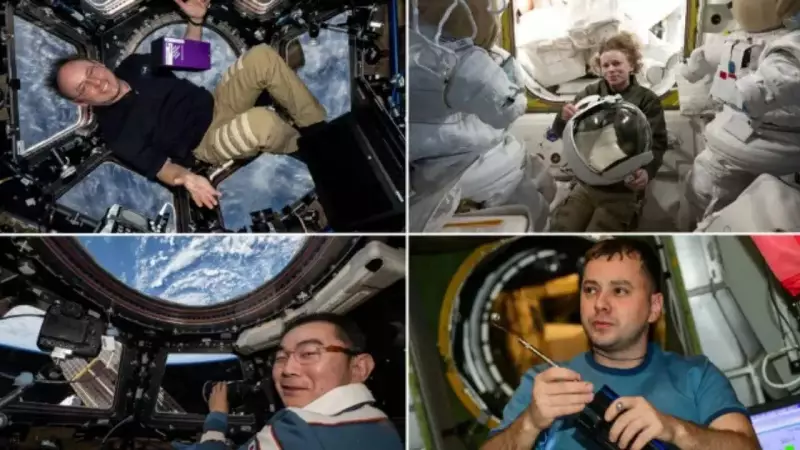
The Crew-11 mission arrived at the International Space Station on August 2. The four-member crew includes NASA astronauts Zena Cardman and Mike Fincke. They are joined by Japan Aerospace Exploration Agency astronaut Kimiya Yui and Roscosmos cosmonaut Oleg Platonov.
Originally planned for a six-month stay, the mission will now conclude earlier than scheduled. NASA officials clarified the situation does not constitute an emergency. However, limitations of medical diagnostics in orbit made an early return the most responsible option available.
Return Timeline and Operations
NASA and SpaceX are targeting specific dates for the Crew-11 return. The undocking of the SpaceX Dragon spacecraft from the International Space Station is planned for no earlier than 5 p.m. Eastern Time on Wednesday, January 14.
Several factors could affect this timeline. Weather conditions, spacecraft readiness, and recovery team availability all play crucial roles. Mission managers continue monitoring conditions in designated recovery zones closely. Sea states and other operational factors also influence the schedule.
Splashdown and Recovery
Following undocking, the Crew-11 spacecraft is expected to splash down off the California coast. This should occur at approximately 3:40 a.m. Eastern Time on Thursday, January 15. NASA and SpaceX will confirm precise splashdown location and timing closer to the undocking event.
The agency has detailed plans for live coverage of key mission milestones. All times remain subject to change based on real-time operations during the return sequence.
Mission Coverage Schedule
NASA will provide comprehensive live coverage of the Crew-11 return. On Wednesday, January 14, hatch closure coverage begins at 3:00 p.m. Eastern Time. The actual hatch closure follows at 3:30 p.m.
Undocking coverage starts at 4:45 p.m., with undocking scheduled for 5:00 p.m. The following day, return coverage begins at 2:15 a.m. on Thursday, January 15.
Critical events include the deorbit burn at 2:50 a.m. Splashdown follows at approximately 3:40 a.m. NASA plans a post-landing media news conference at 5:45 a.m. The agency will share additional broadcast details closer to the events.
ISS Operations Continue
After Crew-11 departs, the International Space Station will continue operations with a reduced crew. Three astronauts will remain aboard the orbital laboratory. NASA's Chris Williams stays alongside Russian cosmonauts Sergey Kud-Sverchkov and Sergei Mikayev.
While the ISS typically hosts seven astronauts, three-person crews were common during the station's early years. NASA confirmed full mission support will continue from Earth. This ensures station safety, scientific research, and maintenance operations proceed uninterrupted.
The agency maintains capability to support the station until the next crew rotation arrives. This early return represents a significant moment in space station history, demonstrating NASA's commitment to astronaut wellbeing above all operational considerations.






