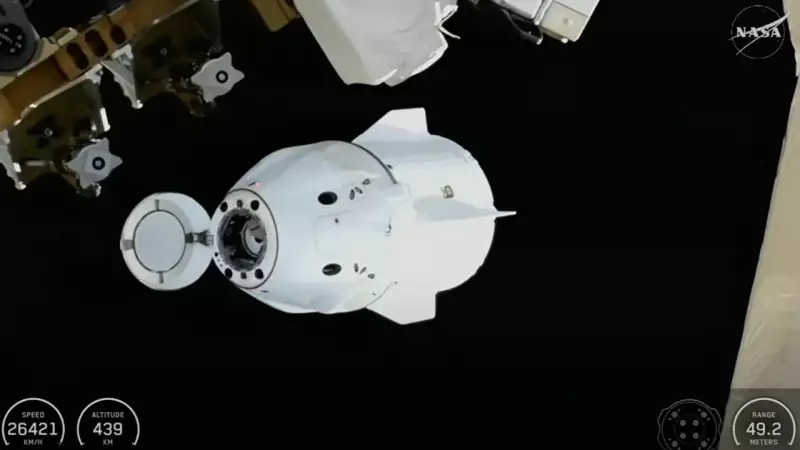
NASA Makes History with First Medical Evacuation from Space Station
NASA initiated an unprecedented medical evacuation from the International Space Station on Wednesday. The agency brought back an astronaut requiring medical attention along with three crewmates. This marked the first such evacuation in NASA's 65-year history of human spaceflight.
Early Return and Splashdown Details
The four astronauts from the United States, Russia, and Japan splashed down early Thursday morning in the Pacific Ocean near San Diego. They returned aboard a SpaceX capsule, cutting their mission short by more than a month. NASA officials confirmed that standard splashdown and recovery procedures were followed, with medical teams ready aboard the Pacific recovery ship.
"Our timing of this departure is unexpected," NASA astronaut Zena Cardman stated before the return journey. "But what was not surprising to me was how well this crew came together as a family to help each other and just take care of each other."

Medical Situation and Crew Status
Officials have not identified the astronaut needing medical care or disclosed specific health issues. Outgoing ISS commander Mike Fincke reassured everyone that the astronaut remains "stable, safe and well cared for." He explained that "this was a deliberate decision to allow the right medical evaluations to happen on the ground, where the full range of diagnostic capability exists."
NASA emphasized that the health concern was unrelated to spacewalk activities or other station operations. The agency stressed this was not an emergency situation but a precautionary measure.
Crew Background and Mission Changes
The returning crew consisted of:
- Zena Cardman, a 38-year-old biologist and polar explorer on her first spaceflight
- Oleg Platonov, a 39-year-old former Russian Air Force fighter pilot also on his debut mission
- Mike Fincke, a 58-year-old retired Air Force colonel with extensive space experience
- Kimiya Yui, a 55-year-old retired Japanese fighter pilot and veteran space traveler
Cardman and Platonov were experiencing their first space missions. Fincke has spent more than one and a half years in orbit across four missions and conducted nine spacewalks. Yui recently celebrated his 300th day in space during two missions.
NASA canceled a planned spacewalk on January 7 after the medical concern emerged. The agency subsequently announced the crew's early return. The astronauts were originally scheduled to remain on the station until late February.
Station Operations and Future Plans
Only three crew members now remain aboard the ISS - one American astronaut and two Russian cosmonauts. They are just a month and a half into an eight-month mission that began with a Soyuz launch from Kazakhstan.
NASA officials explained that leaving the ailing astronaut in space for another month would have been riskier than temporarily reducing the station crew by more than half. Until the next crew arrives, routine and emergency spacewalks will be suspended. These activities require a two-person team with backup support.
NASA and SpaceX are working to advance the launch of a replacement four-person crew from Florida. The launch was originally planned for mid-February but may now occur earlier.
Leadership Decision and Historical Context
This medical evacuation represents the first major decision by NASA's new administrator, Jared Isaacman, who took office in December. "The health and the well-being of our astronauts is always and will be our highest priority," Isaacman declared when announcing the decision last week.
Computer modeling had previously projected that a medical evacuation from the ISS would occur roughly once every three years. However, NASA had never faced such a situation before. The Russians have experienced similar events, including in 1985 when cosmonaut Vladimir Vasyutin returned early from Salyut 7 due to serious illness.
It remains unclear how soon all four astronauts will be transported from California to Houston, home of the Johnson Space Center. The medical evacuation demonstrates NASA's commitment to astronaut safety while highlighting the complex logistics of human spaceflight operations.