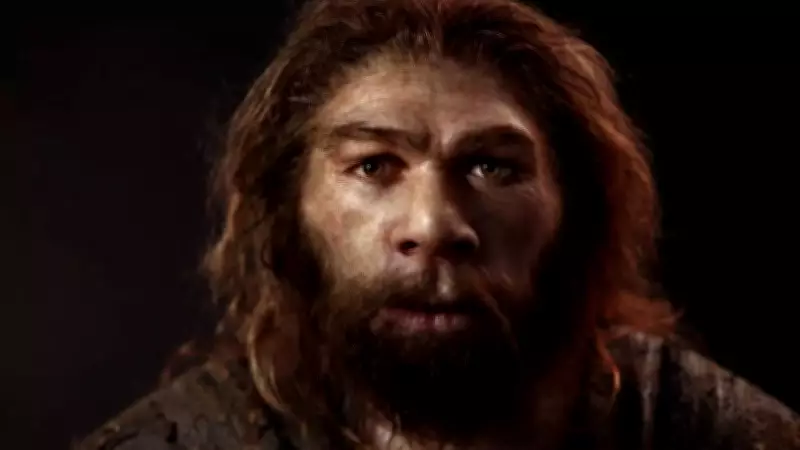
Neanderthal DNA Study Uncovers Ancient Partner Preferences in Human Evolution
Ancient history often appears distant and abstract, reduced to mere fossil fragments and textbook timelines. However, a groundbreaking scientific discovery has now made the past feel unexpectedly personal and immediate. A new Neanderthal DNA study has achieved precisely this, offering fresh insights into the intimate interactions between modern humans and their ancient cousins.
Revealing Patterns in Prehistoric Partnerships
Researchers analyzing ancient genomes have uncovered compelling evidence suggesting there may have been a clear partner preference when modern humans and Neanderthals interbred tens of thousands of years ago. According to the detailed findings published in the prestigious journal Science, pairings appear to have been significantly more common between female modern humans and male Neanderthals than previously believed.
This discovery fundamentally reshapes how scientists imagine these prehistoric encounters, moving beyond simple biological mixing to consider complex social dynamics. What makes this Neanderthal DNA study particularly intriguing is the strong suggestion that culture and social behavior may have actively shaped our genetic history in profound ways.

The X Chromosome Mystery in Human Evolution
Scientists have known for years that most people living outside sub-Saharan Africa carry a small but significant percentage of Neanderthal DNA in their genetic makeup. These inherited genes are not merely historical leftovers but continue to influence modern human biology in tangible ways. Some affect our immune systems, while others are linked to certain health risks and physical traits, demonstrating how ancient population mixing still affects us today.
Researchers have long noticed something unusual about this genetic inheritance. The human X chromosome contains far less Neanderthal DNA than would be expected when compared with other chromosomes. For decades, experts believed natural selection might explain this imbalance, theorizing that Neanderthal genes on the X chromosome were potentially harmful and gradually removed over evolutionary time.
A New Approach to Ancient Genetics
This innovative research approached the genetic puzzle from a completely different angle. Instead of examining only modern human DNA, scientists conducted comprehensive analyses of Neanderthal genomes themselves. What they discovered appears to mirror the human pattern in reverse. There is significantly more human DNA than expected on the Neanderthal X chromosome, creating a symmetrical genetic pattern that demands explanation.
Understanding this finding requires a basic understanding of genetics. Females carry two X chromosomes, while males carry one X and one Y chromosome. Across a population, approximately two-thirds of X chromosomes are inherited from mothers. This simple biological rule fundamentally shapes how genes spread and accumulate over generations.
The Genetics Behind the Discovery
If female humans mated more frequently with male Neanderthals, this behavioral pattern would produce exactly the genetic signal researchers have now observed. Over thousands of years and multiple generations, more human DNA would naturally accumulate on Neanderthal X chromosomes through maternal inheritance. Simultaneously, less Neanderthal DNA would remain on human X chromosomes, creating the distinctive genetic imbalance that has puzzled scientists for years.
Alexander Platt, a geneticist involved in the comprehensive study, suggests that the simplest explanation may relate to behavior rather than survival advantage alone. He argues that the pattern might reflect how these ancient groups interacted socially and formed partnerships, rather than strict evolutionary filtering through natural selection.

Missing Pieces in Neanderthal DNA Research
The genetic evidence, while compelling, cannot tell us precisely how these relationships formed or what social dynamics governed them. Scientists are left to consider several plausible possibilities based on archaeological and anthropological knowledge. It is possible that human women joined Neanderthal groups through various social mechanisms. Equally possible is that Neanderthal males entered larger, more complex human communities and formed partnerships there.
Early modern humans often lived in broader social networks with more extensive connections between groups, while Neanderthals may have lived in smaller, more isolated family units. This social structural difference could have influenced partnership patterns significantly.
Some researchers also note that offspring resulting from unions between human males and Neanderthal females might not have survived or reproduced as successfully. If that were indeed the case, it could partly explain the genetic imbalance observed in modern populations. The current study cannot completely rule out this alternative explanation, highlighting the complexity of interpreting ancient genetic data.
Population genetics expert Xinjun Zhang has acknowledged that a definitive answer may never be possible with current scientific methods. Without direct observation of these ancient societies, scientists must rely entirely on genetic clues preserved in fragmentary ancient remains, combined with sophisticated analytical techniques to reconstruct prehistoric social dynamics.
This Neanderthal DNA study represents a significant advancement in our understanding of human evolution, demonstrating how genetic research can illuminate not just biological history but social behavior across deep time. As research continues, each discovery brings us closer to understanding the complex tapestry of interactions that ultimately produced modern humanity.