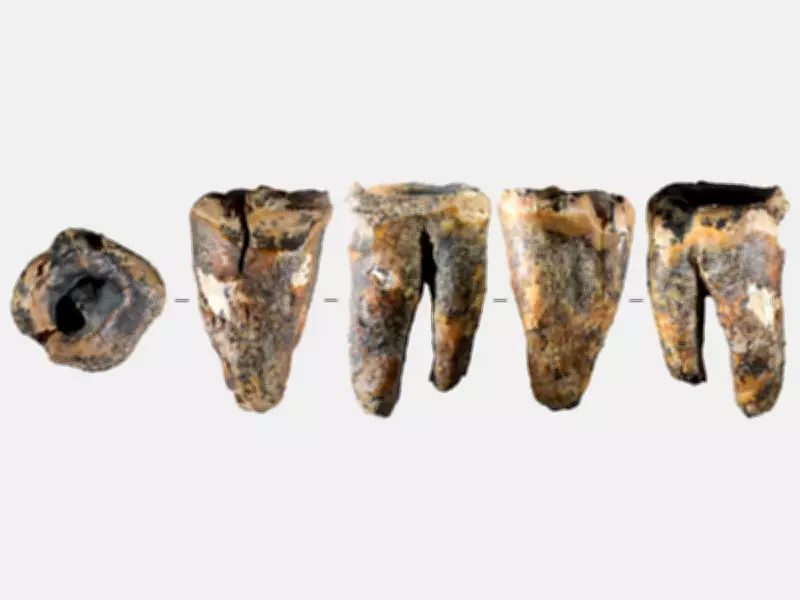
In the past, the term Neanderthal was often used to describe someone who was unsteady or dumb, with an image of hulking figures surviving on instinct rather than sophistication. However, recent discoveries are transforming our understanding of these ancient relatives. Archaeological evidence now shows that Neanderthals did not merely survive but practiced sophisticated medical procedures, bridging the gap between ancient and modern healthcare.
Breakthrough in the Altai Mountains
The story begins in the secluded Chagyrskaya cave, located in the Altai region of southern Russia. During excavations, archaeologists uncovered a molar belonging to a Neanderthal who lived around 59,000 years ago. Initially appearing as a typical fossilized tooth, closer examination revealed a deep, intentional hole reaching the pulp cavity. In a study published in PLOS One, researchers led by Andrey Krivoshapkin from the Institute of Archaeology and Ethnography used advanced imaging and experimentation to determine the hole's origin. They ruled out natural decay, fractures from chewing, or post-mortem chemical erosion. Instead, the evidence pointed to a planned medical intervention. The Neanderthal suffered from a serious dental cavity and infection, likely causing severe pain. A group member used a sharp stone tool to cut out the infected tissue. Microscopic grooves on the tooth matched those from modern human teeth drilled with ancient stone tools, confirming the procedure.
More Than Just a Quick Fix
This finding is significant for what it reveals about Neanderthal society and empathy. The study found ante-mortem wear on the hole's walls, indicating the patient survived the surgery and used the tooth for eating long after. The procedure's success demonstrates manual dexterity and anatomical knowledge previously thought unique to Homo sapiens. Neanderthals could pinpoint the cause of a toothache, choose a mechanical solution, and execute a risky procedure without modern numbing agents. While self-care today often involves face masks and yoga, for Neanderthals, it meant creative problem-solving. They used toothpicks for hygiene and possibly medicinal plants as primitive antibiotics, challenging old textbook notions of primitiveness.

The Shared Human Heritage of Healing
This discovery predates the earliest known examples of similar human dental work by over 40,000 years, suggesting that the drive to heal is not a modern technology but an inherent hominin trait. Andrey Krivoshapkin noted that this behavior goes beyond basic instincts seen in other primates. It required a group willing to help sufferers and individuals to endure a painful process for relief. This paints a picture of a society that cared for each other's health. Reflecting on these ancient dental practitioners reminds us of our roots. Whether a mother uses a creative kitchen technique to clean her child's toys or a Neanderthal uses a flint stone to ease tooth pain, the core motivation remains the same: to improve life for themselves and those around them. Neanderthals were not failed humans; they were creative, resilient, and deeply humane pioneers of medicine.