Former Diplomat Stresses Need for India's Technological Self-Reliance in AI Era
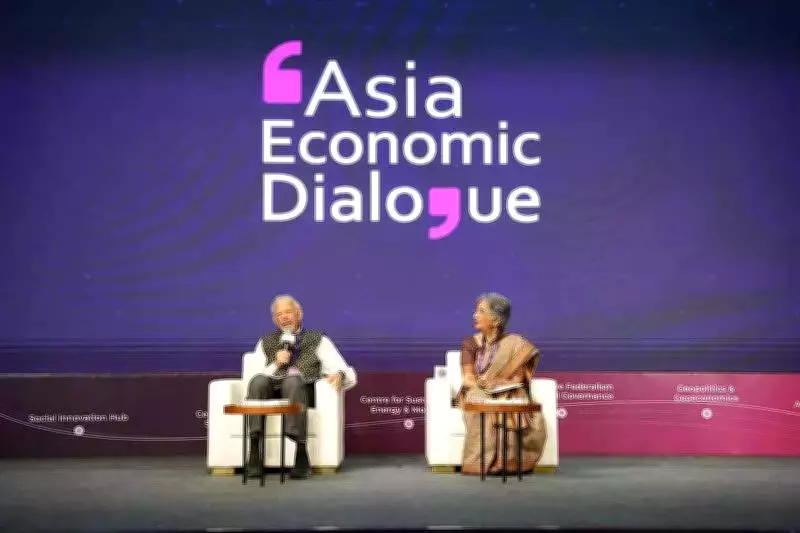
In a significant address at the Asia Economic Dialogue organized by the Pune International Centre, former Foreign Secretary Nirupama Rao delivered a compelling warning about India's technological future. She emphasized that the nation must carefully balance efficiency with autonomy when adopting artificial intelligence solutions.
The Sovereignty Imperative in Technology
"Technological sovereignty is not given. It has to be built," declared Rao with conviction. "Artificial intelligence capabilities, semiconductor fabrication, telecom architecture, space technology, and cybersecurity are not commercial luxuries but are sovereignty platforms that determine national strength in the 21st century."
The former diplomat elaborated that India needs to master the complete AI ecosystem, from graphics processing units (GPUs) and data governance frameworks to practical applications. "If we rely solely on borrowed algorithms from other nations or corporations, we may gain short-term efficiency but risk losing long-term autonomy in critical decision-making processes," she cautioned.

Redefining Global Power Dynamics
Rao presented a visionary perspective on future global leadership, stating that "the world will not be led by those who command traditional armies but by those who command algorithms, data ecosystems, rare mineral resources, and energy grids." This fundamental shift requires nations to reconsider their strategic priorities and investment patterns.
The former foreign secretary connected domestic capabilities with international influence, noting that "foreign policy ultimately rests on domestic strength. Infrastructure development, energy security, robust public health systems, financial stability, and social cohesion are not merely internal concerns—these factors collectively shape a nation's external credibility and negotiating position."
Strategic Global Engagement and Supply Chain Resilience
Rao advocated for continued deep global engagement through carefully negotiated free trade agreements while simultaneously building domestic resilience. "India needs to secure beneficial supply chain partnerships and capital flows while systematically reducing concentrated vulnerabilities," she explained.
She highlighted several strategic priorities:
- Energy diversification to reduce dependency on single sources or regions
- Competing trade agreements with major economic partners to maximize opportunities
- Strengthening ties with ASEAN nations, African countries, and Latin American economies
- Geographical and technological diversification of supply chains to create resilient networks
"Supply chains represent a strategic lattice that India must construct to absorb external shocks and mitigate risks of over-dependency or potential coercion," Rao elaborated, emphasizing the interconnected nature of modern economic systems.
Navigating Global Turbulence
The former diplomat identified several key drivers of international instability that India must navigate skillfully:
- Renewed great power rivalry between major nations
- The weaponization of economic interdependence
- Erosion of institutional guardrails in global governance
- Climate change impacts and environmental pressures
- Pandemic preparedness and health security challenges
- Domestic political pressures that reinforce nationalist tendencies
In this complex landscape, Rao expressed confidence in India's potential role, stating "At this critical juncture, India can actively shape the evolving trends of globalization rather than being a passive bystander. Our nation is not merely a middle power but a pivotal state with significant influence."
The address concluded with a call for strategic patience and sustained investment in technological self-reliance, positioning India not just as a consumer of global innovation but as an architect of sovereign technological capabilities that will define its place in the emerging world order.