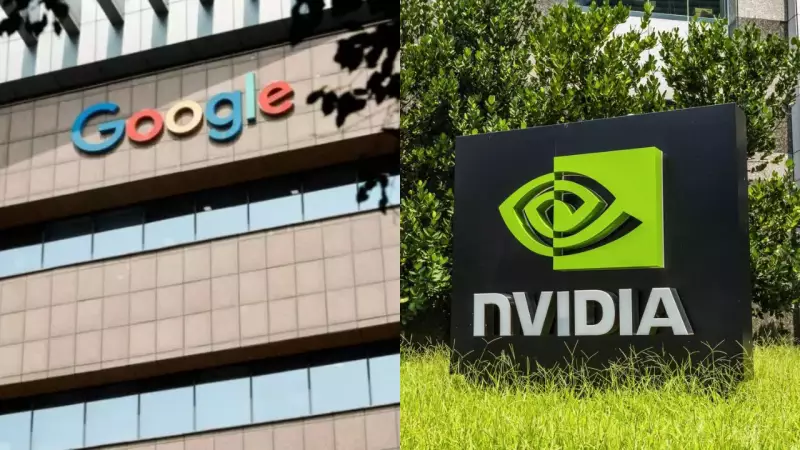
In a blockbuster move to solidify its position in the fiercely competitive artificial intelligence chip market, graphics giant Nvidia has acquired the key assets of AI chip startup Groq. The deal, valued at a staggering $20 billion, represents a significant premium and is widely seen as a defensive strategy against the growing trend of tech giants opting for custom silicon, particularly Google's Tensor Processing Units (TPUs).
The Strategic Drivers Behind the Mega-Deal
This acquisition is driven by two powerful forces reshaping the tech industry. First, there is an intense global push for cost efficiency in running massive AI workloads. Second, the demand for ever-higher processing speeds, especially for AI inference, is skyrocketing. Nvidia, despite its dominance, has been grappling with an overwhelming demand for its GPUs, prompting major clients to explore specialized, often cheaper, alternatives.
The urgency for Nvidia was highlighted earlier this year when a report suggested that Meta, one of its largest customers, was in advanced talks to spend billions on Google's TPUs. This news alone wiped approximately $250 billion from Nvidia's market valuation, underscoring the tangible threat posed by rival chip architectures.

GPU vs. TPU: Understanding the Battlefield
To grasp the significance of this deal, one must understand the core difference between Nvidia's offerings and Google's. Nvidia's GPUs are general-purpose processors excelling at a wide range of tasks from gaming and crypto mining to AI and scientific simulations. Google's TPUs, however, are application-specific integrated circuits (ASICs) built from the ground up to accelerate the tensor calculations fundamental to machine learning.
While GPUs offer excellent speed and flexibility, they carry overhead for general tasks and are costly. TPUs sacrifice that flexibility for ultra-fast, ultra-efficient performance in specific AI training and inference tasks. This allows companies to mix-and-match GPUs and TPUs to optimize for both performance and cost, a trend Nvidia could not ignore.
How Groq's LPU Technology Fits Nvidia's Puzzle
This is where Groq becomes a crucial piece for Nvidia. Groq's flagship technology is the Language Processing Unit (LPU), a new category of processor designed explicitly for AI inference. According to Groq, its LPU technology can run Large Language Models (LLMs) at substantially faster speeds and with up to 10x greater energy efficiency compared to traditional GPUs.
By bringing Groq's fast and efficient LPU technology in-house, Nvidia is making a preemptive strike. The acquisition allows Nvidia to neutralize the risk of a rival offering a compelling low-cost inference alternative, which could have confined Nvidia's dominance solely to the AI training market. Instead, Nvidia can now offer a complete, tiered solution to its customers.
The strategic vision is clear: direct premium clients with complex needs toward its high-end GPUs for heavy-duty model training, while steering cost-conscious users requiring high-speed inference toward the newly acquired LPU technology. This move enables Nvidia to capture the entire AI customer lifecycle, from training to deployment, securing its fortress against the rising tide of custom silicon.