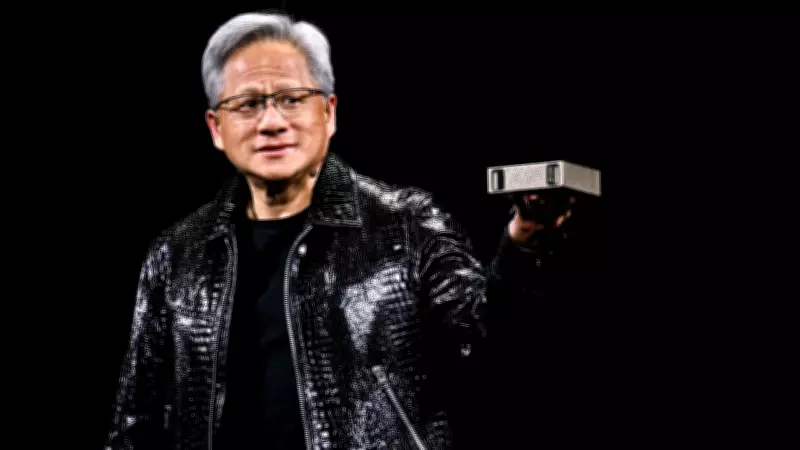
Nvidia CEO Jensen Huang Defends Massive AI Infrastructure Spending as Sustainable Investment
Nvidia CEO Jensen Huang has moved to calm investor nerves, asserting that the colossal capital expenditure by Big Tech companies on artificial intelligence infrastructure does not represent a bubble on the verge of bursting. Instead, Huang characterizes this unprecedented spending as the dawn of a new computing era that is here to stay.
Addressing Concerns During Q4 Earnings Call
During Nvidia's recent fourth-quarter earnings call, Huang directly confronted growing concerns about hyperscalers including Microsoft, Meta, Google, and Amazon. These technology giants are collectively budgeting nearly $700 billion this year alone to construct massive AI data centers. Meta has announced plans to spend up to $135 billion, while Google has dramatically increased its capital expenditure to $185 billion from just $91 billion last year.
"This new way of computing is not going back," Huang declared emphatically, dismissing fears that such three-digit billion-dollar spending figures are unsustainable. He provided context by explaining, "If you think about it and said 'OK, well the world was investing about $300 to $400 billion a year in classical computing, and now AI is here and the amount of necessary computation is 1,000 times higher... if we continue to believe there's value in it, then the world will invest to produce that token.'"

Huang referred to tokens as the fundamental units of data processed by AI models, emphasizing that global demand for token generation capability far exceeds the current $700 billion investment level. "I'm fairly confident that we're going to continue to generate tokens, we're going to continue to invest in compute capacity from this point out," he added with conviction.
Nvidia's Blockbuster Results Amid Investor Unease
Despite reporting spectacular fourth-quarter revenue of $68.1 billion—representing a 73% year-over-year increase—Nvidia's stock rose less than 1% following the earnings announcement. This muted market response reflects persistent investor anxiety about whether hyperscaler spending can maintain its current breakneck pace.
More than half of Nvidia's revenue originates from these five hyperscalers, who are already exceeding their free cash flow and accumulating debt to finance AI infrastructure projects. During the earnings call, analysts pressed Huang on whether other customers could sustain demand if hyperscaler spending eventually slows down.
The Next Frontier: Agentic and Physical AI Applications
Huang pointed to emerging AI applications as evidence of lasting, sustainable demand. He highlighted the rapid rise of agentic AI—tools like OpenClaw that operate autonomously—noting that this inflection point "literally happened in the last 2 or 3 months."
Looking ahead, Huang predicted the next frontier will be physical AI, as sophisticated models become integrated into robotics systems and manufacturing equipment. "AI is here. AI is not going to go back. AI is only going to get better from here," he stated definitively, signaling that Nvidia views the hyperscaler spending spree not as a temporary phenomenon but as the foundation of a long-term technological transformation.
Huang's comments come as Nvidia projects sales growth of up to 200% in the current quarter, further underscoring the company's confidence in the sustainability of AI infrastructure investments across the technology sector.