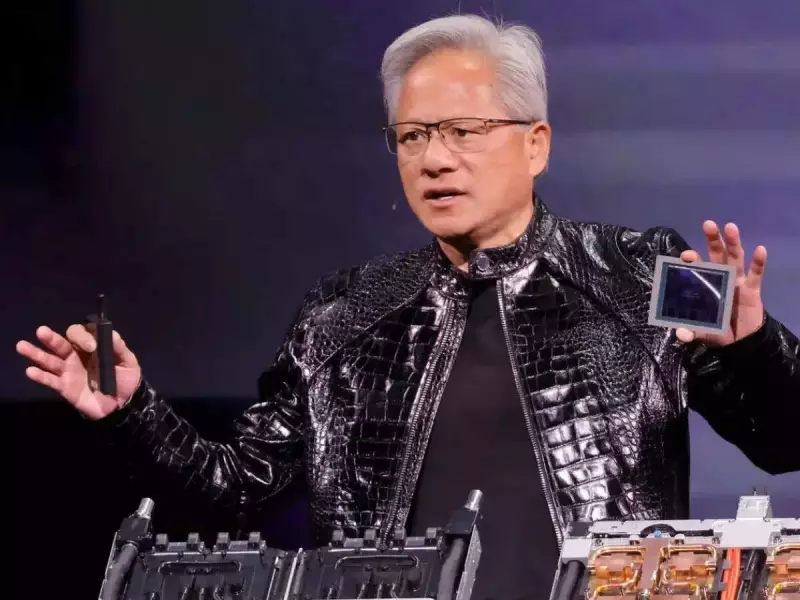
Nvidia CEO Jensen Huang Redefines Engineering Work
Jensen Huang, the chief executive officer of Nvidia, has made a bold statement about the future of engineering. He believes engineers should spend zero percent of their time writing code. This is not about cutting jobs or finding easy ways out. Huang is describing a fundamental shift in what engineering work should be.
The Shift from Tasks to Purpose
Speaking on the No Priors AI podcast, Huang revealed that every engineer at Nvidia now uses Cursor, an AI coding assistant, throughout their workday. He expressed his vision clearly. "Nothing would give me more joy than if none of our engineers were coding at all," Huang said. "And they were just purely solving undiscovered problems."
From a career perspective, this is not a rejection of engineering skills. It is a redefinition of where those skills should be applied. Huang frames this as "purpose versus task." In his view, writing code is merely a task. The real purpose is identifying problems worth solving and designing systems to address them.

Huang argues that AI should handle the task layer. This allows humans to focus on higher-level work. For engineers, this means long-term value will come less from mastering syntax and more from problem framing, system thinking, and good judgment.
The Radiology Example and Job Growth
Huang often uses radiology to explain why automation does not have to destroy careers. Years ago, AI researcher Geoffrey Hinton predicted radiologists would become obsolete because machines could read scans faster. That did not happen. Instead, the number of radiologists actually grew.
Huang points out the reason is simple. Reading scans was never the purpose. Diagnosing illness and deciding treatment was the real goal. When AI took over image reading, demand for clinical judgment increased. Huang believes engineering follows the same pattern. Code is not the goal. Outcomes are what truly matter.
Inside Nvidia: Embracing AI Fully
At a recent Nvidia all-hands meeting, Huang reportedly criticized managers who told teams to limit AI use. "Are you insane?" he said, according to Business Insider. Huang told employees that work would not disappear. It would shift toward harder and less defined problems.
For engineers, the message was clear. Resisting AI is a career risk, not a safety move. Huang is betting that engineers who move toward purpose will stay relevant in the changing landscape.
Industry-Wide Adjustments
Nvidia's stance is not isolated. Other tech leaders have shared how much code is already written by AI tools. Sundar Pichai, CEO of Google, has said AI writes over 30 percent of new code at the company. Dario Amodei, CEO of Anthropic, reported that Claude generates 90 percent of his firm's code.
However, a July study by METR found that AI assistants reduced productivity for experienced developers by 19 percent. This happened even though participants expected a 20 percent increase. For engineers planning careers, this gap matters. The tools are advancing fast, but knowing when and how to rely on them remains a crucial skill.
Warnings from Tool Builders
Even leaders behind coding assistants urge caution. Michael Truell, CEO of Cursor, warned against "vibe coding," where developers accept AI output without review. "If you close your eyes and do not look at the code and have AI build things with shaky foundations, things start to kind of crumble," Truell said at Fortune Brainstorm AI.
Andrej Karpathy, former AI director at Tesla, who coined the term "vibe coding," has also pulled back. He said his recent Nanochat project was "basically entirely hand-written" because AI agents were not reliable enough. "I have never felt this much behind," Karpathy wrote recently. "The profession is being dramatically refactored."
What This Means for Engineering Careers
Huang's argument is not that engineers become less technical. It is that their technical value shifts upward. Engineers who focus only on writing code may find that layer shrinking. Engineers who can define problems, assess trade-offs, and guide AI systems may gain influence.

For students and early-career professionals, the implication is clear. Learning to code still matters, but it may no longer be the center of the job. Understanding systems, users, and outcomes may matter more. Whether the wider workforce can make this transition smoothly remains an open question.
The engineering profession is undergoing a significant transformation. AI tools are changing how work gets done. Engineers must adapt by focusing on problem-solving and strategic thinking. This shift promises to make engineering more impactful and relevant in the age of artificial intelligence.