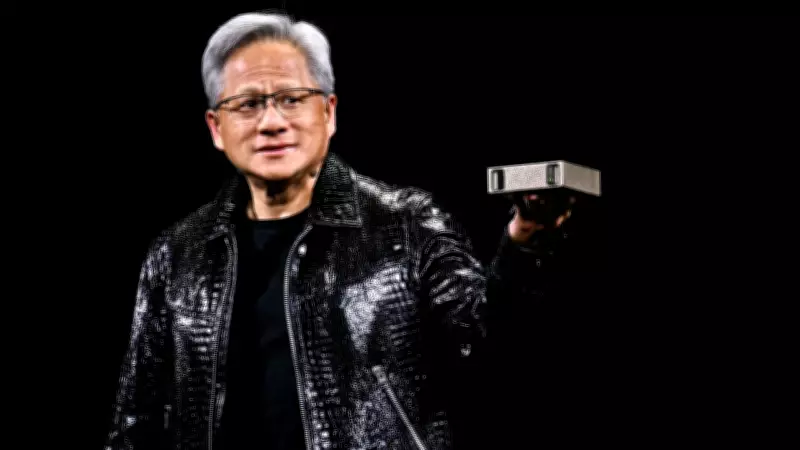
Nvidia CEO Jensen Huang has fired back at critics who argue the US should completely cut off China from advanced artificial intelligence (AI) chips. The tech billionaire dismissed the idea that American companies should simply surrender foreign markets out of fear of competition, calling the mindset 'completely ridiculous.'
'The idea that I regard as completely ridiculous is: why should American companies go compete in foreign countries if you are going to lose it anyway?' Huang said. He added that if the same philosophy were applied to real life, there would be no reason to wake up in the morning. 'If you guys all apply that same philosophy, why wake up in the morning? If you want me to lose, you are going to have to deal it to me.'
What Was the Debate All About?
Huang's response came after an incident on the popular Dwarkesh Podcast, where he was questioned whether the US should sell AI chips to China. Host Dwarkesh Patel asked if giving China powerful AI chips could harm US companies and national security, even citing Anthropic's Mythos as an example.

In response, Huang said China does not need super high-end chips to challenge US tech stature. He noted that Mythos was trained on 'fairly mundane capacity,' meaning it did not require cutting-edge hardware, as reported by Tom's Hardware. Huang also reiterated that China already possesses substantial computing power, even if it is not as advanced as Nvidia's chips.
Huang argued that keeping Nvidia out of China will not actually hinder their AI progress because Beijing already commands massive computing power. As an example, he pointed to the Huawei CloudMatrix system. He explained that even without access to Nvidia's latest hardware, Chinese engineers can use 'brute force'—linking together large quantities of slightly older or less advanced chips—to achieve the same powerful AI results.
Strict Trade Bans Will Backfire
According to the Nvidia chief, strict trade bans will ultimately backfire on American interests. Instead of freezing China's tech sector, a total embargo will simply force Chinese firms to build an independent tech ecosystem completely outside US control. Huang warned that dividing the globe into two competing, incompatible technological systems—US tech versus foreign tech—would be a 'horrible outcome' for America's long-term global dominance.
Instead of building a wall, Huang believes the real winning strategy for the US is to keep global AI development inside the American tech ecosystem by remaining competitive, selling internationally, and forcing rivals to play by Western standards.