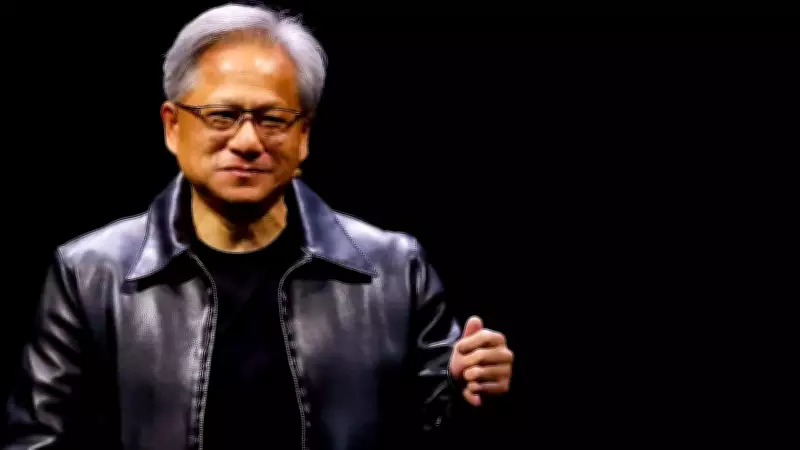
Nvidia CEO Jensen Huang Proposes Revolutionary Compensation Model for AI Engineers
In a bold move that could reshape how tech companies attract and retain top talent, Nvidia CEO Jensen Huang has unveiled a novel compensation idea during the company's recent GTC conference in San Jose. Huang proposed giving engineers an annual token budget equivalent to approximately half their base salary, in addition to their regular pay package.
Tokens: The New Currency of AI Work
Tokens represent the fundamental unit of measurement for AI computing, analogous to how kilometers measure distance or kilowatts quantify electricity. When users input prompts into AI systems like ChatGPT or Claude, the models break down the text into smaller components called tokens. For instance, the word "unbelievable" might be segmented into "un," "believe," and "able." Generating approximately 750 words of text typically consumes around 1,000 tokens, while more complex tasks such as writing code or running AI agents for extended periods require significantly more.
AI companies have established pricing models based on token consumption. OpenAI, for example, charges $15 per million tokens for its most advanced model. When engineers utilize tools like Claude Code, each line of generated code deducts from their organization's token allocation. These expenses accumulate rapidly—one Vercel engineer recently incurred a $10,000 bill in a single day while deploying AI agents to develop a new service.

Silicon Valley's New Recruitment Tool
Huang's proposal emerges from an evolving trend in the tech industry. Thibault Sottiaux, engineering lead at OpenAI's Codex, noted in February that job candidates increasingly inquire about compute access during interviews, with some OpenAI employees consuming over 10 billion tokens weekly. Silicon Valley is beginning to treat token budgets as a fourth pillar of compensation, alongside traditional salary, bonuses, and equity.
"They're going to make a few hundred thousand dollars a year in their base pay. I'm going to give them probably half of that on top of it as tokens so that they could be amplified 10X. Of course we would," Huang told the audience at the SAP Center. He emphasized that engineers with greater token access achieve higher productivity, making token allocation a critical factor in recruitment discussions.
The Growing Importance of Token Management
Nvidia has a vested interest in this development, as its chips power the generation of tokens at scale. However, the broader industry trend is undeniable. Companies such as Zapier and Kumo AI are already monitoring token usage per employee, analyzing patterns to identify inefficiencies or recognize top performers who maximize output from each prompt.
While token budgets as compensation may appear innovative today, Huang predicts that within a few years, omitting them from job offers will seem unusual. As AI integration expands across corporations, token costs are rising, making efficient management essential for competitive advantage.
This shift highlights how the AI revolution is transforming not only technology but also workplace dynamics and compensation structures, positioning tokens as a valuable resource in the quest for engineering excellence.