In a remarkable display of sportsmanship and long-term vision, Nvidia's CEO Jensen Huang has publicly expressed admiration for Chinese artificial intelligence startup DeepSeek. This comes nearly a year after DeepSeek's breakthrough triggered a seismic sell-off that erased a staggering $593 billion from Nvidia's market value in a single day.
The Praise That Followed The Panic
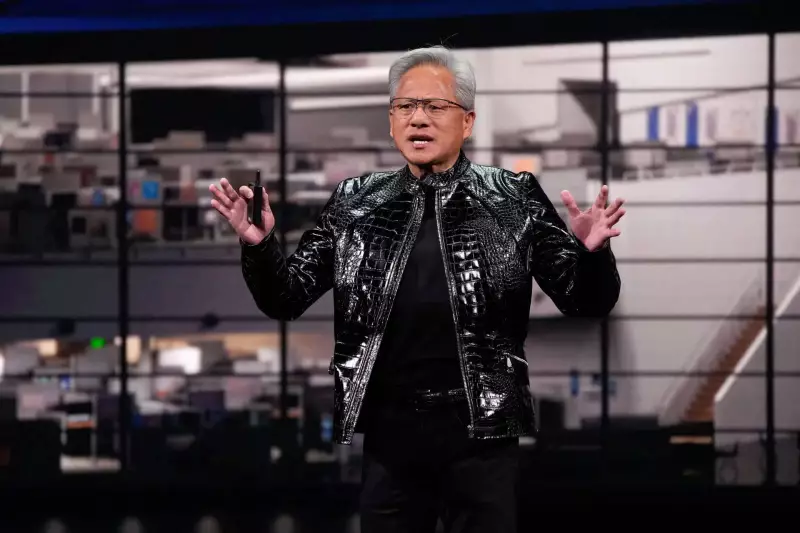
Speaking at the Consumer Electronics Show (CES) in Las Vegas on January 5, 2026, Huang credited DeepSeek with "activating" a global movement toward open-source AI. He described the company's work as "really, really exciting" and stated Nvidia was "so happy with it." This endorsement is particularly striking given the events of January 2025.
At that time, DeepSeek's announcement of its R1 model sent shockwaves through Wall Street. The Chinese firm claimed it had developed a highly competitive AI model using a surprisingly modest setup: just 2,048 of Nvidia's older H800 chips. The entire project reportedly cost under $6 million and took only two months to complete. This stood in stark contrast to the common practice among US tech giants, who were spending tens of millions on thousands of Nvidia's most advanced chips to achieve similar results.

A Record-Breaking Market Bloodbath
The implications of DeepSeek's efficiency immediately spooked investors. On January 27, 2025, Nvidia's stock price crashed by 17%. This translated into that historic single-day loss of roughly $593 billion, a record for any US company. The panic was not contained to Nvidia alone. The sell-off rippled across the entire technology sector, causing sharp declines in chip stocks and other AI-related companies. Investors began to fundamentally question whether the massive, unchecked spending spree on AI infrastructure by Big Tech still made economic sense.
However, Huang has consistently defended DeepSeek's achievements, arguing the market reaction was a misunderstanding. At CES 2026, he reinforced this stance, noting that the R1 model "caught the world by surprise" and is actively helping to revolutionize global AI development. "We saw the advance of DeepSeek R1, the first open model that's a reasoning system," Huang told the audience. He emphasized that such open-source models are rapidly closing the performance gap with expensive, proprietary "frontier" models from leaders like OpenAI and Google.
Innovation Thrives Despite Restrictions
Huang highlighted a critical lesson from DeepSeek's success. Chinese developers, operating under strict US chip export restrictions, have proven that major AI breakthroughs do not necessarily require unlimited computing power. DeepSeek's strategy involved stockpiling the H800 chips—a then-older generation—before a 2023 US export ban took effect. This move demonstrated that smart, innovative engineering and software optimization can powerfully compensate for hardware limitations.
Despite the disruptive shock caused by DeepSeek, Nvidia remains intensely bullish on the future of artificial intelligence. At the same CES event, Huang unveiled the company's next-generation platform, named Vera Rubin. He announced it is now in "full production" and will deliver five times the computing power of its predecessors.
The new flagship servers will be formidable, containing 72 graphics processing units and 36 central processing units. These can be linked into large-scale "pods" harnessing over 1,000 Rubin chips. Huang also reported that demand from Chinese customers for Nvidia's H200 chips remains "strong," even as the company carefully navigates the complex landscape of US export controls.
In a validation of Huang's long-term perspective, Nvidia's stock has largely recovered from the January 2025 crash. This rebound supports his core argument: spending on AI infrastructure will continue its growth trajectory globally, driven by relentless innovation, even as efficiency breakthroughs like DeepSeek's reshape the competitive landscape.