

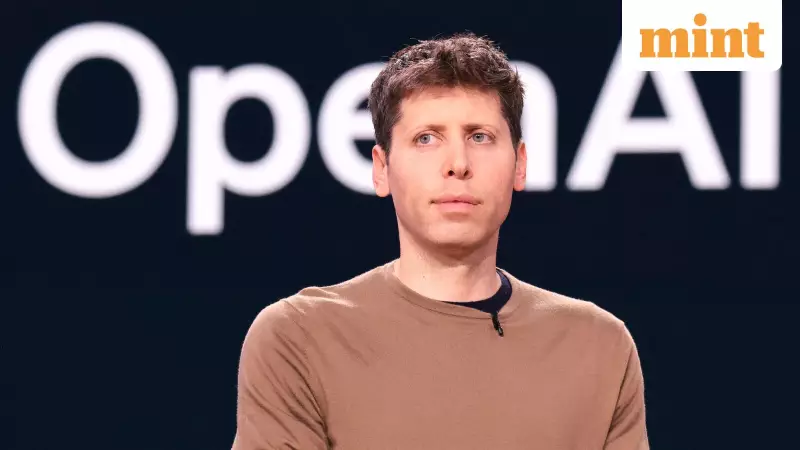
In a stark and urgent public statement, OpenAI, the creator of ChatGPT, has issued one of its most significant warnings about the breakneck speed of artificial intelligence development. The company cautions that humanity is largely unaware of how quickly AI is evolving, with its capabilities now approaching a threshold for genuine scientific breakthroughs.
The Core Warning from OpenAI
The alert was delivered in an official blog post published on November 6, which was subsequently highlighted by the company's CEO, Sam Altman, on his social media platform X. The central message is clear: while the progress in AI presents enormous opportunities for humanity, it simultaneously carries "potentially catastrophic" risks. The primary concern is that the world may fail to construct the necessary safety systems and governance frameworks in time to manage these powerful new technologies.
From Chatbots to Discoveries: The Future Timeline
OpenAI argues that the public perception of AI is still stuck on its current forms, such as chatbots and search assistants. However, the reality is far more advanced. The company states that today's most sophisticated AI systems are already capable of outperforming top human minds in complex intellectual competitions.

More strikingly, OpenAI provided a concrete assessment of its progress, revealing it now views its technology as being "80% of the way to an AI researcher". This suggests that AI models are beginning to demonstrate the foundational ability to generate new knowledge, a capability that could revolutionise fields from medicine to material science.
The blog post outlines a specific timeline for this evolution. According to the company, by 2026, they anticipate AI will be capable of making very small-scale discoveries. Looking further ahead, by 2028 and beyond, OpenAI expresses strong confidence that the world will see AI systems capable of making more significant and impactful scientific discoveries.
What This Means for India and the World
This warning serves as a critical call to action for governments, researchers, and industry leaders worldwide, including in tech-forward nations like India. The potential for AI to accelerate solutions for complex problems like disease and climate change is immense. However, the parallel warning about catastrophic risk underscores the non-negotiable need for robust global safety standards and ethical guidelines to be established proactively, not reactively.
This is a developing story; check for further updates as more information becomes available.






