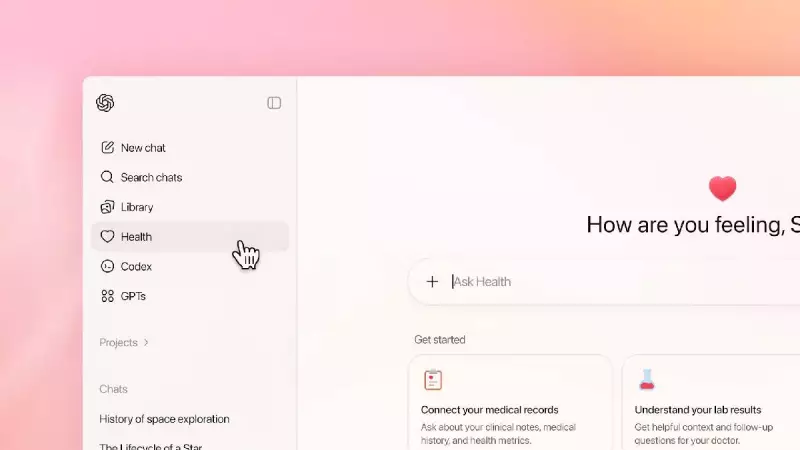
In a significant move blending artificial intelligence with healthcare, OpenAI has officially unveiled a new specialized tool named ChatGPT Health. Announced on January 8, 2026, this initiative marks the company's focused foray into the medical and personal wellness domain, aiming to revolutionize how individuals interact with and manage their health information.
What is ChatGPT Health and How Does It Work?
ChatGPT Health is a distinct, purpose-built version of OpenAI's renowned AI model, specifically designed to handle sensitive medical and wellness data. Unlike the general-purpose ChatGPT, this tool is tailored to assist users in organizing, understanding, and querying their personal health information. The core functionality revolves around allowing users to upload various types of health-related documents. Once the data is processed, the AI can answer questions, provide summaries, and offer insights based on the uploaded information, acting as a personalized health data assistant.
The system is engineered with a strong emphasis on privacy and security, given the sensitive nature of medical records. OpenAI has stated that data uploaded to ChatGPT Health is protected by robust encryption and strict access controls. The model is trained to be highly accurate and cautious in its responses, especially when dealing with potential medical interpretations, though it is crucial to note that it is not a substitute for professional medical advice from a qualified doctor.

Joining the Pilot Program and Initial Access
As of the launch date, ChatGPT Health is being introduced through a limited pilot program. Interested users cannot simply sign up via a public website. Instead, OpenAI is employing a selective process for this initial phase. Potential participants need to express their interest by joining a dedicated waitlist. The company will then extend invitations to join the pilot based on this waitlist, allowing them to test the platform and provide valuable feedback to shape its future development.
This phased rollout strategy is typical for OpenAI, allowing them to manage scale, ensure system stability, and refine features based on real-world usage before a broader public release. The pilot is a critical step in ensuring the tool is safe, reliable, and truly useful for managing personal health data.
Implications for the Future of Personal Healthcare
The launch of ChatGPT Health signals a major shift towards personalized, AI-powered health management. For users, it promises a centralized, intelligent interface for often-fragmented health data, from doctor's reports and lab results to fitness tracker logs. This could empower individuals to have more informed conversations with healthcare providers and take a more active role in their wellness journey.
However, the introduction also brings important considerations to the forefront. The success of such a tool hinges on unwavering data security, privacy compliance with regulations like HIPAA (in the US) and similar frameworks globally, and clear communication about the AI's limitations. The medical community will likely watch closely to see how this technology integrates into the healthcare ecosystem and how it navigates the complex ethical landscape of AI in medicine.
OpenAI's entry into this space with ChatGPT Health, announced on January 8, 2026, has the potential to set new standards for consumer-facing health AI. Its evolution from the pilot phase to a publicly available tool will be a key narrative to follow in the coming years, potentially reshaping the intersection of artificial intelligence and personal wellness.