OpenAI's Internal Memo Exposes Tensions with Microsoft Partnership
In a revealing internal communication, OpenAI's chief revenue officer, Denise Dresser, sent a four-page memo to employees on Sunday, outlining enterprise strategy. Buried within this playbook was a stark line that directly addressed the company's most critical—and increasingly complex—partner: Microsoft.
A Blunt Acknowledgment of Partnership Limitations
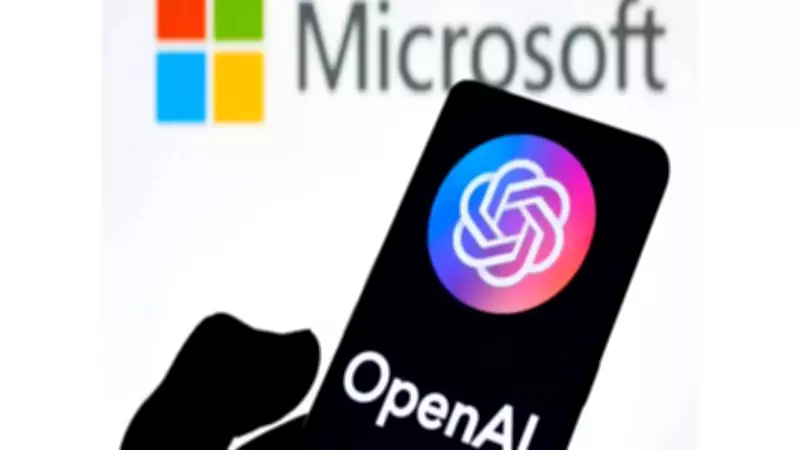
Dresser wrote, "Our Microsoft partnership has been foundational to our success. But it has also limited our ability to meet enterprises where they are." This statement marks a remarkably candid admission from OpenAI, which publicly continues to describe the relationship as "core and strategic." The memo, reviewed by CNBC and The Verge, focused on five Q2 enterprise priorities, but the mention of Microsoft resonated most powerfully due to its context in a series of ongoing tensions.
The Gradual Unraveling of the OpenAI-Microsoft Alliance
The partnership between OpenAI and Microsoft dates back to 2019, when Microsoft invested $1 billion to provide exclusive supercomputing capabilities via its Azure service. Over the years, the collaboration deepened, but signs of strain emerged well before Sunday's memo. Key developments include:

- In June 2024, OpenAI secured a $10 billion deal with Oracle for additional compute capacity.
- Later that year, OpenAI collaborated with SoftBank, Thrive, Nvidia, and Oracle on the Stargate AI data center project, notably excluding Microsoft.
- Microsoft quietly added OpenAI to its list of competitors in an annual report, signaling a shift in dynamics.
- By March 2025, OpenAI executives considered publicly accusing Microsoft of anticompetitive behavior and exploring federal regulatory review of their contract, though this did not materialize.
- In September 2025, the two companies signed a non-binding memorandum of understanding to resolve tensions and restructure enterprise AI deployments.
However, this peace was short-lived. On April 2, 2026, Microsoft released three proprietary foundational models under its Microsoft AI brand, marking the clearest break yet from the partnership and positioning OpenAI against the very company that helped build it.
Framing the Amazon Deal as a Strategic Solution
Dresser's memo did not merely observe the Microsoft issue; it set the stage for a pivot. Immediately following the critical line, she highlighted OpenAI's $50 billion partnership with Amazon Web Services (AWS), announced in late February, as the key to unlocking enterprise customer access. She noted, "For many [enterprises], that's Bedrock," referring to Amazon's cloud AI platform, and added that customer demand since the announcement has been "frankly staggering."
Legal Complexities and Existential Necessities
The Amazon partnership, however, is embroiled in legal challenges. Microsoft is considering legal action, arguing that the deal may violate an agreement requiring all access to OpenAI's models to be routed through Azure. OpenAI and Amazon are attempting to circumvent this with a technical workaround called a Stateful Runtime Environment on Bedrock, but Microsoft's engineers dispute its validity under contract terms.
In a document prepared for investors ahead of its anticipated IPO, OpenAI itself identified the Microsoft relationship as a risk factor, emphasizing the need to develop additional partnerships. This context frames the Amazon deal not as a mere strategic move but as an existential necessity for OpenAI's growth and independence.
The IPO Imperative: Reducing Dependency on Microsoft
OpenAI reported $13.1 billion in revenue for 2025 and holds a valuation of $730 billion. Dresser disclosed that enterprise accounts contribute 40% of this revenue and are projected to match the consumer business by year-end. To appeal to public market investors, OpenAI must demonstrate it is not structurally reliant on a single partner that has now become a competitor.

The memo's reference to Microsoft serves as a critical data point in this narrative, signaling to employees and the broader market that OpenAI recognizes the partnership's foundational role but is actively working to overcome its constraints. Microsoft has declined to comment on the leaked memo.