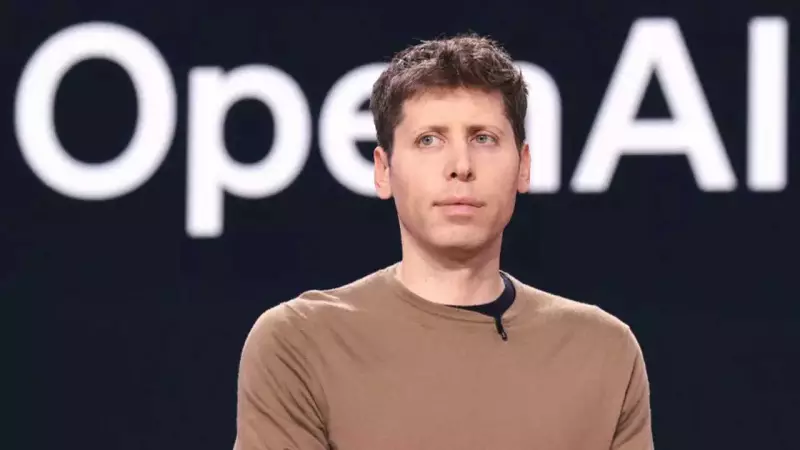
OpenAI Strikes Hard at Thinking Machines Lab in Major Talent Grab
OpenAI has executed a strategic move against a growing competitor. The artificial intelligence giant has successfully recruited three founding members from Thinking Machines Lab. This startup is led by former OpenAI Chief Technology Officer Mira Murati.
The poached researchers include Barret Zoph, Luke Metz, and Sam Schoenholz. All three are now returning to OpenAI. Reports indicate that additional Thinking Machines researchers are currently in discussions to make similar moves.
A Familiar Pattern in Silicon Valley's AI Wars
This aggressive hiring tactic mirrors actions taken by Meta last year. Mark Zuckerberg's company reportedly offered compensation packages worth approximately $200 million to attract top AI researchers. OpenAI's latest hiring spree has left Thinking Machines Lab reeling from the loss.

The startup has now lost half of its cofounders in less than one year since its launch. Fidji Simo, OpenAI's CEO of applications, officially announced these hirings on Wednesday. She stated that these moves had been "in the works for several weeks."
Zoph will report directly to Simo in his new role. Metz and Schoenholz will work under Zoph's supervision. At least two more researchers from Thinking Machines are reportedly departing. Lia Guy and Ian O'Connell are both leaving, with Guy specifically heading to OpenAI.
The Messy Backstory Behind the Departures
The talent grab followed a complicated separation. Murati informed her staff that she had terminated Zoph's employment due to "unethical conduct." However, OpenAI disputed these concerns in an internal company memo.
According to reports from Wired and the Wall Street Journal, Zoph had an undisclosed workplace relationship. This relationship involved another employee in a leadership position who has since left the company.
Sources told Wired that Murati confronted Zoph about this relationship last summer. Their professional relationship deteriorated significantly afterward. Zoph began speaking with competitors including Meta before ultimately choosing to return to OpenAI.
In her internal message to employees, Murati cited a history of performance and conduct issues. These issues reportedly dated back to mid-2025.
When Billion-Dollar Valuations Cannot Retain Talent
The fundamental problem for startups like Thinking Machines is not funding but timing. The company can offer equity potentially worth billions of dollars. However, this represents a long-term investment for employees.
Meanwhile, established giants like Google and Meta provide compensation that materializes in months rather than years. These companies have sweetened their offers with accelerated vesting schedules. These schedules turn stock options into actual money almost immediately.
OpenAI and Anthropic possess another significant advantage. Both companies have floated plans for initial public offerings within the next year or two. For employees, this provides a concrete exit timeline.
Contrast this with a startup that is barely one year old. Thinking Machines has no public product roadmap and an uncertain path to liquidity. The choice for researchers becomes less about believing in the mission. It becomes more about when they can actually purchase that house or achieve financial security.
The Irony of Silicon Valley Competition
Thinking Machines raised an impressive $2 billion in July. This funding came at a $12 billion valuation, marking one of Silicon Valley's largest seed rounds ever. The startup was even in talks to raise more capital at a $50 billion valuation as recently as November.
However, these eye-popping valuations have not translated into strong employee retention. The startup released just one product called Tinker in October. Tinker is an API designed for fine-tuning large language models.
For Mira Murati, these talent losses represent a harsh Silicon Valley irony. Murati played a role in Sam Altman's brief ouster from OpenAI back in 2023. Now she watches her former company systematically dismantle the team she built specifically to compete against OpenAI.

The ongoing talent war highlights the intense competition for artificial intelligence expertise. Established companies with immediate compensation and clear exit strategies continue to attract top researchers away from promising but uncertain startups.