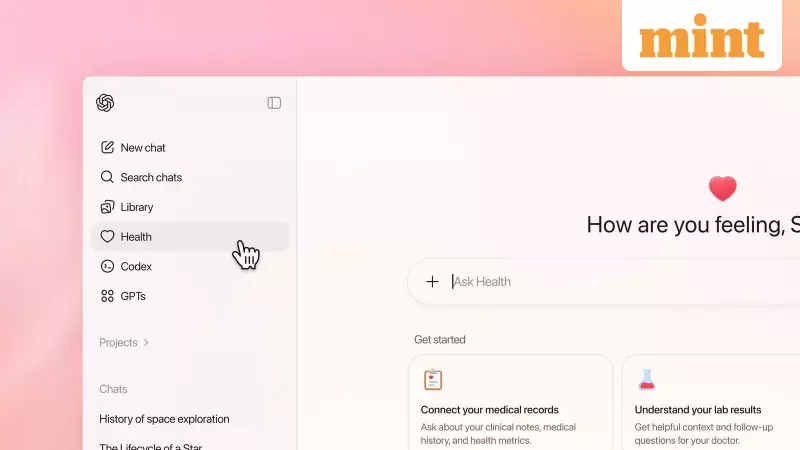
In a significant move blending artificial intelligence with personal wellness, OpenAI has officially unveiled its latest feature: ChatGPT Health. This innovative tool is designed to transform how individuals manage their health by providing highly personalized advice, drawing directly from their medical history and daily fitness data.
What is ChatGPT Health and How Does It Work?
The core idea behind ChatGPT Health is simple yet powerful: to offer tailored health and fitness guidance by connecting the AI to a user's personal health ecosystem. The feature allows users to securely upload their medical records, including doctor visit notes, lab results, prescriptions, and full medical history. Beyond static records, it also syncs in real-time with popular wellness applications.
This integration includes major platforms like Apple Health for activity and sleep tracking, MyFitnessPal for dietary logs, Peloton for workout data, and others such as Function, Weight Watchers, AllTrails, and Instacart. By consolidating this information, ChatGPT Health aims to move beyond generic answers to provide context-aware, specific recommendations related to diets, workouts, and lab interpretations.

Rigorous Development and Global Medical Insight
OpenAI did not develop this sensitive feature in isolation. The company invested two full years in building ChatGPT Health, collaborating extensively with the global medical community. Over 260 medical professionals and physicians contributed to its development, ensuring the AI's responses are both helpful and safe.
These experts hail from more than 60 countries and cover dozens of medical specialties, providing a broad and diverse perspective on healthcare practices. This extensive consultation was crucial for OpenAI to understand how to craft health-related answers that are useful while minimizing potential harm, a critical concern for any AI tool in the medical domain.
Access, Availability, and User Experience
For users, interacting with ChatGPT Health will feel familiar. Once data is uploaded and apps are connected via a dedicated "Apps" section, users can chat with the AI as they normally would. The difference is that the AI's responses will now be informed by the user's unique health profile. Users can also provide specific instructions or upload new documents during a chat session to get increasingly refined advice.
The feature is accessed through a new "Health" tab in the ChatGPT sidebar on the web version. However, availability is currently limited. ChatGPT Health is on a waitlist, with an initial, very limited rollout to users in the United States. OpenAI plans to make it available to free users, with paid subscribers receiving priority access, but it will not be immediately launched in the European Economic Area, Switzerland, or the United Kingdom.
This launch addresses a clear user demand, as over 200 million users already turn to ChatGPT for health-related questions each week. By introducing ChatGPT Health, OpenAI aims to make these interactions substantially more accurate and personally relevant, marking a new step in the convergence of AI and everyday healthcare management.