OpenAI's Nonprofit Push Targets AI Scale Across India
Artificial intelligence is rapidly transitioning from experimental projects to real-world applications within India's social sector. OpenAI has initiated a four-city nonprofit workshop tour to speed up this adoption process. The tour specifically targets organizations that serve rural communities. This move represents a clear shift in strategy. It acknowledges the existing gaps between promising AI pilots and their successful large-scale implementation.
Bringing AI to the Doorstep of Nonprofits
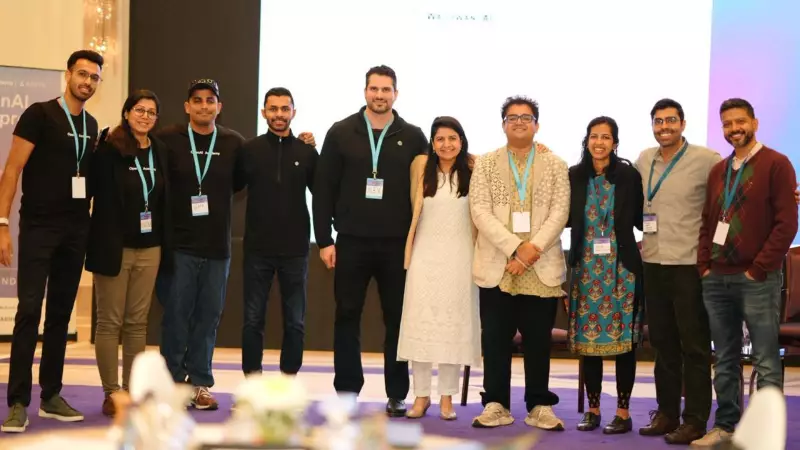
OpenAI's Nonprofit Jam series began in Bengaluru on January 15. The company designed this initiative to directly engage with nonprofit organizations across the country. Pragya Misra, who leads strategy and global affairs for OpenAI India, explained the motivation. She stated this tour acts as a strategic precursor to their upcoming AI Impact Summit in February. The core theme is creating tangible impact.
"We wanted to engage with nonprofits more deeply," Misra said. "This is primarily to accelerate the integration of AI into the social sector." OpenAI is conducting these workshops in partnership with Karya and the Wadhwani AI foundation.

Misra observed a recurring pattern since joining OpenAI in April 2024. The same group of early adopters often appeared at AI events. While these individuals showed great enthusiasm, the depth of actual AI integration into daily workflows remained limited. India's nonprofit ecosystem is vibrant, but it lacked deep technological adoption.
Surprising Leadership from the Social Sector
Interestingly, India's nonprofit sector has shown more eagerness to adopt AI tools than many private enterprises. Misra highlighted this unexpected trend. "We saw much more leaning in and adoption in the nonprofit and social sector in India than we even saw in the private sector," she noted. The reason is straightforward. Social sector organizations constantly strive to maximize outcomes with very limited resources. AI presents a powerful tool for efficiency.
The Challenge of Moving from Pilot to Deployment
The journey from a successful pilot project to nationwide deployment remains a significant hurdle. Misra identified commercialization pathways as a primary bottleneck. Pilot projects often demonstrate immense impact. However, the path to scaling them commercially or rolling them out across India is not clear. This creates a major stumbling block.
Another key challenge is the collaborative nature of the nonprofit ecosystem. An organization might excel in a specific sector within a particular state. Scaling that success nationally requires partners in other regions. Finding partners with compatible technological capabilities can be difficult.
Real-World Examples of AI Impact
When asked about specific AI capabilities nonprofits are adopting, Misra shared compelling examples. She mentioned organizations like Nura Health, Rocket Learning, Agami, and Udhyam Learning.
"From Udhyam's Saathi helping shy girls build confidence through mock pitches to Rocket Learning using AI for auto-grading and lesson planning, AI takes over the monotony so humans can focus on what matters," Misra explained. She emphasized a critical point. In all these applications, a human remains firmly in the loop. The technology does not replace people. It works alongside them, enhancing human confidence, creativity, and teaching capabilities.
Bridging the Gap Between Ambition and Reality
The Nonprofit Jam workshops aim to help organizations move from experimentation to actual deployment. Participants work with OpenAI experts to understand how tools like ChatGPT can support program delivery and improve decision-making.
Chintan Donda, a senior machine learning engineer at Wadhwani AI, elaborated on the challenges. Nonprofits are setting ambitious AI goals. These include predicting crop failure, identifying at-risk students, or enabling automated health triage. Translating these ideas into reality requires navigating sector-specific obstacles.

Despite India's advanced digital public infrastructure like Aadhaar and UPI, much ground-level data is still collected manually. The Digital Personal Data Protection Act adds another layer. It introduces privacy and consent requirements that many nonprofits are still learning to manage, especially when working with marginalized groups.
Talent limitations often push organizations toward general-purpose models like ChatGPT or Gemini. Donda noted a drawback. "While these tools provide quick access to AI capabilities, they may not always offer the level of localisation or customisation desired for specific social-sector contexts."
Designing AI for India's Unique Conditions
Donda stressed the need to shed imported assumptions for effective AI deployment. The focus must shift from merely sophisticated models to building resilient AI systems that work in real-world Indian conditions.
The human-in-the-loop model is critical. Voice-first design often matters more than sophisticated web interfaces. A high-end dashboard is frequently unusable for field workers in remote areas with poor internet. Deployment through familiar platforms like WhatsApp or IVR systems, in local dialects, ensures better adoption. It fits seamlessly into existing workflows.
Measuring Success Through Community Impact
How does OpenAI measure the success of these nonprofit efforts? Misra clarified that success is not measured by workshop attendance. The true metric is whether organizations can serve more communities months from now.
"The real value of this technology is going to be unlocked in tier-three rural communities, and that is where we are seeing a lot of impact coming in," she said.
The metrics are qualitative. Can an organization serving lakhs of people double its reach? Can it launch new services because AI efficiently handles existing work? "It is hard to put a number to these things," Misra acknowledged. However, by maintaining close relationships with nonprofits, OpenAI receives direct feedback. Organizations share heartwarming stories about how collaborative work with AI models is genuinely changing lives on the ground.
OpenAI's four-city tour marks a dedicated effort to bridge the gap between AI potential and practical, scalable impact in India's vital social sector.