

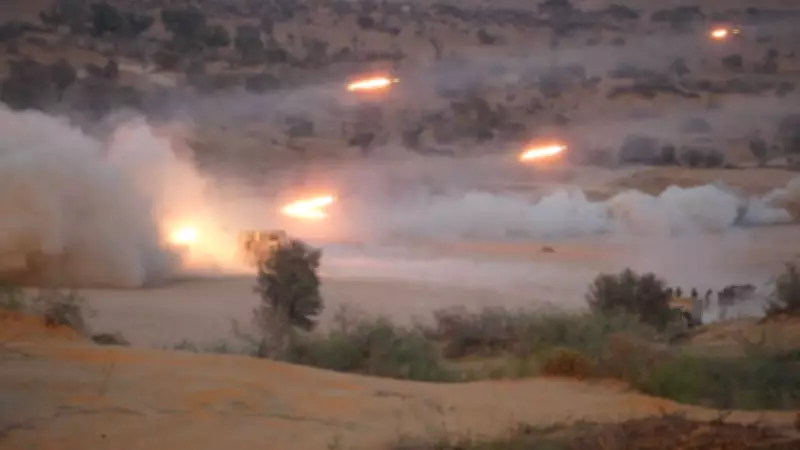
The Indian Army, adhering to the principle that peacetime preparation minimizes wartime casualties, is undergoing a significant transformation under the banner of Operation Sindoor 2.0. Chief of Army Staff General Upendra Dwivedi, while addressing the Passing Out Parade at the National Defence Academy, emphasized that India is actively preparing for the next phase of conflict.
Post-Sindoor Doctrine Shift
One year after the 88-hour Operation Sindoor, lessons learned have reshaped India's counter-terror doctrine and combat readiness. The military has shifted from a reactive defense posture to a preemptive, technology-driven punitive deterrence strategy. This was validated during the tri-service Trishul Exercise in November 2025, which demonstrated integrated multi-domain operations under compressed timelines. The exercise synchronized sensors, shooters, and decision-making into a kill-web architecture, showcasing the army's new operational capabilities.
Structural Reforms and New Formations
The Indian Army has decisively transitioned from manpower-heavy tactics to a high-tech, multi-domain force centered around unmanned systems, artificial intelligence, and lean rapid-response units. Structural changes have been implemented to enhance offensive capabilities. The army has raised Rudra Brigades and Bhairav light commando battalions, which enable infantry operations in difficult terrain and free special forces for strategic missions. These formations reflect a structural move toward speed and flexibility.

Integration of Unmanned Systems
Unmanned systems have been embedded into army units at various levels. Infantry battalions have raised Ashni drone platoons, while the Regiment of Artillery is set to be equipped with Divyastra batteries and Shaktibaan regiments. The Armoured Corps has showcased Shaurya Squadrons, though this initiative remains under review. These drone-equipped units are capable of conducting surveillance, precision strikes, electronic warfare, and logistics support.
Late last year, the Army placed orders worth approximately Rs 5,000 crore for indigenous drones, including loitering munitions, kamikaze drones, and surveillance UAVs. This investment underscores the army's commitment to leveraging drone technology for future operations.
Challenges and Future Outlook
Despite these advancements, progress on establishing Integrated Theatre Commands has stalled. India has yet to create an Integrated Rocket Force, even as Pakistan and China have advanced their own rocket force structures. The army's post-Sindoor changes reflect tactical innovation through new formations, drones, and doctrinal shifts, but further integration and modernization are needed to maintain a strategic edge.
The Indian Army's transformation under Operation Sindoor 2.0 marks a significant step toward a more agile, technology-driven force capable of addressing future threats in a rapidly evolving security environment.






