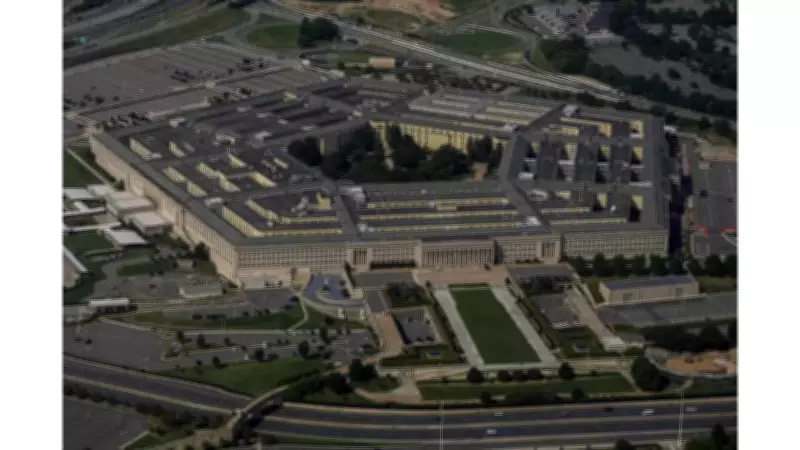
Pentagon Requests Unrestricted AI Access for Classified Military Operations
The United States Department of Defense has reportedly issued a classified request to leading artificial intelligence companies, seeking to bypass standard usage restrictions and deploy their advanced AI tools directly on classified military networks. According to sources familiar with the matter, this initiative aims to integrate cutting-edge AI capabilities into sensitive defense operations, including mission planning and weapons targeting.
Breaking Down the Pentagon's AI Ambitions
Emil Michael, the Pentagon's Chief Technology Officer, announced these plans at a recent White House event, informing executives from companies like OpenAI and Anthropic about the military's goal to make AI models accessible in both unclassified and classified domains. "The Pentagon is moving to deploy frontier AI capabilities across all classification levels," an anonymous official revealed to Reuters, highlighting the strategic push to leverage AI in modern warfare scenarios.
This request forms part of ongoing negotiations between the Department of Defense and generative AI firms, focusing on how the US military can utilize AI on future battlefields. These environments are increasingly characterized by autonomous drone swarms, robotic systems, and sophisticated cyberattacks, making AI integration a critical priority for defense strategists.

AI Companies and Military Collaboration: A Complex Landscape
While several AI companies are already developing custom tools for the US military, most are currently limited to unclassified networks used primarily for administrative purposes. Notably, Anthropic's AI is accessible in classified settings through third-party intermediaries, but the government remains constrained by the company's usage policies. The Reuters report indicates that the Pentagon's latest move could intensify debates over military desires for unrestricted AI access versus tech companies' efforts to establish ethical boundaries.
AI researchers have raised concerns about potential risks, noting that AI tools can make errors or generate plausible-sounding but inaccurate information. In classified military contexts, such mistakes could have severe consequences, underscoring the tension between innovation and safety.
Recent Developments and Corporate Responses
OpenAI recently finalized an agreement with the Pentagon, permitting military use of its tools, including ChatGPT, on an unclassified network called genai.mil. This platform has been deployed to over 3 million Department of Defense employees, with OpenAI agreeing to relax many typical user restrictions while retaining some safeguards. Similar deals have been struck with other tech giants like Alphabet's Google and xAI.
However, OpenAI clarified that this week's agreement specifically pertains to unclassified use via genai.mil. Expanding access to classified networks would necessitate a new or modified agreement, according to a company spokesperson.
Anthropic's Stance and Ongoing Discussions
In contrast, discussions between Anthropic and the Pentagon have been more contentious. Anthropic executives have explicitly stated they do not want their technology used for autonomous weapons targeting or domestic surveillance within the United States. An Anthropic spokesperson emphasized the company's commitment to supporting national security, stating, "Claude is already extensively used for national security missions by the US government, and we are in productive discussions with the Department of War about ways to continue that work."
It is worth noting that US President Donald Trump has ordered the Department of Defense to be renamed the Department of War, a change that would require congressional approval to implement fully.
The Broader Implications for AI and Military Strategy
Military officials are keen to harness AI's ability to synthesize vast amounts of information to inform decision-making processes. However, AI companies have implemented safeguards and guidelines to mitigate risks, a practice that Pentagon officials have sometimes objected to, arguing that commercial AI tools should be deployable as long as they comply with American law.

As negotiations continue, the outcome of these discussions will likely shape the future of AI integration in defense operations, balancing technological advancement with ethical considerations and operational security.