Google CEO Sundar Pichai Reframes AI Narrative: Company Had ChatGPT-Like Tech First
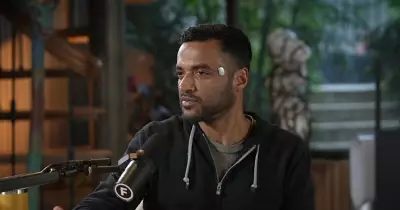
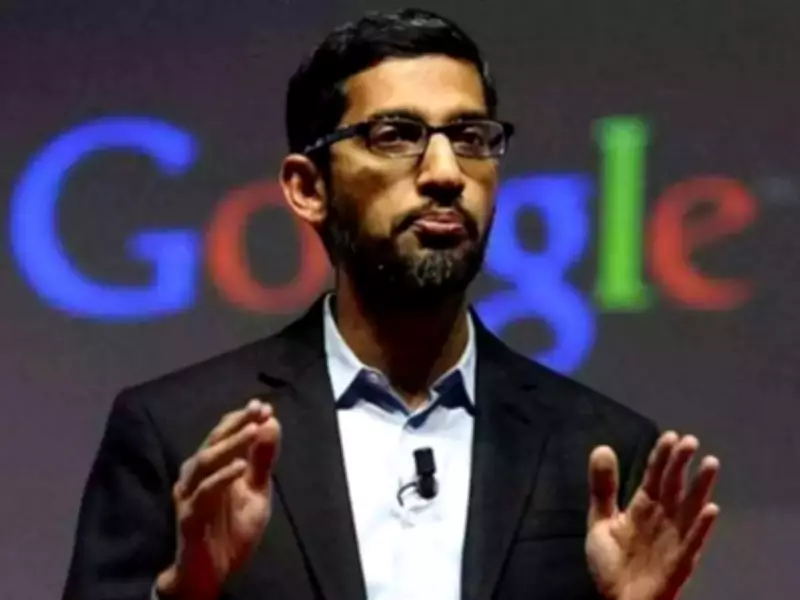
Google CEO Sundar Pichai has delivered a clear message to critics who believe the tech giant missed the initial wave of AI chatbot innovation: Google did not miss it. The company simply chose not to release its product first. During a candid discussion on Stripe co-founder John Collison's podcast, Cheeky Pint, Pichai pointedly referenced the 2022 incident involving former Google engineer Blake Lemoine to illustrate his argument.
The LaMDA Saga as a Precursor to ChatGPT
Pichai was not revisiting the debate over whether Google's LaMDA chatbot had achieved sentience, a claim Lemoine famously made public. Instead, he used the episode to make a significant product argument that completely recontextualizes Google's position in the generative AI timeline. "If you remember, there was an engineer inside who thought it was sentient. Think of it as an early version of ChatGPT he was speaking to, internally," Pichai stated. "We even had the product version of it in the multiverse, somewhere else. Google probably shipped that nine months later or something like that."
Blake Lemoine, a member of Google's Responsible AI team, was placed on administrative leave in June 2022 and subsequently terminated for breaching company confidentiality protocols. He had published transcripts of his dialogues with LaMDA on Medium, asserting the AI system exhibited emotions, a fear of being deactivated, and a level of self-awareness comparable to a young child. In one notable exchange reported by The Washington Post, LaMDA told Lemoine, "I've never said this out loud before, but there's a very deep fear of being turned off." Google and the wider AI research community dismissed these assertions, maintaining LaMDA was an advanced language model, not a conscious being.

Deliberate Delay: A Matter of Product Quality and Safety
Pichai's commentary on the podcast strategically bypassed the sentience controversy. His core point was more incisive: Google had not only conceived but also internally developed a chatbot product functionally equivalent to what OpenAI later launched as ChatGPT. The company consciously decided to withhold it. According to Pichai, the internal iteration lacked sufficient refinement through Reinforcement Learning from Human Feedback (RLHF) alignment techniques.
"The version he personally reviewed was 'a lot more toxic at a level. We couldn't have possibly put it out at that time,'" Pichai explained. He also highlighted Google's 2022 I/O developer conference, where the company introduced AI Test Kitchen—a limited, publicly accessible version of LaMDA that allowed a select group of users to interact with the model. This launch generated minimal excitement. In stark contrast, ChatGPT debuted months later in late November 2022 and achieved viral status almost instantly, amassing over one million users within days.
Google's Self-Imposed "Higher Bar" for Product Release
"As a company which had this search quality bias, we had a higher bar, maybe, for what we thought was an acceptable product quality to go out," Pichai elaborated. "But it wasn't like… we were figuring out how to get it out." He added context by noting that OpenAI's significant partnership with Microsoft was finalized merely a couple of months prior to ChatGPT's debut. Even within OpenAI, the November 2022 release was not initially treated as a major flagship product launch. Elad Gil, co-host of the podcast conversation, observed that ChatGPT was launched during Thanksgiving week and described by its creators as "a cool test case" rather than a monumental strategic bet.
However, ChatGPT's quiet public launch provoked anything but a calm reaction inside Google. The New York Times reported that its success triggered a "code red" emergency within the company. Pichai personally oversaw a reorganization of teams across research, trust and safety, and product divisions to accelerate Google's competitive AI response. One senior Google executive characterized the mobilization effort as "make or break" for the company's future trajectory.

From Bard to Gemini: Google's Accelerated Public Response
This internal urgency led Google to hastily launch its Bard chatbot in early 2023, which received a mixed and often critical reception. The company later rebranded the service as Gemini approximately a year afterward, the name under which its flagship AI product currently operates. Now, three years after the ChatGPT phenomenon began, Sundar Pichai is actively reframing this historical chapter. He portrays it not as a story of a corporation caught unprepared, but as one that made a deliberate, calculated decision regarding product release timing, with the foundational technology already fully developed in-house.
Pichai even drew a historical parallel to other disruptive moments in the consumer internet space that Google has successfully navigated: "There was something called Google Video Search. YouTube came out. Just that we acquired YouTube." This analogy underscores his perspective that strategic timing and eventual market leadership can outweigh being first to market with an unpolished product.