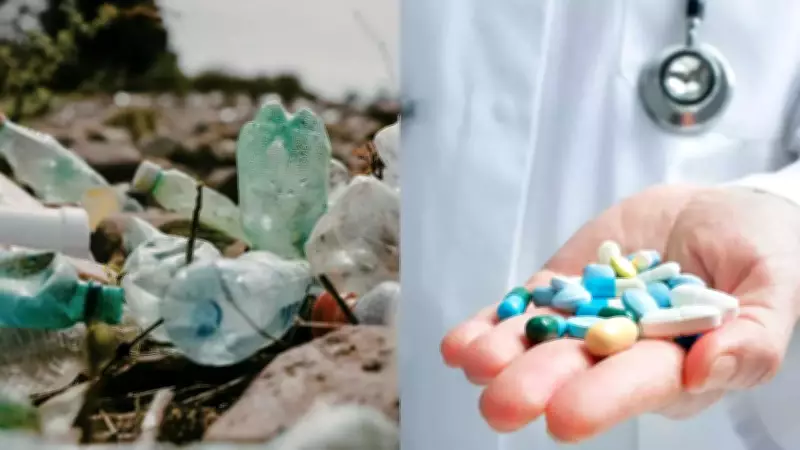
From Environmental Problem to Medical Solution: Plastic Waste Transformed into Parkinson's Drug
Plastic waste has long represented one of humanity's most persistent environmental challenges, with discarded bottles accumulating in landfills, polluting oceans, and persisting for centuries without decomposing. However, a revolutionary shift in scientific thinking is emerging that could transform this environmental burden into a valuable medical resource.
Breakthrough Research from University of Edinburgh
A groundbreaking study from the University of Edinburgh reveals that discarded plastic, particularly polyethylene terephthalate (PET) commonly used in beverage bottles and food packaging, can be converted into L-DOPA, a vital medication for treating Parkinson's disease. This innovative approach represents a paradigm shift where scientists are no longer viewing plastic purely as waste but rather as a potential raw material for pharmaceutical production.
The Transformation Process: From Bottle to Medicine
The conversion process begins with decomposing PET plastic into its fundamental chemical components. Through this decomposition, researchers obtain terephthalic acid, which serves as the foundational chemical for subsequent reactions. The real breakthrough occurs when genetically modified Escherichia coli bacteria are introduced into the process.

These specially engineered microbes perform a series of biological reactions that transform the plastic-derived chemicals into L-DOPA, the standard treatment for Parkinson's disease that helps replenish dopamine levels in the brain and alleviates symptoms including tremors, stiffness, and movement difficulties.
What makes this discovery particularly remarkable is the complete transformation pathway: a discarded plastic item with minimal perceived value gradually becomes a high-value pharmaceutical product that improves human health and quality of life.
Dual Benefits: Environmental and Medical
Traditional pharmaceutical manufacturing typically relies on fossil fuels and energy-intensive processes that, while effective, present significant sustainability challenges. This new approach using plastic waste as raw material offers multiple advantages:
- Reduced environmental pollution by diverting plastic from landfills and oceans
- Decreased dependence on non-renewable resources for pharmaceutical production
- Addressing the plastic recycling gap where current facilities cannot process all PET produced annually
- Creating valuable medical products from materials previously considered worthless
University experts emphasize that this method could simultaneously tackle two critical global issues: the escalating plastic waste crisis and the growing demand for affordable, sustainable pharmaceutical production.
Scaling Up the Technology
While researchers have successfully demonstrated this technique at a preparative scale in controlled laboratory settings, significant challenges remain before industrial implementation becomes feasible. The process requires optimization to become faster, more efficient, and cost-competitive with established manufacturing methods.
Current research efforts focus on improving the system's environmental and economic performance, with scientists working to enhance reaction rates, increase yield efficiency, and reduce production costs. The research team continues to refine the biological and chemical processes involved, exploring ways to scale up the technology while maintaining quality and consistency.
Future Implications and Research Directions
This pioneering research opens numerous possibilities for future applications. Beyond Parkinson's disease treatment, scientists speculate that similar approaches could be developed for producing other pharmaceutical compounds from plastic waste. The interdisciplinary nature of this work—combining materials science, biochemistry, and pharmaceutical engineering—suggests a new frontier in sustainable medicine production.

As research progresses, the scientific community anticipates that this technology could eventually contribute to circular economy models where plastic waste becomes a valuable feedstock rather than environmental pollution. The successful implementation of such systems would represent a significant step toward more sustainable healthcare systems and environmental management practices worldwide.