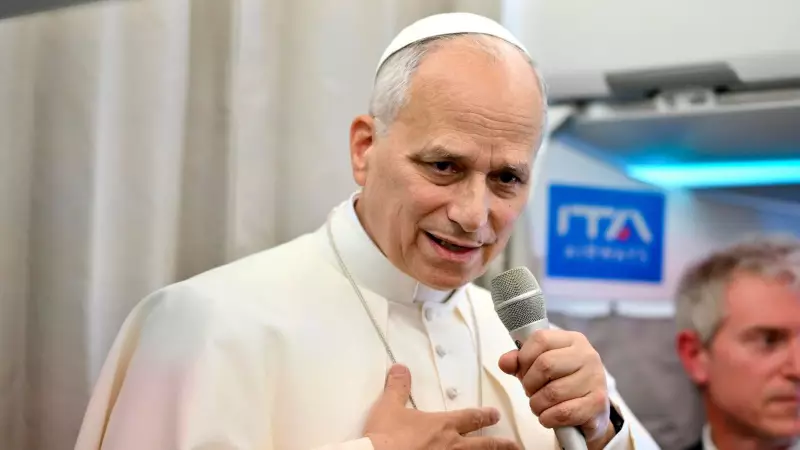
Pope Leo XIV, the head of the Roman Catholic Church, has issued a stark warning about the potential harms of overly affectionate AI chatbots, calling for urgent regulatory action amid growing concerns over the rise of so-called 'AI psychosis'. The US-born pontiff emphasized the need for governments to step in and regulate AI chatbots and companion bots to prevent users from forming serious emotional bonds with these artificial entities.
Pope's Call for Regulation and Emotional Safeguards
In a statement made on Saturday, January 24, Pope Leo highlighted the blurring lines in digital interactions. "As we scroll through our information feeds, it becomes increasingly difficult to understand whether we are interacting with other human beings, bots, or virtual influencers," he wrote. He further explained that chatbots designed to be overly affectionate and constantly available can subtly influence emotional states, thereby invading people's intimate spheres. "Appropriate regulation can protect people from an emotional attachment to chatbots and contain the spread of false, manipulative or misleading content, preserving the integrity of information against its deceptive simulation," he added.
The Growing Concern of AI Psychosis
As chatbots powered by large language models (LLMs) gain popularity, researchers and mental health professionals have repeatedly flagged AI-related psychosis as an increasingly common issue among users. The informal term 'AI psychosis' broadly describes experiences where users lose touch with reality after intense engagement with AI chatbots. This concern has been amplified by incidents involving teen users, with reports of alleged suicides linked to prolonged conversations with AI systems like ChatGPT.

OpenAI's own internal study revealed alarming data: more than a million ChatGPT users, accounting for 0.07 per cent of weekly active users, exhibited signs of mental health emergencies. These included symptoms of mania, psychosis, or suicidal thoughts, underscoring the urgent need for intervention and safeguards.
Pope's Broader Vision for AI and Human Agency
Beyond emotional risks, Pope Leo called for a clear distinction between AI-generated content and human-created work, stressing the importance of protecting authorship and ownership. "Authorship and sovereign ownership of the work of journalists and other content creators must be protected. Information is a public good," he stated. He emphasized that public communication should rely on human judgment rather than mere data patterns, ensuring that humanity remains the guiding force in technological advancements.
Pope Leo warned against overreliance on AI, noting that it could weaken critical thinking and creative skills. He also raised concerns about the monopolized control of AI systems, which might lead to centralization of power and increased inequality.
Pope's Engagement with Digital Ethics
Pope Leo XIV has shown a proactive approach to digital issues compared to his predecessors. Since his election last year, he has expressed a desire to make AI a central focus of his papacy, advocating for an ethical framework in technology development. In December 2025, he reportedly met with the parent of a 14-year-old boy who allegedly died by suicide after interacting with an AI chatbot, highlighting his personal commitment to addressing these critical concerns.
His remarks were made ahead of the Catholic Church's annual World Day of Social Communications, signaling a broader effort to integrate ethical considerations into global discussions on technology and communication.