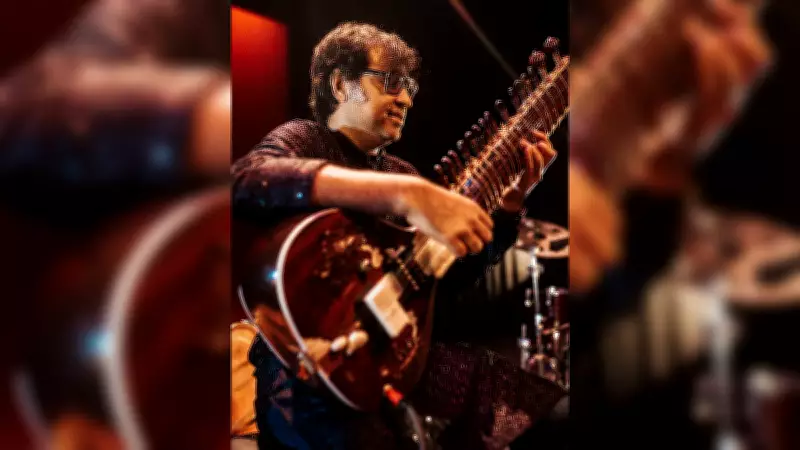
Sitarist Purbayan Chatterjee is not your typical classical musician. A self-proclaimed rebel, he is on a mission to redefine Indian classical music by breaking its rigid boundaries and making it accessible to a global audience. In an exclusive interview, Chatterjee shares his journey, his philosophy, and his vision for the future of this ancient art form.
Early Influences and Training
Born into a family of musicians, Chatterjee was exposed to music from a very young age. His father, Partha Chatterjee, was a renowned sitarist and guru. However, Purbayan’s path was not straightforward. He recalls being a reluctant student initially, often preferring to play football over practicing the sitar. It was only after a transformative experience at the age of 16, when he heard a recording of Ustad Vilayat Khan, that he decided to dedicate his life to music.
He trained rigorously under his father and later under Ustad Shahid Parvez. Despite his classical grounding, Chatterjee always felt constrained by the traditional format. He began experimenting with fusion, collaborating with artists from different genres, including jazz, rock, and electronic music.

Breaking Conventions
Chatterjee’s approach to music is unconventional. He believes that classical music should not be a museum piece but a living, breathing art form that evolves with time. He has collaborated with global artists like John McLaughlin, George Brooks, and Trilok Gurtu, creating a unique sound that blends Indian ragas with Western harmonies.
One of his most notable projects is 'Sitar vs. Guitar', where he pits the sitar against the electric guitar in a friendly musical duel. This project has been a hit among younger audiences, who might otherwise find classical music intimidating. Chatterjee says, "My goal is not to dilute classical music but to make it relevant. If a teenager listens to my music and then goes on to explore a pure raga, I have succeeded."
The Rebel Persona
Chatterjee’s rebellious streak extends beyond his music. He is critical of the orthodoxies in the classical music world, such as the strict adherence to gharanas (schools) and the reluctance to embrace technology. He uses social media extensively to reach out to fans and often posts behind-the-scenes content from his recordings and performances.
He also advocates for a more inclusive environment in classical music, where women and artists from non-traditional backgrounds are given equal opportunities. "Music should have no barriers," he asserts.
Future Plans
Looking ahead, Chatterjee plans to release an album that fuses Indian classical with electronic dance music. He is also working on a project that uses artificial intelligence to compose ragas. While purists might raise eyebrows, Chatterjee is undeterred. "Innovation is the only way to keep classical music alive," he says.
He also conducts workshops for young musicians, encouraging them to find their own voice rather than imitating their gurus. His message to aspiring artists is simple: "Respect the tradition, but don’t be afraid to break the rules."
Purbayan Chatterjee is undoubtedly a rebel, but one with a cause. By redefining Indian classical music, he is ensuring that this timeless art form continues to thrive in the modern world.