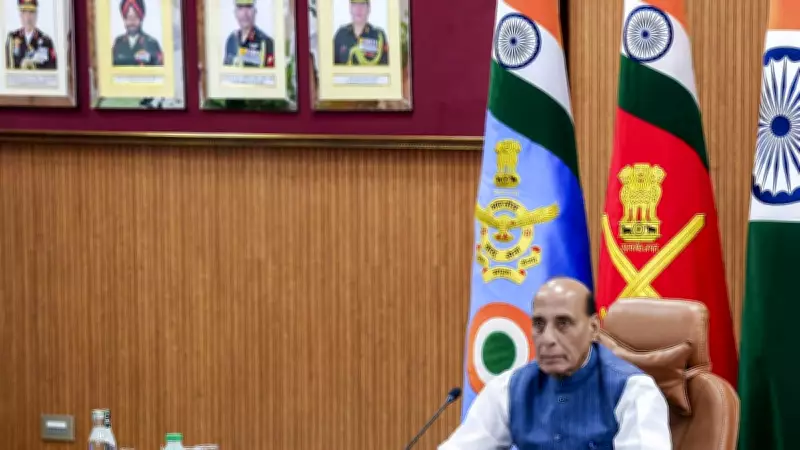
Defence Minister Rajnath Singh has stressed the urgent need to boost artificial intelligence (AI) and autonomous system capabilities for future warfare. Speaking on the first anniversary of Operation Sindoor, he described the 88-hour conflict between India and Pakistan as a 'short-duration, deep-penetration, high-intensity, and high-impact operation.'
Emphasis on Technological Advancement
Singh highlighted that modern warfare is evolving rapidly, and India must stay ahead by investing in cutting-edge technologies. He said, 'We need to boost AI and autonomous system capability for future warfare to ensure our armed forces are prepared for any challenge.' The minister underscored the importance of indigenously developed systems to reduce dependence on foreign technology.
Operation Sindoor: A Case Study
Reflecting on Operation Sindoor, Singh noted that the operation demonstrated India's ability to conduct precise and swift military actions. The 88-hour conflict, he said, showcased the effectiveness of coordinated planning and execution. 'It was a short-duration, deep-penetration, high-intensity, and high-impact operation,' he reiterated, adding that lessons from such operations should guide future strategies.

The minister also called for greater collaboration between the armed forces, research institutions, and the private sector to accelerate innovation in defence technology. He emphasized that AI-driven systems, including drones, surveillance, and autonomous vehicles, would play a critical role in future conflicts.
Strategic Autonomy
Singh reiterated the government's commitment to achieving self-reliance in defence production. He said that boosting indigenous capabilities in AI and autonomous systems is essential for strategic autonomy. 'We must not only adopt but also lead in these technologies to safeguard our national interests,' he added.
The event was attended by senior military officials and defence experts, who discussed the way forward for modernising India's defence forces.