There is something peculiar happening in research on generations. Psychologists are noticing that adults who grew up in the 1960s and 1970s seem to possess a form of psychological toughness that is vanishing from younger generations. They are trying to understand why, because it was not something anyone deliberately taught. It happened almost by accident.
The Accidental Resilience of a Generation
Researchers tracking people through longitudinal studies like the Berkeley Guidance Study and the Oakland Growth Study found that those who experienced economic deprivation and challenging childhoods often showed stronger psychological outcomes by midlife than those raised in more comfortable households. This counterintuitive discovery points to an uncomfortable truth: sometimes hardship builds character in ways comfort simply cannot.
How Circumstance Shaped Character
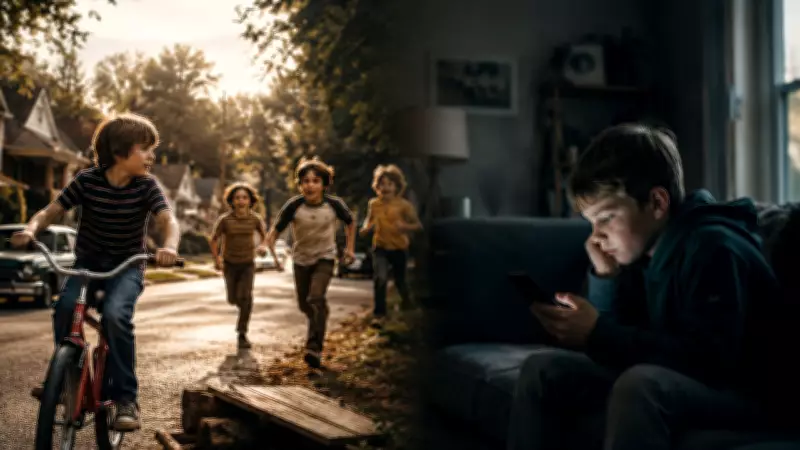
The story starts with circumstance more than philosophy. Mothers were entering the workforce in large numbers during the 1960s and 1970s, childcare options outside the home were limited, and divorce rates were climbing. This left an entire generation with an unusual amount of unsupervised time. Kids walked to school alone. They let themselves into empty houses. They resolved conflicts on playgrounds without an adult referee. This was not intentional parenting strategy. Parents were not consulting child development books. They were just trying to survive.

What is striking is what actually happened. These kids developed what psychologists now recognize as exceptional problem-solving abilities and emotional regulation skills that seem almost alien to younger generations who grew up under constant supervision. When a kid had nothing to do on a summer afternoon, they did not panic. They figured something out: a fort in the woods, a neighborhood game with no written rules, or a bicycle ride toward the horizon. The repetition of these small moments—a thousand tiny leaps without a safety net—created something durable.
Boredom and Self-Efficacy
Research shows that boredom tolerance correlates with creativity, self-reflection, and emotional regulation. When you are forced to be alone with your thoughts without reaching for a screen, something shifts. Your brain learns to occupy itself. Your emotions learn to settle on their own. This builds what psychologists call self-efficacy: the belief that you can handle what comes your way because you have been handling things since you were eight.
The social learning was equally important. Peer groups formed and resolved conflicts without adult mediation or smartphone documentation, creating a robust social immune system through consistent practice in social negotiation and reputation management. When you cannot escape your social circle by blocking someone online, when the argument happens in real time and you have to face that person tomorrow at school, you get very good at reading the room and talking your way through problems. You develop a kind of social flexibility that comes only from practice and stakes.
The Complicated Picture
However, the conversation gets complicated. Those born in the 1960s and 1970s are now finding themselves navigating unfamiliar territory as the language of trauma and resilience has become more prevalent in popular discourse. Some are discovering that the very qualities they valued are being reframed as signs of unresolved trauma. A woman in her fifties recalls thinking her childhood independence was preparation for adult life. Her daughter calls it neglect. It is the same experience seen through completely different frames.
The honest truth is mixed. Some children were genuinely neglected, some were lonely, and some were managing situations they were too young to handle, with consequences that show up in clinical literature on emotional parentification and latchkey trauma. Not everyone became resilient. Some people developed anxiety that never really left. The picture is muddier than any simple narrative allows.

What Endures
What seems undeniable, though, is that this generation learned something about themselves early: they could survive their own lives. Nobody was coming to fix it. Nobody was going to call the teacher or the counselor or launch a whole intervention. So they fixed it themselves, or they figured out how to live with it unsolved. That is not necessarily a strength to celebrate. But it is a strength. It built something in them that the carefully scaffolded childhoods of later generations have not quite managed to replicate. Now, decades later, as the world gets more uncertain and anxiety more common, there is something useful in understanding how these people learned to sit with discomfort and keep going.