

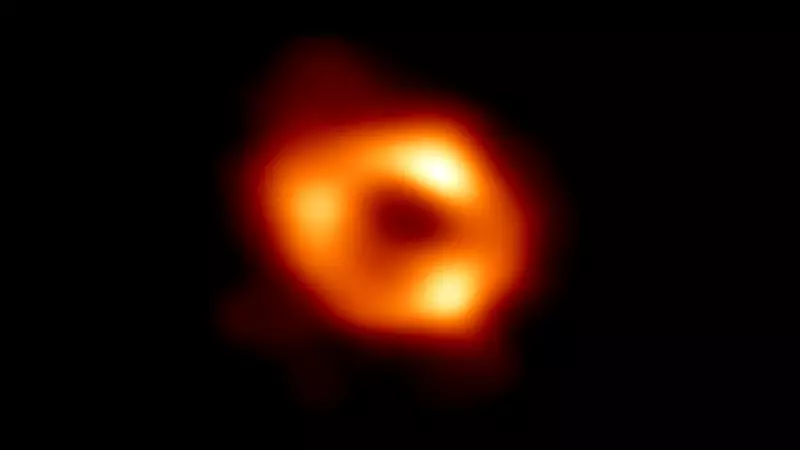
Scientists Detect Potential Black Hole Explosion, Validating Hawking's Theory
In a groundbreaking development that could reshape our understanding of cosmic phenomena, astronomers have potentially detected an exploding black hole, offering the first observational evidence for a theory proposed by the legendary physicist Stephen Hawking over five decades ago.
Hawking's Revolutionary Prediction
Back in 1974, theoretical physicist Stephen Hawking made a startling calculation that challenged conventional wisdom about black holes. He theorized that these mysterious cosmic entities are not entirely black but instead leak radiation over immense timescales, a process now famously known as Hawking radiation.
According to Hawking's calculations, this gradual leakage of energy would eventually cause black holes to shrink and ultimately explode in a spectacular release of pent-up energy. This explosive event was described as a miniature replica of the Big Bang, the cataclysmic explosion that gave birth to our universe.

The Recent Astronomical Discovery
The potential detection of such an explosion represents a monumental achievement in astrophysics. While black holes have been studied extensively for their gravitational effects and event horizons, direct evidence of their explosive demise has remained elusive until now.
This observation, if confirmed, would provide the first tangible proof that black holes do not last forever but have a finite lifespan that ends in a dramatic burst of energy. The detected explosion appears to match the theoretical predictions of energy release that Hawking described in his pioneering work.
Implications for Physics and Cosmology
The confirmation of Hawking's theory would have profound implications for multiple fields of science. It would validate one of the most important predictions in theoretical physics and provide new insights into the ultimate fate of black holes throughout the universe.
Furthermore, understanding these explosive events could shed light on fundamental questions about the nature of space, time, and energy. The mini-Big Bang description suggests connections between the smallest and largest scales of cosmic phenomena, potentially offering clues about the universe's origins and eventual destiny.
Scientific Validation Process
As with any major astronomical discovery, the scientific community will now undertake rigorous verification processes. Researchers will need to:
- Analyze the observational data in greater detail
- Rule out alternative explanations for the detected energy release
- Compare the findings with theoretical models of black hole evaporation
- Attempt to replicate observations through different instruments and methods
This careful validation is essential before the scientific community can definitively declare that Hawking's prediction has been observationally confirmed.
Historical Context and Future Research
Stephen Hawking's 1974 paper on black hole radiation represented a revolutionary synthesis of quantum mechanics and general relativity. For decades, physicists have sought ways to test this theory observationally, facing significant challenges due to the extremely long timescales involved and the subtle nature of the predicted effects.
The potential detection of a black hole explosion opens new avenues for research into:
- The detailed mechanisms of Hawking radiation
- The final moments of black hole evaporation
- The nature of the energy released during these explosive events
- How such explosions might affect their surrounding cosmic environments
This discovery, reported in late March 2026, marks what could be a turning point in our understanding of some of the universe's most mysterious objects. As scientists continue to analyze the data, the world awaits confirmation of whether we have truly witnessed the explosive death of a black hole, exactly as Stephen Hawking predicted more than fifty years ago.






