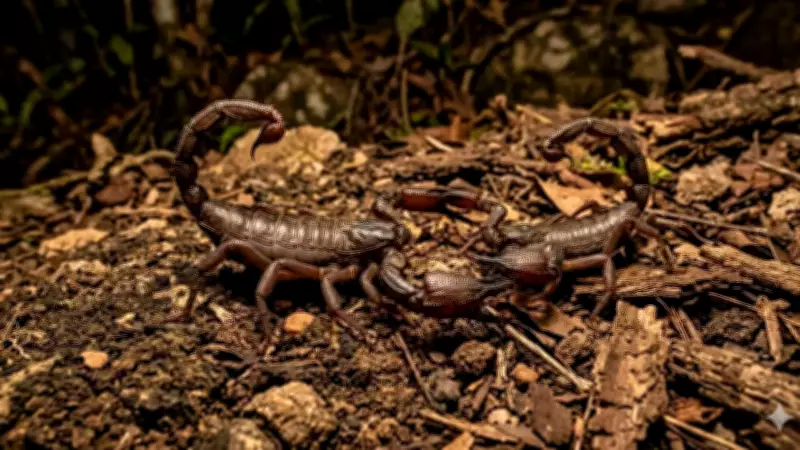
Scorpions are often described as creatures built for survival, though much of that reputation comes from places where food and water are unreliable for long stretches of time. In deserts and rocky scrublands, prey may disappear for weeks, temperatures swing sharply between day and night, and surface moisture can vanish almost completely. Yet scorpions continue functioning under conditions that would quickly weaken many other animals. Their ability to endure has less to do with aggression or physical toughness than with how slowly their bodies operate. A scorpion spends long periods inactive, conserving energy in ways that are easy to miss from the outside.
How Scorpions Can Survive Long Periods Without Food
Many animals rely on constant movement, regular feeding, and steady energy turnover to remain active. Scorpions work differently. They spend much of their time motionless inside burrows, beneath stones, or inside cracks where temperatures remain comparatively stable. Even hunting involves patience rather than pursuit.
Research published in the Journal of Experimental Biology, titled Low Metabolic Rate in Scorpions: Implications for Population Biomass and Cannibalism, reported that scorpions have metabolic rates far lower than many other terrestrial arthropods of similar size. Their oxygen consumption remains minimal, which means they burn through stored energy slowly. This reduced demand allows them to survive on infrequent meals that might seem inadequate for other predators. A single insect can sometimes sustain a scorpion for a surprisingly long period. The slower pace affects nearly everything they do. Growth is gradual. Movement is measured. Some species can remain inactive for extended periods without showing major physiological stress. The strategy appears less about endurance in the dramatic sense and more about avoiding unnecessary energy loss wherever possible.

How Scorpions Survive Without Water in Desert Habitats
Dry habitats create another problem beyond limited prey. Water disappears quickly in exposed landscapes, especially in desert regions where daytime heat rapidly increases evaporation. Scorpions avoid much of this loss through behavior and body structure rather than active cooling mechanisms.
Their wax-like outer coating reduces water escaping through the exoskeleton, while nocturnal activity keeps them away from intense daytime heat. Burrows also hold slightly higher humidity levels than the surrounding surface environment. These small adjustments add up over time.
According to the report published in the National Library of Medicine, titled Selected to survive and kill: Tityus serrulatus, the Brazilian yellow scorpion, several desert arthropods survive harsh conditions by tightly regulating moisture loss and reducing metabolic activity during unfavorable periods. Scorpions fit closely into that pattern. They gain small amounts of water from prey and may survive long intervals without directly drinking at all, depending on environmental conditions and species differences. Periods of inactivity become important here, too. Remaining still is not simply hiding behavior. Less movement means lower respiration rates and reduced water loss.
Scorpions Have Survived Difficult Climates for Millions of Years
Scorpions are sometimes presented as highly adaptable animals constantly responding to hostile environments. In practice, much of their survival depends on avoiding change rather than reacting to it. They wait out difficult conditions. During drought or food shortages, some species reduce activity even further and remain sheltered for long periods underground. Their bodies tolerate this slowdown because their energy requirements are already low to begin with. Instead of maintaining constant biological activity, they operate in brief phases linked to opportunity, feeding when prey appears, retreating again when conditions worsen. As per the report, this approach may explain why scorpions have existed for hundreds of millions of years across very different climates. Their survival strategy does not depend on speed, competition, or complex social systems. It depends on restraint.

Even reproduction reflects this slower rhythm. Many scorpions mature gradually and produce relatively small numbers of offspring compared with faster-breeding invertebrates. The trade-off seems tied to stability rather than rapid population growth.
The Real Reason Scorpions Survive Extreme Conditions for So Long
Stories about scorpions surviving extreme neglect are often exaggerated, though the underlying biology is real. A scorpion cannot live indefinitely without food or water, and survival limits vary between species, temperatures, and habitat conditions. Still, their tolerance for scarcity remains unusual compared with many land animals.
The image of toughness sometimes creates the impression that scorpions are biologically indestructible. According to the study, it paints a quieter picture. Their survival depends on efficiency, low energy use, and long periods of inactivity rather than physical resilience alone.
In many ways, scorpions survive by doing less. They avoid wasting water, avoid unnecessary movement, and avoid rapid energy consumption. What looks like endurance from the outside is often careful conservation happening over weeks or months beneath rocks, inside burrows, and away from heat.