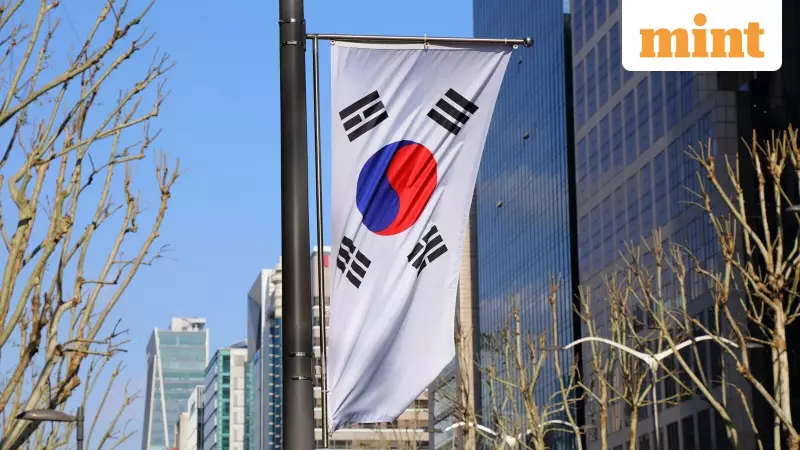
South Korea Makes History with First Comprehensive National AI Legislation
South Korea has achieved a significant milestone in the global technology landscape by becoming the first country to enact a comprehensive national artificial intelligence law. The AI Basic Act, which took effect recently, represents a pioneering approach to regulating emerging technologies while simultaneously encouraging their widespread adoption.
From Go Champion Defeat to AI Leadership
The nation's journey toward AI regulation began nearly a decade ago when Google DeepMind's AI system defeated legendary Go player Lee Sedol in a televised tournament that captivated South Korea. This watershed moment served as an early warning about artificial intelligence's transformative potential, prompting then-president Park Geun-hye to declare that Korean society was "ironically lucky" to recognize the technology's importance before widespread implementation.
That initial shock has evolved into one of the fastest AI adoption rates globally in the post-ChatGPT era. South Korea now faces the challenge of transforming this technological momentum into something even more valuable: durable public trust in artificial intelligence systems.

Balancing Innovation with Protection
While the United States and China compete to develop superior AI models, South Korea is addressing a more immediate concern: how an advanced, hyper-connected economy can rapidly deploy AI without allowing scams, deepfakes, and low-quality content to undermine public confidence. Seoul's approach fundamentally challenges the assumption that regulation necessarily stifles innovation, instead proposing that well-designed rules can legitimize and accelerate responsible adoption.
The rest of the world is observing South Korea's experiment closely, as the nation has become a real-world demonstration of how quickly AI technology can permeate an economy under favorable conditions. Microsoft's AI Economy Institute recently identified South Korea as "the clearest end-of-year success story" in its Diffusion Report, noting the sharpest spike in AI adoption during the second half of last year.
Remarkable Adoption Statistics
The data reveals South Korea's exceptional embrace of artificial intelligence:
- While generative AI usage grew by 25% in the United States and 35% globally since October 2024, South Korea experienced an astonishing 80% increase
- The nation boasts the second-highest number of paying ChatGPT subscribers worldwide, trailing only the United States
- Only 16% of South Korean respondents expressed being "more concerned than excited" about AI's rise in daily life—less than half the global average of 34% and significantly below the United States' 50%
Microsoft attributes this remarkable adoption surge to multiple factors, including improvements in Korean-language capabilities of large language models and the viral "Studio Ghibli moment" in April 2025 when global users became fascinated with ChatGPT's image generator. The company also credits government policy initiatives, particularly the AI Basic Act, for accelerating AI integration across educational institutions, workplaces, and public services.
Addressing the Dark Side of AI Adoption
South Korea's leadership position in AI adoption comes with heightened exposure to technology's potential downsides. The country reportedly consumes the largest amount of 'AI slop'—low-quality, machine-generated content—and faced a deepfake pornography crisis well before similar issues gained global attention through platforms like Elon Musk's Grok.
While many governments hesitate to regulate artificial intelligence due to competitive pressures and hype cycles, South Korea has taken a proactive stance. The AI Basic Act aims to establish "a foundation of trustworthiness" for AI's societal role before problems escalate rather than after damage occurs.
Key Provisions of the AI Basic Act
Inspired by similar European Union legislation but implemented earlier, South Korea's new regulations include several important provisions:

- Enhanced human oversight requirements for AI systems operating in sensitive domains ranging from loan screening to nuclear facility management
- Mandatory disclosure mechanisms when artificial intelligence is employed in decision-making processes
- Labeling requirements including watermarks for machine-generated content that might be difficult to distinguish from human-created material
Criticism and Implementation Challenges
Despite its pioneering status, the AI Basic Act has faced criticism from various quarters. Detractors argue that the legislation contains vague provisions that could potentially chill innovation and disproportionately burden startups compared to established technology giants who can more easily absorb compliance costs.
Some of these concerns are legitimate, and the South Korean government has demonstrated willingness to consider industry feedback during implementation. Nevertheless, Seoul deserves recognition for taking decisive action before potential AI-related backlash becomes irreversible.
A Unique Test Case for Global Policymakers
With 98% of its population online and the world's highest density of industrial robots, South Korea is uniquely positioned to translate widespread AI adoption into tangible economic benefits. This combination of factors makes the country an invaluable test case for policymakers worldwide who struggle to balance technological advancement with growing societal concerns.
The fundamental premise of South Korea's approach is that AI guardrails should not slow deployment but rather make it sustainable. For transformative technologies like artificial intelligence, the ultimate constraint may not be regulation itself but rather the public trust necessary for widespread acceptance and integration.
If South Korea can successfully scale artificial intelligence implementation while maintaining protections against deception and abuse, it will provide other jurisdictions with a valuable blueprint for achieving both innovation and responsibility in the AI era.