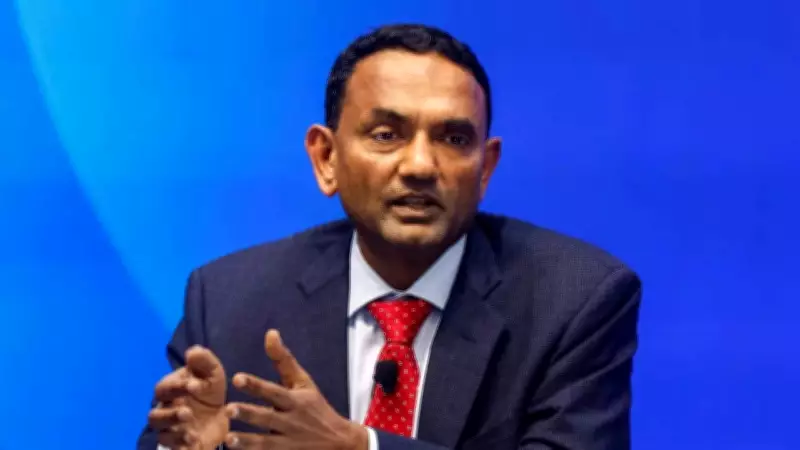
TCS CEO Champions AI as Civilizational Shift, Urges Proactive Revenue Cannibalization
In a bold declaration at the Nasscom Technology Leadership Forum 2026, TCS CEO K Krithivasan positioned Generative AI as a transformative civilizational shift, asserting that the company is fully prepared to disrupt its own revenue streams if necessary to enhance client outcomes through artificial intelligence.
Embracing Disruption for Superior Client Value
Krithivasan articulated a forward-thinking strategy, emphasizing that TCS is actively encouraging its associates to identify and implement AI solutions that deliver faster, better, and cheaper results for customers—even when such innovations threaten to cannibalize existing revenue sources. "We are telling associates that if you find you can do something faster, better and cheaper with AI, you should proactively tell your customers - even if it cannibalises revenue," he stated during a panel discussion.
He further elaborated that the company harbors no fear of AI technology displacing livelihoods. Instead, TCS views this technological evolution as a gateway to unprecedented opportunities. "We are not afraid that this technology will take away our livelihood. We believe it will open up more opportunities. You benefit more by embracing it than by resisting the change," Krithivasan affirmed, highlighting a paradigm shift from defensive postures to proactive adaptation.

Cultural Transformation: The Core of AI Adoption
The TCS CEO pinpointed cultural readiness as the most critical element in navigating the AI revolution. He stressed the necessity of cultivating a willingness to improve processes and outcomes, even when such improvements disrupt established business models. Krithivasan emphasized that this cultural transformation must originate from the top echelons of leadership. AI adoption cannot be merely delegated to junior staff; it requires hands-on engagement from senior executives to build credibility and drive meaningful change.
"Leaders must build, test and experiment themselves. Junior employees may be more comfortable with AI tools, but leadership credibility depends on hands-on engagement," he explained, underscoring the importance of experiential learning and direct involvement from corporate heads in AI integration efforts.
AI: A Dual Challenge and Opportunity for Tech Services
While industry leaders across various sectors acknowledge the disruptive force of artificial intelligence, Krithivasan framed it as both a formidable challenge and a significant opportunity, particularly for technology services firms like TCS. "We see this as both a challenge and an opportunity," he remarked, pointing to the rapid evolution of AI models and their capacity to address long-standing problems.
He marveled at the ability of modern AI systems to learn, unlearn, and relearn dynamically, noting that sometimes a simple new prompt string can unlock substantial value. "Problems that haven't been solved for decades are now being addressed. The ability of models to learn, unlearn and relearn is remarkable. Sometimes all it takes is a new prompt string to unlock significant value," Krithivasan observed, illustrating the transformative potential of AI in solving complex issues efficiently.
This strategic vision from TCS's leadership signals a robust commitment to leveraging AI not just as a tool, but as a fundamental driver of innovation and client-centric value creation, even at the cost of disrupting traditional revenue models.